
2030 Hindsight on 2025: The Year Wall Street Took Over Bitcoin


Original Title: "2030 Retrospective on 2025: The Year Wall Street Officially Took Over Bitcoin"
Original Author: Daii, Airdrop Reference Founder
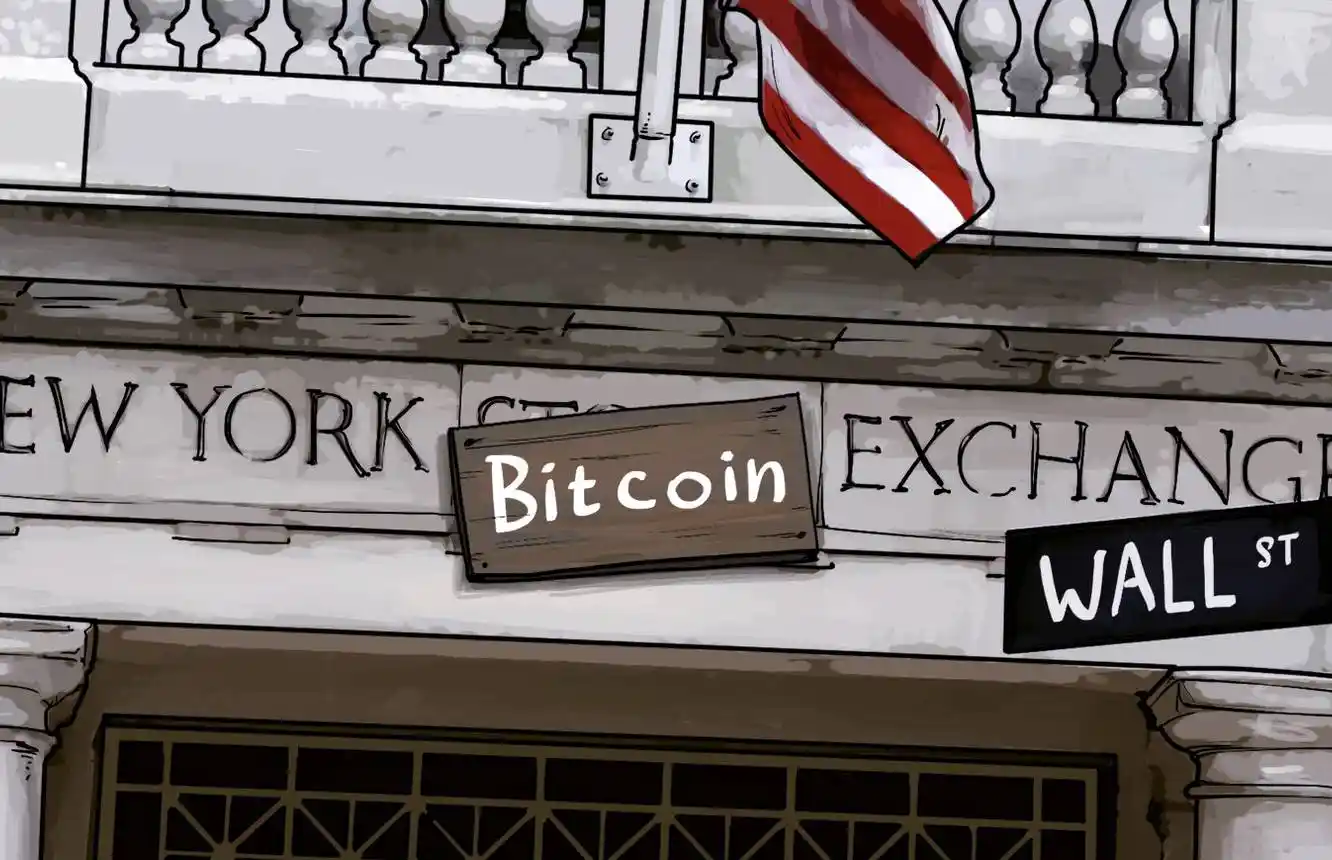
One day in 2030, when BlackRock's Bitcoin ETF's AUM surpassed that of the S&P 500 index fund, Wall Street traders suddenly realized: the thing that they once mocked as a "dark web toy" now held the global capital by the throat.
But all the turning point started in 2025 — the year when the price of Bitcoin surged past $250,000 amidst the institutional whale hunting, yet no one could clearly say who it belonged to anymore. On-chain data showed that over 63% of the circulating supply was locked in institutional custody addresses, and Bitcoin exchange liquidity dried up to only support three days of trading volume.
The above is a fantasy; let us return to the present for now.
A substantial amount of funds continues to flow out from Bitcoin ETFs, causing Bitcoin to briefly drop below $80,000. The explanation for this phenomenon mainly revolves around two aspects:
1. From a policy perspective, it was due to the U.S.-China trade war initiated by Trump;
2. From a fund perspective, it was because 56% of short-term holders — hedge funds — closed their arbitrage positions.
However, analysts believe that the current Bitcoin bull market is in the "distribution phase."
The "distribution phase" of a Bitcoin bull market usually refers to the late stage before and after the price peak, where whales gradually sell off their chips, transferring Bitcoin from early holders to new market entrants. This phase signifies the market transitioning from a frenzy of upward movement to the top area and is a crucial juncture for the bull-bear shift.
No more suspense; let's give the answer first: the current market liquidity structure has changed.
· OG retail and OG whales are playing the role of sellers;
· Institutional whales and new retail entrants through ETFs are becoming the main buyers.
In the cryptocurrency field, "OG" is an abbreviation for "Original Gangster" (and is also often interpreted as "Old Guard"), specifically referring to the earliest participants, pioneers, or long-standing core group in the Bitcoin space.
In short, old money is exiting, and new money is entering. Among the new money, institutions are dominant.
Next, we will provide you with a detailed analysis from the perspectives of market structure, current cycle characteristics, roles of institutions and retail investors, cycle timeline, and more.
1. Typical Market Structure: Whale Distribution to Retail at the End of a Bull Market
A typical Bitcoin bull market at the end phase exhibits a pattern where whales distribute chips to retail investors, meaning early large holders sell coins to latecomer retail investors at high prices.
In other words, retail investors often buy at high prices in a euphoric atmosphere, while the "smart money" whales take the opportunity to sell in batches at the peak, realizing profits. This process has played out multiple times in historical cycles:
For example, as the 2017 bull market approached its peak, the Bitcoin balance held by whales saw a net decrease, indicating a significant amount of chips moved away from whale hands. This was because at the time, there was a massive influx of new demand into the market, providing enough liquidity for whales to distribute their holdings, as detailed in: The Shrimp Supply Sink: Revisiting the Distribution of Bitcoin Supply.
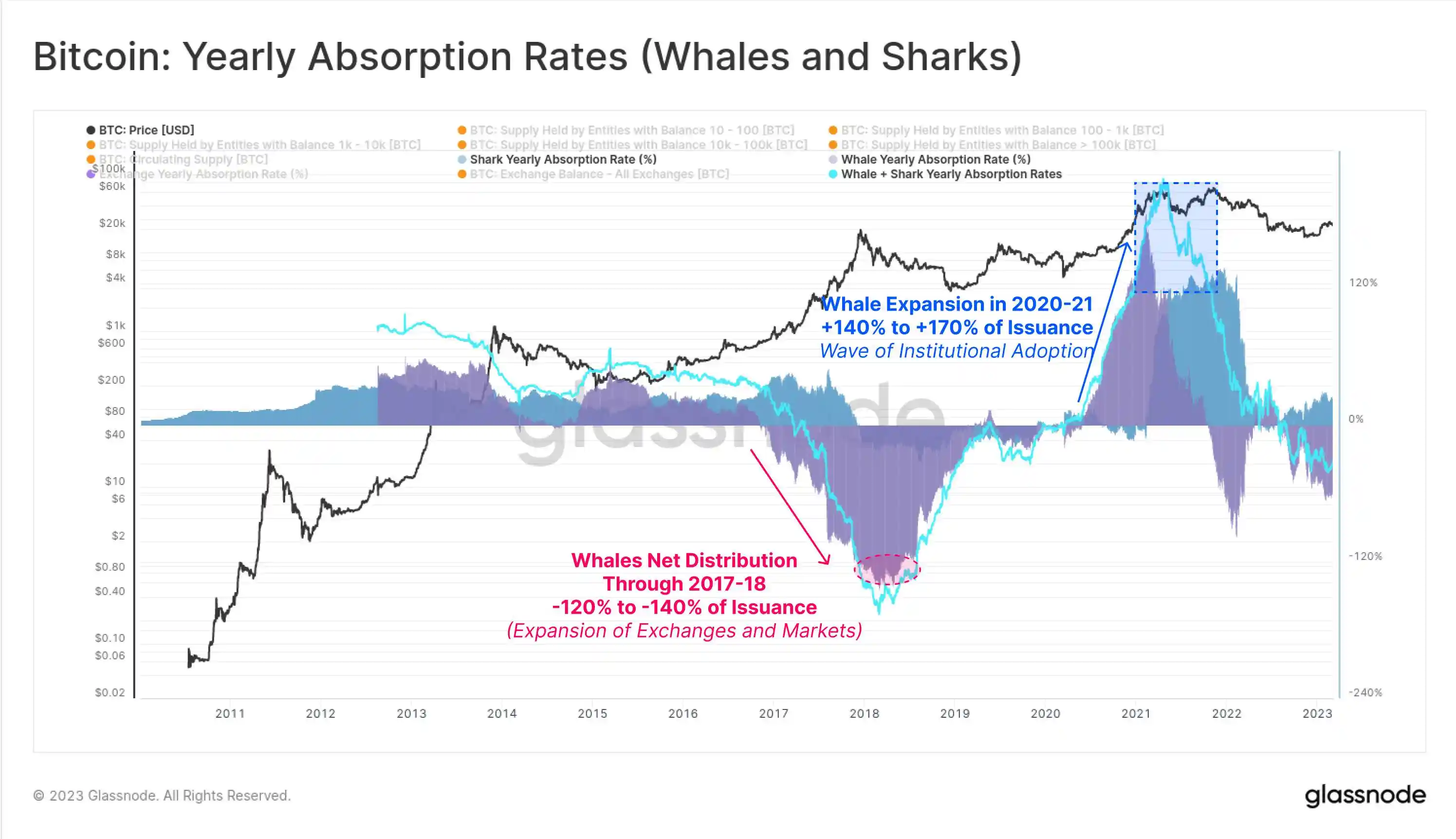
Overall, the market structure at the end of a traditional bull market can be summarized as follows: early holders progressively sell off, increasing market supply, while retail investors buy in large quantities driven by FOMO (Fear Of Missing Out) sentiment. This distribution behavior often comes with signs such as increased Bitcoin inflows to exchanges, movement of old coins on-chain, foreshadowing the market is about to peak and reverse.
2. Characteristics of This Bull Market Cycle: Structural New Changes
The distribution phase of the current bull market cycle (2023-2025) differs from the past, especially in the behaviors of retail and institutional investors.
2.1 Unprecedented Institutional Participation in This Cycle
The introduction of Bitcoin spot ETFs and the aggressive Bitcoin purchases by publicly traded companies have made the market participants more diverse, no longer solely driven by retail investors. The entry of institutional funds has brought a deeper pool of capital and more stable demand, directly reflected in the reduced market volatility compared to the past — analysis shows that the maximum drawdown of the current bull market is significantly smaller than in previous cycles, with peak retracements typically not exceeding 25%-30%. This is attributed to the intervention of institutional funds stabilizing volatility.
At the same time, market maturity has increased, with each cycle seeing a diminishing price increase, leading to a more stable trend. This can also be observed from indicators such as the growth rate of the realized cap: this cycle's realized cap has only expanded a small portion of the previous peak, indicating that the frenzy has not yet fully unleashed (see: Thinking Ahead).
Realized Cap is a key metric to measure the market's capital inflow situation. Unlike the traditional Market Cap, Realized Cap is not simply the current price multiplied by the circulating supply, but considers the price of each Bitcoin at its last on-chain transaction. Therefore, it better reflects the actual scale of funds invested in the market.
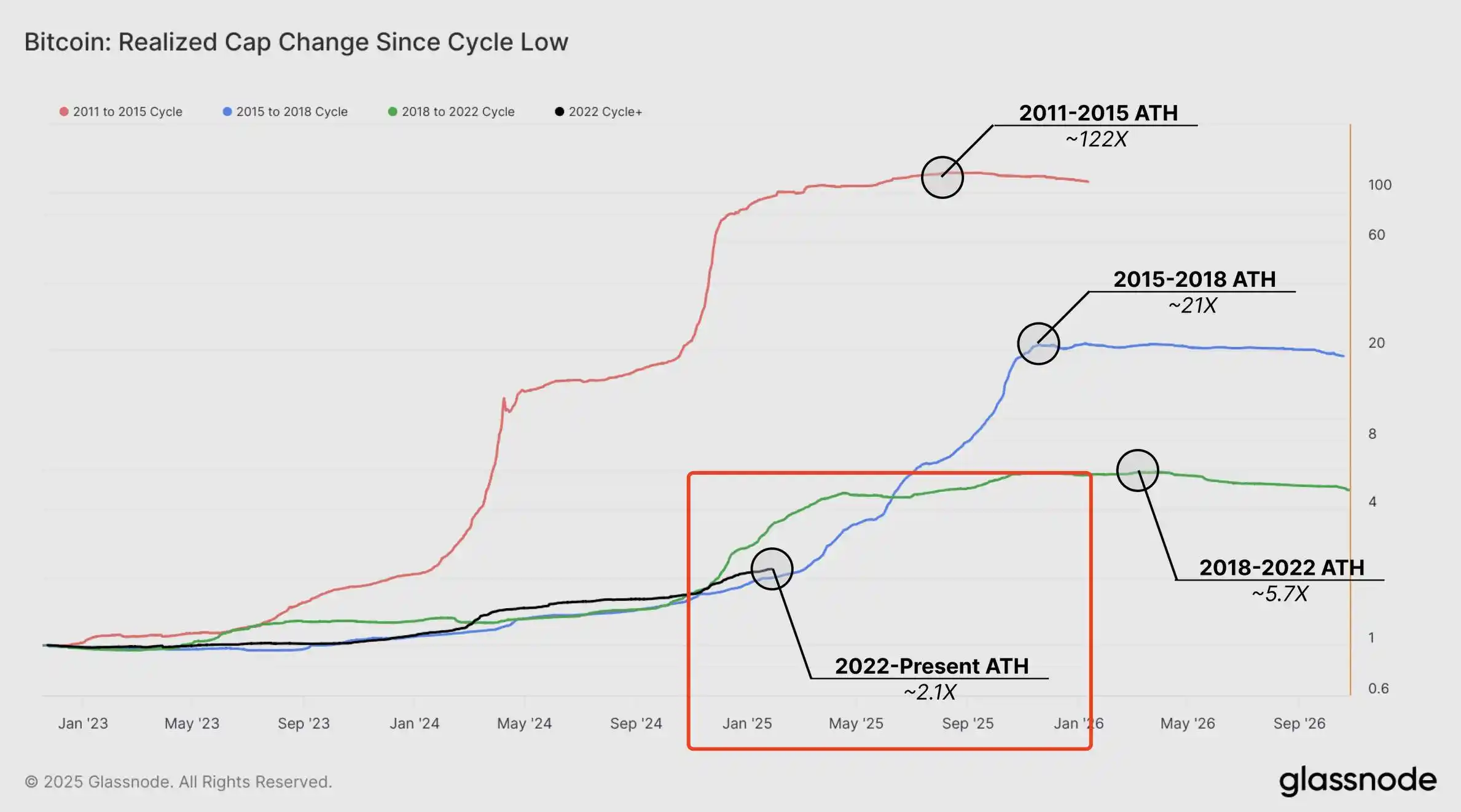
Of course, the above indicators may also indicate that the market is entering a more mature and stable development stage.
2.2 Retail Investors' Behavior in This Round is Also More Rational and Diverse
On the one hand, experienced retail investors (individual investors who have experienced multiple market cycles) are relatively cautious, taking profits earlier after a certain price increase, which is different from the past when retail investors chased the price all the way to the top.
For example, data from early 2025 shows that small holders (retail investors) net transferred approximately 6,000 BTC (about $6.25 billion) to exchanges in January, starting to cash out early, while during the same period, whales only marginally net increased by about 1,000 BTC, essentially staying put. This divergence indicates that many retail investors believe it's a phase of a peak, choosing to take profits, while whales (seen as "smart money") remain on hold, apparently expecting a higher profit margin.
On the other hand, the enthusiasm of new retail investors is still accumulating. Indicators such as Google Trends indicate that public attention temporarily dropped after the price reached a new high and "reset," without reaching the peak of mass hysteria seen in the late stages of past cycles. This suggests that the current bull market may not have entered the final frenzy stage yet, with remaining upside potential in the market.
2.3 Institutional Investors' Behavior Has Become a Key Feature of This Bull Market
The previous bull market of 2020-2021 was the first time a large number of institutions and publicly traded companies entered the market, leading to an increase in whale holdings—a phenomenon where institutions and other new "whales" bought large amounts, causing Bitcoin to flow from retail hands to these whale accounts.
This trend has continued in the current cycle: large institutions are heavily buying Bitcoin through channels such as OTC markets, trust funds, or ETFs, making traditional whales no longer net sellers, to some extent delaying the distribution phase's arrival. This has made the distribution of this bull market more gradual and decentralized, rather than the previous pattern where retail investors were the only buyers: the market's depth and breadth have increased, and new funds are sufficient to absorb the chips sold by long-term holders.

A Glassnode report points out that a significant amount of wealth has already transferred or is transferring from long-term holders to new investors, marking a sign of maturity in the Bitcoin market—long-term holders have realized record profits (up to $21 billion in a single day), and new investors have enough demand to absorb these sell-offs, see Bitcoin sees wealth shift from long-term holders to new investors – Glassnode.
It is evident that in this bull market, the interaction between retail investors and institutions has created a more resilient market environment.
3. Evolution of Roles: Institutional and Retail Investors' Impact on Liquidity
As the market participant structure evolves, the roles of institutions and retail investors in the allocation phase have also undergone significant changes.
CryptoQuant CEO Ki Young Ju summarized the current allocation pattern as follows: "OG Retail" (Original Gangster Retail) + existing whales → new retail investors (through ETFs, MSTR, and other channels) + new whales (institutions).
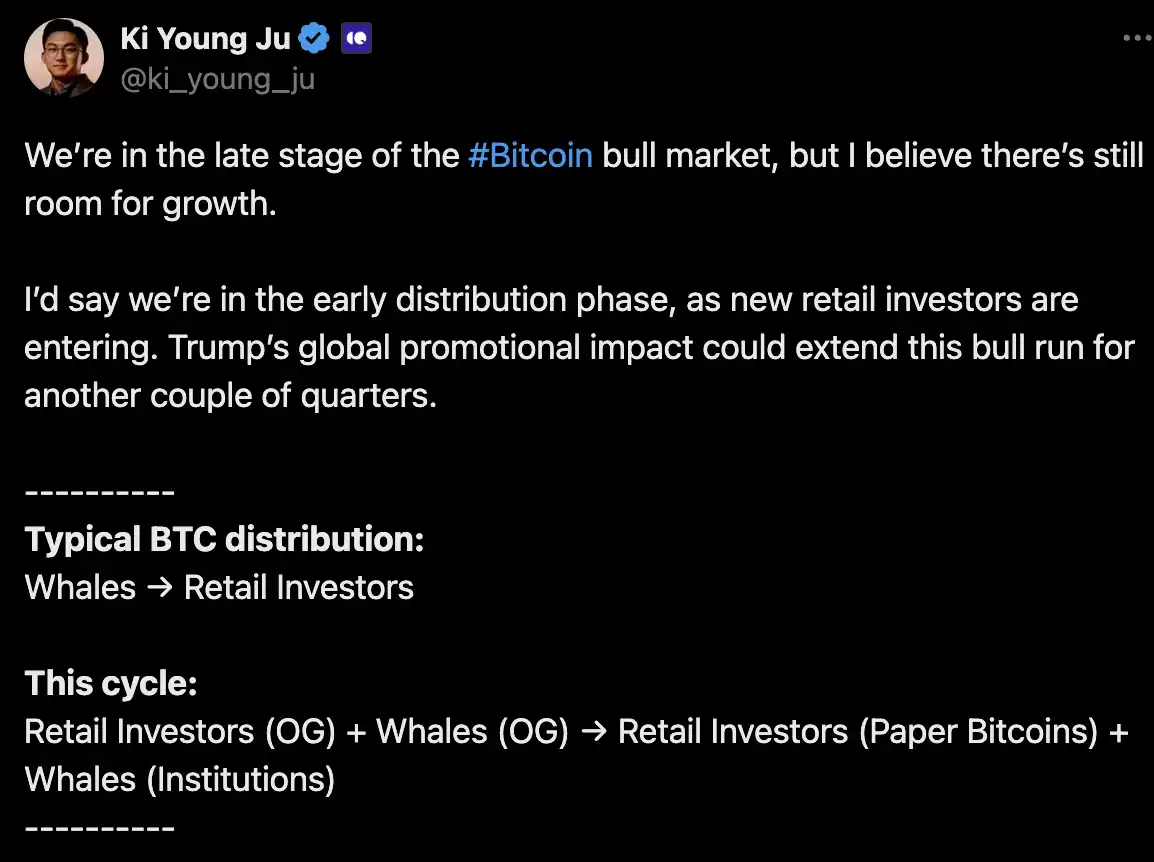
In other words, retail investors and whales who experienced the early stages of the cycle are gradually selling off, and the party stepping in to buy includes not only traditional retail investors but also ordinary investors entering through investment vehicles like ETFs and institutions acting as whale entities.
This diversified participation pattern is starkly different from the traditional "whale → retail" linear distribution model.
· In this cycle, OG Retail (early entrant individual holders) may hold a significant amount of Bitcoin. They choose to cash out and exit at the peak of the bull market, providing some selling pressure and liquidity to the market.
· Similarly, OG whales (early large holders) will also gradually sell off to realize profits multiple times over. In response, institutional whales as new buying forces absorb this selling pressure massively. They buy through custody accounts and ETFs, with Bitcoin flowing from old wallets to these institutions' custody wallets.
· Furthermore, some traditional retail investors now indirectly hold Bitcoin through ETFs and publicly traded company stocks (such as MicroStrategy's stock), representing a new form of "retail buying the dip."
This role transition has had a profound impact on market liquidity and price trends.
3.1 More Bitcoin Moving Off Exchanges
On one hand, the selling behavior of OG holders usually leaves significant on-chain footprints: increased activity in old wallets, large transfers flowing to exchanges, and more.
For example, in this bull market, it has been observed that some long-dormant wallets have become active, moving coins to exchanges in preparation for sale, indicating that old holders are starting to distribute chips. Ki Young Ju pointed out that the activities of OG players are reflected through on-chain and exchange data, whereas the movement of "paper Bitcoins" (such as ETF shares, Bitcoin-related stocks) is only reflected in custody wallet on-chain records during settlement. In other words, institutional fund buying often occurs off-exchange or through custody, with direct on-chain reflections being the increase in balance of custody addresses, rather than direct exchange movements as with traditional exchanges.
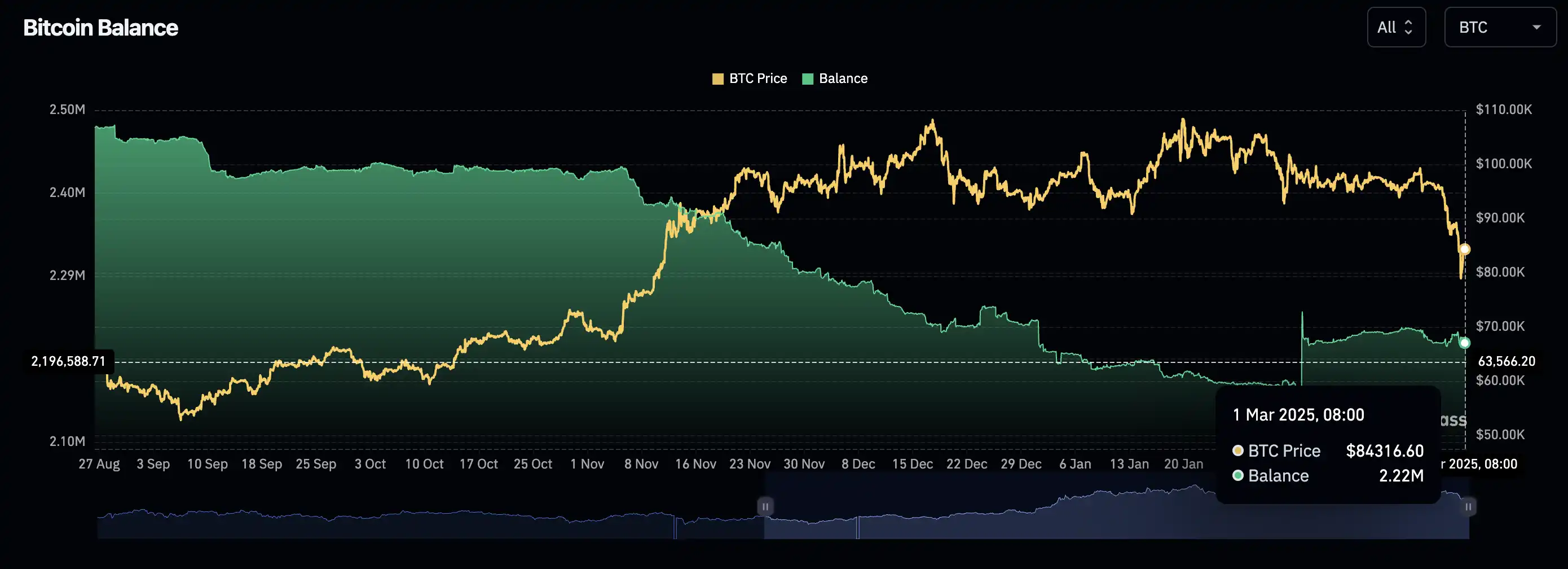
The current exchange's Bitcoin balance is 2.22 million coins, which is also a reflection of this characteristic.
3.2 New Whales, New Retail Investors Show More Resilience
On the other hand, institutional investors, as newly emerged whales, not only provide massive buying support but also enhance the market's resilience to sell pressure and liquidity depth.
Unlike the panic selling often seen during retail-dominated periods in the past, institutional funds tend to buy the dip and hold for the long term. When the market experiences a pullback, the intervention of these professional funds often helps stabilize the price. For example, some analysis attributes the reduced volatility of this bull market to institutional participation: when retail investors sell, institutions are willing to buy to ensure market liquidity, resulting in much smaller price retracements.
Although the launch of Bitcoin ETFs has brought significant incremental funds to the market, some ETF holders (such as hedge funds) may primarily engage in arbitrage trading, leading to higher fund liquidity. Recent outflows of ETF funds indicate that some institutional funds are only engaging in short-term arbitrage rather than holding long term. The recent drop in Bitcoin below $80,000 faced selling pressure from hedge funds closing out arbitrage positions.
However, newly entered retail investors have shown strong resilience, not panic selling at each adjustment but willing to continue holding, with Bitcoin's short-term holder metric showing greater resistance to price drops.
Overall, the interaction between OG retail investors + OG whales and new institutional whales + new retail investors has formed the unique supply-demand pattern in the current market: early holders provide liquidity, while institutions and new buyers absorb chips, making the distribution process in the later stages of the bull market smoother and more traceable.
4. Market Cycle Timeline: Historical Trends and Prospects for This Bull Market
From historical data, the Bitcoin market demonstrates a roughly four-year cycle, each containing a full cycle of bear market - bull market - transition. This is highly related to the Bitcoin block reward halving event: after the halving, new coin issuance sharply decreases, followed by a roughly 12-18 month period of a significant price surge (bull market), and then entering a bear market correction near the peak.
4.1 History
Looking back at the timeline of several major bull markets:
· The first halving occurred at the end of 2012, and the Bitcoin price peaked in December 2013, about 13 months later;
· The second halving in 2016, with the bull market peak near $20,000 in December 2017, about 18 months later;
· In May 2020, during the third halving, Bitcoin experienced a double peak near $70,000 at two high points (April and November) around 17-18 months later by the end of 2021.
Based on this, it is speculated that the fourth halving in April 2024 may trigger a new bull market, with the peak likely to occur approximately one to one and a half years after the halving, around the second half of 2025, ushering in the final distribution phase (end of the bull market).
Of course, cycles do not mechanically repeat, and changes in market conditions and participant structure may affect the duration and peak of this bull market.
4.2 Optimistic
Some analysts believe that the macro environment, regulatory policies, and market maturity will have a significant impact on this cycle.
For example, Grayscale's research team pointed out in a late 2024 report that the current market is only in the mid-term stage of a new cycle. If the fundamentals (user adoption, macro environment, etc.) remain strong, the bull market may extend into 2025 or even longer. They emphasize that the newly introduced spot Bitcoin ETF has broadened the channels for fund inflows, and the clarity of the future U.S. regulatory environment (such as the potential impact of the Trump administration) may further boost the crypto market valuation.
This means that this bull market is expected to be longer than previous cycles, and the upward trend may extend beyond the traditional time window.
On the other hand, there is also on-chain data supporting the view of a longer bull market. For example, the current cycle's Realized Cap has not yet reached half of the peak of the previous cycle, indicating that the market's enthusiasm has not been fully released. Some analysts therefore predict that the final peak of this bull market may far exceed the previous cycle, with peak expectations commonly raised to $150,000 or even higher.
4.3 Conservative
However, some opinions suggest that the peak will occur within 2025.
For instance, CryptoQuant's Ki Young Ju predicts that the final distribution phase of the Bitcoin bull market (various OG holders and institutions concentrating on selling to the final buyers) will take place within the year 2025. His assessment is based on the early distribution phase already entered and the observed influx of new retail funds, believing that it is not necessary to switch to a bearish view prematurely before the final distribution is completed.
Combining historical patterns and current indicators, it can be speculated that this bull market will most likely enter its final stages in the second half of 2025 when, as prices reach a phase peak, various holders will accelerate chip distribution to complete the final distribution process.
Of course, the precise timing and magnitude are difficult to predict, but based on the cycle length (around 1.5 years post-halving) and market signs (retail frenzy level, institutional fund flows, etc.), 2025 may become a key year.
Conclusion
As Bitcoin evolves from a geeky toy to a trillion-dollar strategic asset, this bull market cycle may reveal a harsh truth: the essence of financial revolution is not to eliminate old money but to reconstruct the genetic chain of global capital with new rules.
The current "distribution phase" is indeed the coronation ceremony of Wall Street formally taking over the crypto world. When OG whales hand over their chips to BlackRocks, this is not the prelude to a collapse but the march of restructuring the global capital landscape—Bitcoin is transforming from retail's myth of sudden wealth to the "digital strategic reserve" on institutional balance sheets.
The most ironic part is that while retail investors are still calculating their "exit scam passwords," firms like BlackRock have already included Bitcoin in their 2030 balance sheet template.
The ultimate question of 2025: is this the peak of a cyclical cycle or the birth pangs of a new financial order? The answer lies in the icy blockchain data—each outflow from an OG wallet is contributing to the custodial addresses of BlackRocks; each ETF's net inflow is redefining the notion of "value storage."
For investors navigating through the cycle, here is a piece of advice: the greatest risk is not missing out but interpreting the rules of 2025 with the cognition of 2017. When "holding addresses" turn into "institutional custody accounts," when the "halving narrative" becomes a derivative of the Federal Reserve interest rate decisions, this century's handover has transcended the bull-bear dichotomy—
History tends to repeat itself, but this time, what takes the stage is not retail tears but the incessant chain of institutional treasury on-chain transfers.
This trend towards institutionalization can perhaps be likened to the evolution of the Web 1.0 era—where the internet, originally belonging to geeks, ultimately fell into the hands of FAANG (Facebook, Apple, Amazon, Netflix, and Google) giants.
History's cyclical nature is always brimming with dark humor.
You may also like

WEEX App Just Got Smarter – New Tabs for Faster Trades & Easy Asset Management

Blockchain Capital Partner: The Core Secret of Arbitrage

WEEX All-New Search Features: Find, Trade & Earn Faster Than Ever

Will MicroStrategy fall into a death spiral? What will the macro trend be in the second half of the year?

Morning Report | Illinois signs the strictest digital asset tax law in the U.S.; RWA tokenization market size surpasses $43 billion, institutions accelerate the migration of on-chain assets

Full version of the debut Q&A! Federal Reserve Chairman Waller: Sticking to the 2% inflation target, establishing five special working groups, individual did not submit the dot plot

From Disruptor to Shadow Market: The Crypto Market is Becoming a Colony of Traditional Finance
Dalio's important long article: How to position in the current market environment?

OKX Star analyzes Binance's competitive advantages: when regulation levels the playing field, competition has just begun

New gameplay for participating in initial offerings on cryptocurrency exchanges
Why Is Bitcoin Down Today? What the Hawkish FOMC Means for SpaceX, Gold and Nasdaq

DeepSeek Financing Story

Morning Report | DeepSeek completes over $7 billion in financing, with a valuation exceeding $50 billion; Musk's personal wealth has surpassed the total market value of Bitcoin

Cursor, why did you get on Musk's spaceship?
In the name of charity, for the benefit of the family: How the Trump family turned charity into profit?

Will Gold Break $4,500 After Tonight's Fed Decision? What XAUT and PAXG Traders Need to Know

SharpLink CEO: How to understand that Ethereum developers have just surpassed 1 million?

Morning Report | MiCA grace period expires on July 1; Kalshi's trading volume in the first week of the World Cup breaks $5.1 billion, setting a record
WEEX App Just Got Smarter – New Tabs for Faster Trades & Easy Asset Management
Blockchain Capital Partner: The Core Secret of Arbitrage
WEEX All-New Search Features: Find, Trade & Earn Faster Than Ever
Will MicroStrategy fall into a death spiral? What will the macro trend be in the second half of the year?
Morning Report | Illinois signs the strictest digital asset tax law in the U.S.; RWA tokenization market size surpasses $43 billion, institutions accelerate the migration of on-chain assets
Full version of the debut Q&A! Federal Reserve Chairman Waller: Sticking to the 2% inflation target, establishing five special working groups, individual did not submit the dot plot


