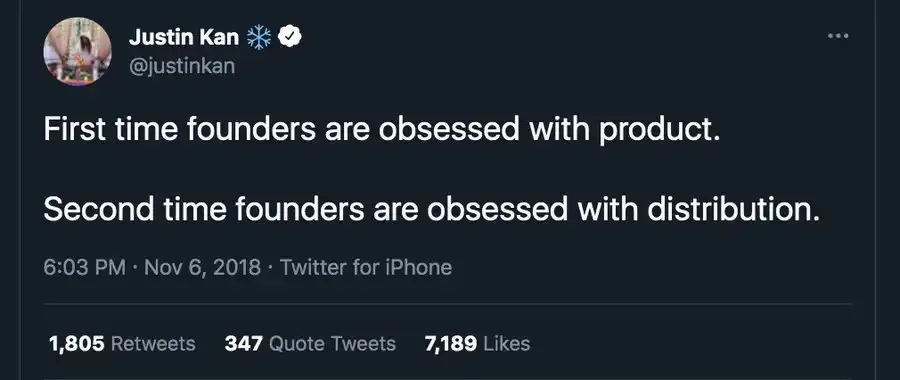
Attention is Value, How Does InfoFi Capture the Zeitgeist?

By: blockbeats|2025/03/06 15:45:03
0
Share
copy
Original Article Title: Mindshare is Everything: The Rise of InfoFi
Original Article Author: Marco Manoppo, primitive Partner
Original Article Translation: ChatGPT

Editor's Note: InfoFi financializes information, narrative, and market sentiment, relying on trusted oracles (such as Chainlink, Pyth) to securely bring off-chain data on-chain. Currently, oracles face challenges like data manipulation and subjectivity in sentiment analysis, requiring future optimization through AI integration and incentive mechanisms. InfoFi development directions include Narrative ETFs, influencer financial products, MemeCoin derivatives, etc., focusing on capturing and trading attention. It may evolve into an independent market rather than a subset of DeFi, with the key being the ability to create high-liquidity, scalable financial instruments to truly trade digital mindshare.

The following is the original content (reorganized for readability):

Mindshare is everything, and if you think I'm going to start with such an obvious statement like your typical VC, then you're absolutely right—but please, bear with me.

Attention is Value, How Does InfoFi Capture the Zeitgeist?


Attention has always been the most crucial "currency" because that's how goods are sold. Before the internet, the printing press and the advertising industry had their golden ages. Cigarette companies attracted attention by associating with controversial social topics and movements—in other words, to sell more.

In simple terms, attention → mindshare → channel distribution.

Subsequently, the era of brands arrived. Brands like Nike, Lucky Charms, Nutella mastered the art of emotion-driven marketing, increasing mindshare and ultimately leading to higher profit margins. Consumers were willing to pay a 30% premium for the same product just due to different brand awareness. I, too, fell victim to this trend—during college, I was crazily collecting Supreme Box Logos, a truly embarrassing period.

I almost spent $1000 on these useless things when I should have been buying ETH back then.

Fast forward to the 2020s, where everything revolves around digital mindshare.

This trend accelerated during and after the pandemic, but its roots can be traced back to the rise of YouTubers in the past 15-20 years. Early content creators like Ryan Higa and Smosh, driven purely by passion, started making "funny little videos." However, social media changed everything. Platforms like Facebook, Twitter, and Instagram accelerated the viral effect, elevating the influence of YouTubers and independent creators beyond most B-list celebrities.

For example, Casey Neistat started his daily vlog in 2015—just a mere decade ago. At that time, YouTubers struggled to translate traffic into commercial success. Businesses tried to capitalize on this trend (e.g., BuzzFeed), but we all saw how that turned out.

Fast forward to today, creators like MrBeast have built multi-million-dollar business empires solely relying on their distribution channels. Rhett & Link are also a prime example, as they acquired and expanded the Mythical Entertainment Network through their YouTube audience.

Clearly, every business is now vying for mindshare.

Mindshare translates into a premium; in the modern capital market environment, it directly impacts stock prices (or token prices). If Elon Musk wasn't constantly stirring up online conversations, Tesla's market value wouldn't be where it is today. I believe this trend will continue to grow over the next five years and will further financialize—this is what we now refer to as the InfoFi era.

What is InfoFi?

InfoFi (Informational Finance) is a term popularized by Kaito, but I believe its scope far exceeds the initial definition. According to Grok (quoting Kaito), InfoFi is: "An emerging concept that combines financial incentives with the generation, validation, and distribution of information, usually based on decentralized systems.

Its goal is to use market forces to address issues in today's information economy, such as unreliable data, algorithmic bias, and unfair value distribution, ensuring information is more accurate, trustworthy, and efficiently organized and disseminated."
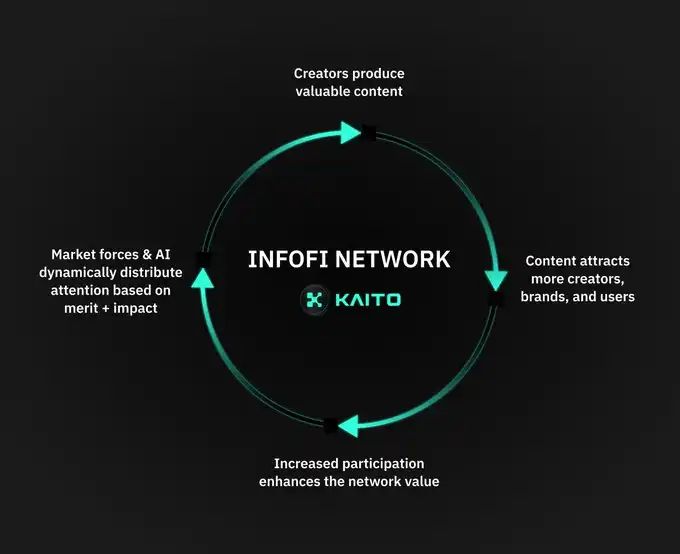
While this definition is reasonable, I believe InfoFi represents something more profound. Fundamentally, InfoFi is the tokenization of the information supply chain itself.

Its core idea is that information is not just free—it is a resource that can be priced, traded, and optimized through financial mechanisms. For decades, the prevailing monetization model for attention has been to first create a standalone product and then direct attention to it. This model has worked well, for example:

· Food Blogger → Restaurant/Seasoning (Uncle Roger, David Chang)

· Fashion Blogger → Personal Clothing Line (Alexa Chung, Kardashians)

· Fitness Blogger → Protein Powder/Energy Drink (Christian Guzman)

· Investor & Financial Institution → Financial Products (ARK Invest, VC Funds for LP/HNWIs)

· Fake Finance Guru → Trading Signal Group (you know who you are)

· Toxic Masculinity Blogger → Pyramid Scheme (you know who you are)

But now, we are standing at the threshold of directly trading "mindshare."

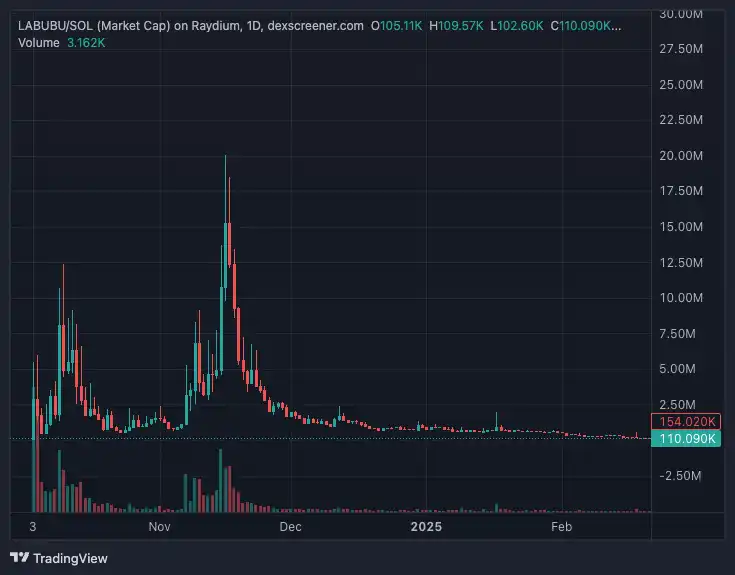
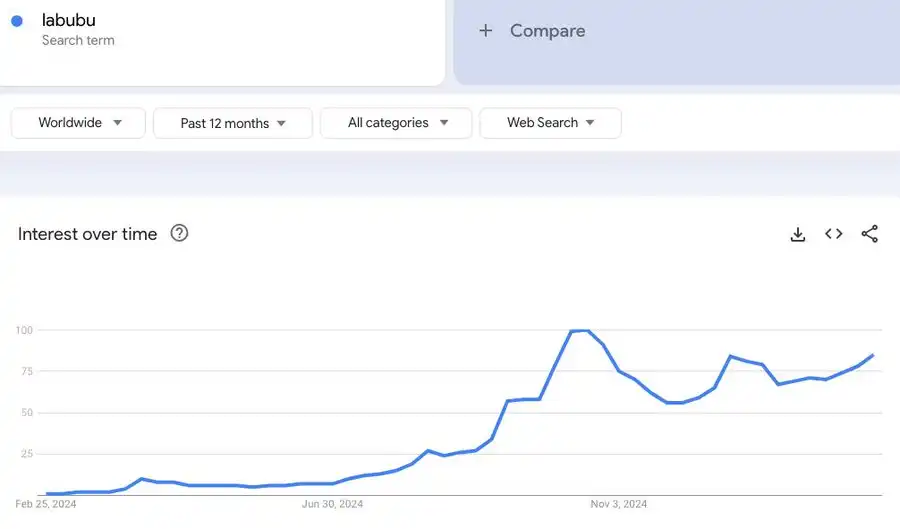
Imagine a world where people no longer need to create derivative businesses but can instead directly invest in and trade cultural trends, narratives, or attention cycles. For example, when Labubu goes viral, there is currently no effective way for the market to bet on its sustained popularity. Although there was a brief memecoin frenzy (LABUBU), its price action was hardly correlated with the actual trend—it was more influenced by the overall crypto market sentiment rather than pure mindshare.

InfoFi offers a new option: a more direct, more liquid mechanism that allows people to speculate directly on attention itself.
The Key to InfoFi's Development: The Role of Trusted Oracle

To truly make InfoFi a reliable market, there must be a trusted oracle data source to ensure that off-chain information is securely and immutably brought on-chain. As InfoFi transactions revolve around narratives, trends, and market sentiment, real-time data feeds become crucial.

Currently, oracle solutions such as UMA, Chainlink, Pyth, API3, and others have played a significant role in the DeFi market. These oracles provide off-chain data services to applications, enabling them to settle bets, verify market trends, and aggregate price data from multiple sources.

Challenges in Current Oracle Infrastructure

Despite the progress of decentralized oracles, there are still several challenges hindering the development of InfoFi:

1. Lack of Real-time Sentiment Analysis: Existing oracles mainly focus on price data or structured event outcomes, while InfoFi requires the ability to actively track and quantify social sentiment, interaction trends, and viral data propagation in real time.

2. Verifiability and Subjectivity Issues: Unlike price data, sentiment analysis involves subjective judgments. How can data be ensured to be objective, fair, and resistant to manipulation?

3. Scalability of Data Flows: Current oracles rely on limited verification data sources, while InfoFi requires large-scale data aggregation, including news, social media, prediction markets, forums, etc., to provide accurate insights.

4. Data Source Manipulation Risk: InfoFi relies on speculative narratives, so malicious manipulation (such as bot farms, fake interactions) may affect market trends. Oracles must be able to detect and filter out such anomalous data.

5. Economic Incentives for Data Providers: Who will verify the reliability of the data provided by oracles? Mechanisms such as staking, penalties, reputation scores, etc., must be robust enough to ensure that data providers report honestly.

The next generation of InfoFi oracles will rely on AI data aggregation, incentive-aligned reputation mechanisms, and real-time trend verification to ensure that narrative-based financial products have security, scalability, and resistance to manipulation.

Market Expansion of InfoFi: From Prediction Markets to Digital Sentiment Trading

Prediction markets have long been the prototype of InfoFi, allowing speculators to bet on real-world events based on informational advantages.

Platforms like Polymarket, Kalshi, Augur, and others have demonstrated this potential, but overall adoption remains niche.

Data markets have seen similar attempts. Back during the 2017 ICO frenzy, some tried to commodify and trade data, but due to unclear value propositions and inefficient tokenomics, these efforts failed to materialize.

InfoFi is a more mature and scalable version of these concepts. It goes beyond mere betting or data trading, transforming "mindshare" into a tradable asset class.

Possible InfoFi markets include:

· Narrative ETF: Tokenized baskets tracking popular trends (e.g., "AI Hot Topics Index," "Metaverse Attention Index")

· Influencer Financial Instruments: Income-sharing tokens for content creators, allowing fans to speculate on their future influence

· MemeCoin Derivatives: A more refined cultural speculation method, no longer limited to the traditional cryptocurrency model

· Tokenized Media Channels: Ownership of content platforms fragmented and tradeable, earning revenue based on a subscription model

The real question is: What kind of application will become the "killer app" of InfoFi? Will it emerge as a standalone track, or merely as a niche market within DeFi?

Key Takeaways

InfoFi has disrupted the notion that "information is free": It argues that attention, narrative, and data are assets with intrinsic value that can be traded, speculated on, and financialized through structured financial tools.

· InfoFi is the inevitable evolution of the attention economy: As mental real estate increasingly determines financial outcomes, the market will develop ways to directly capture and monetize attention cycles.

· InfoFi has opened up new financial markets: It is no longer about converting attention into commercial products but directly speculating on cultural trends, influencer growth, and trend changes.

· The key to InfoFi's success lies in Product-Market Fit (PMF): To become a true financial paradigm rather than just another DeFi gimmick, InfoFi needs to build a high-liquidity, scalable, and compelling trading mechanism.

Future Outlook

InfoFi is still in its early stages, but the financialization of attention has become an inevitable trend. Whether through prediction markets, influencer financial products, or trend trading through tokenization, the core of the next wave of financial innovation will be in effectively measuring and trading digital mindshare.

Original Article Link

You may also like

Token Cannot Compound, Where Is the Real Investment Opportunity?

The next chapter in the crypto industry will undoubtedly be written by Crypto-empowered Stocks.

February 6th Market Key Intelligence, How Much Did You Miss?

1. On-chain Flows: $508.2M USD inflow to Ethereum today; $390.8M USD outflow from Arbitrum 2. Biggest Gainers/Losers: $HBTC, $AIO 3. Top News: Current Bitcoin weekly RSI oversold signal comparable to June 2022

China's Central Bank and Eight Other Departments' Latest Regulatory Focus: Key Attention to RWA Tokenized Asset Risk


Foreword: Today, the People's Bank of China's website published the "Notice of the People's Bank of China, National Development and Reform Commission, Ministry of Industry and Information Technology, Ministry of Public Security, State Administration for Market Regulation, China Banking and Insurance Regulatory Commission, China Securities Regulatory Commission, State Administration of Foreign Exchange on Further Preventing and Dealing with Risks Related to Virtual Currency and Others (Yinfa [2026] No. 42)", the latest regulatory requirements from the eight departments including the central bank, which are basically consistent with the regulatory requirements of recent years. The main focus of the regulation is on speculative activities such as virtual currency trading, exchanges, ICOs, overseas platform services, and this time, regulatory oversight of RWA has been added, explicitly prohibiting RWA tokenization, stablecoins (especially those pegged to the RMB). The following is the full text:


To the people's governments of all provinces, autonomous regions, and municipalities directly under the Central Government, the Xinjiang Production and Construction Corps:


  Recently, there have been speculative activities related to virtual currency and Real-World Assets (RWA) tokenization, disrupting the economic and financial order and jeopardizing the property security of the people. In order to further prevent and address the risks related to virtual currency and Real-World Assets tokenization, effectively safeguard national security and social stability, in accordance with the "Law of the People's Republic of China on the People's Bank of China," "Law of the People's Republic of China on Commercial Banks," "Securities Law of the People's Republic of China," "Law of the People's Republic of China on Securities Investment Funds," "Law of the People's Republic of China on Futures and Derivatives," "Cybersecurity Law of the People's Republic of China," "Regulations of the People's Republic of China on the Administration of Renminbi," "Regulations on Prevention and Disposal of Illegal Fundraising," "Regulations of the People's Republic of China on Foreign Exchange Administration," "Telecommunications Regulations of the People's Republic of China," and other provisions, after reaching consensus with the Cyberspace Administration of China, the Supreme People's Court, and the Supreme People's Procuratorate, and with the approval of the State Council, the relevant matters are notified as follows:


  I. Clarify the essential attributes of virtual currency, Real-World Assets tokenization, and related business activities


  (I) Virtual currency does not possess the legal status equivalent to fiat currency. Virtual currencies such as Bitcoin, Ether, Tether, etc., have the main characteristics of being issued by non-monetary authorities, using encryption technology and distributed ledger or similar technology, existing in digital form, etc. They do not have legal tender status, should not and cannot be circulated and used as currency in the market.


  The business activities related to virtual currency are classified as illegal financial activities. The exchange of fiat currency and virtual currency within the territory, exchange of virtual currencies, acting as a central counterparty in buying and selling virtual currencies, providing information intermediary and pricing services for virtual currency transactions, token issuance financing, and trading of virtual currency-related financial products, etc., fall under illegal financial activities, such as suspected illegal issuance of token vouchers, unauthorized public issuance of securities, illegal operation of securities and futures business, illegal fundraising, etc., are strictly prohibited across the board and resolutely banned in accordance with the law. Overseas entities and individuals are not allowed to provide virtual currency-related services to domestic entities in any form.


  A stablecoin pegged to a fiat currency indirectly fulfills some functions of the fiat currency in circulation. Without the consent of relevant authorities in accordance with the law and regulations, any domestic or foreign entity or individual is not allowed to issue a RMB-pegged stablecoin overseas.


(II)Tokenization of Real-World Assets refers to the use of encryption technology and distributed ledger or similar technologies to transform ownership rights, income rights, etc., of assets into tokens (tokens) or other interests or bond certificates with token (token) characteristics, and carry out issuance and trading activities.


  Engaging in the tokenization of real-world assets domestically, as well as providing related intermediary, information technology services, etc., which are suspected of illegal issuance of token vouchers, unauthorized public offering of securities, illegal operation of securities and futures business, illegal fundraising, and other illegal financial activities, shall be prohibited; except for relevant business activities carried out with the approval of the competent authorities in accordance with the law and regulations and relying on specific financial infrastructures. Overseas entities and individuals are not allowed to illegally provide services related to the tokenization of real-world assets to domestic entities in any form.


  II. Sound Work Mechanism


  (III) Inter-agency Coordination. The People's Bank of China, together with the National Development and Reform Commission, the Ministry of Industry and Information Technology, the Ministry of Public Security, the State Administration for Market Regulation, the China Banking and Insurance Regulatory Commission, the China Securities Regulatory Commission, the State Administration of Foreign Exchange, and other departments, will improve the work mechanism, strengthen coordination with the Cyberspace Administration of China, the Supreme People's Court, and the Supreme People's Procuratorate, coordinate efforts, and overall guide regions to carry out risk prevention and disposal of virtual currency-related illegal financial activities.


  The China Securities Regulatory Commission, together with the National Development and Reform Commission, the Ministry of Industry and Information Technology, the Ministry of Public Security, the People's Bank of China, the State Administration for Market Regulation, the China Banking and Insurance Regulatory Commission, the State Administration of Foreign Exchange, and other departments, will improve the work mechanism, strengthen coordination with the Cyberspace Administration of China, the Supreme People's Court, and the Supreme People's Procuratorate, coordinate efforts, and overall guide regions to carry out risk prevention and disposal of illegal financial activities related to the tokenization of real-world assets.


  (IV) Strengthening Local Implementation. The people's governments at the provincial level are overall responsible for the prevention and disposal of risks related to virtual currencies and the tokenization of real-world assets in their respective administrative regions. The specific leading department is the local financial regulatory department, with participation from branches and dispatched institutions of the State Council's financial regulatory department, telecommunications regulators, public security, market supervision, and other departments, in coordination with cyberspace departments, courts, and procuratorates, to improve the normalization of the work mechanism, effectively connect with the relevant work mechanisms of central departments, form a cooperative and coordinated working pattern between central and local governments, effectively prevent and properly handle risks related to virtual currencies and the tokenization of real-world assets, and maintain economic and financial order and social stability.


  III. Strengthened Risk Monitoring, Prevention, and Disposal


  (5) Enhanced Risk Monitoring. The People's Bank of China, China Securities Regulatory Commission, National Development and Reform Commission, Ministry of Industry and Information Technology, Ministry of Public Security, State Administration of Foreign Exchange, Cyberspace Administration of China, and other departments continue to improve monitoring techniques and system support, enhance cross-departmental data analysis and sharing, establish sound information sharing and cross-validation mechanisms, promptly grasp the risk situation of activities related to virtual currency and real-world asset tokenization. Local governments at all levels give full play to the role of local monitoring and early warning mechanisms. Local financial regulatory authorities, together with branches and agencies of the State Council's financial regulatory authorities, as well as departments of cyberspace and public security, ensure effective connection between online monitoring, offline investigation, and fund tracking, efficiently and accurately identify activities related to virtual currency and real-world asset tokenization, promptly share risk information, improve early warning information dissemination, verification, and rapid response mechanisms.


  (6) Strengthened Oversight of Financial Institutions, Intermediaries, and Technology Service Providers. Financial institutions (including non-bank payment institutions) are prohibited from providing account opening, fund transfer, and clearing services for virtual currency-related business activities, issuing and selling financial products related to virtual currency, including virtual currency and related financial products in the scope of collateral, conducting insurance business related to virtual currency, or including virtual currency in the scope of insurance liability. Financial institutions (including non-bank payment institutions) are prohibited from providing custody, clearing, and settlement services for unauthorized real-world asset tokenization-related business and related financial products. Relevant intermediary institutions and information technology service providers are prohibited from providing intermediary, technical, or other services for unauthorized real-world asset tokenization-related businesses and related financial products.


  (7) Enhanced Management of Internet Information Content and Access. Internet enterprises are prohibited from providing online business venues, commercial displays, marketing, advertising, or paid traffic diversion services for virtual currency and real-world asset tokenization-related business activities. Upon discovering clues of illegal activities, they should promptly report to relevant departments and provide technical support and assistance for related investigations and inquiries. Based on the clues transferred by the financial regulatory authorities, the cyberspace administration, telecommunications authorities, and public security departments should promptly close and deal with websites, mobile applications (including mini-programs), and public accounts engaged in virtual currency and real-world asset tokenization-related business activities in accordance with the law.


  (8) Strengthened Entity Registration and Advertisement Management. Market supervision departments strengthen entity registration and management, and enterprise and individual business registrations must not contain terms such as "virtual currency," "virtual asset," "cryptocurrency," "crypto asset," "stablecoin," "real-world asset tokenization," or "RWA" in their names or business scopes. Market supervision departments, together with financial regulatory authorities, legally enhance the supervision of advertisements related to virtual currency and real-world asset tokenization, promptly investigating and handling relevant illegal advertisements.


  (IX) Continued Rectification of Virtual Currency Mining Activities. The National Development and Reform Commission, together with relevant departments, strictly controls virtual currency mining activities, continuously promotes the rectification of virtual currency mining activities. The people's governments of various provinces take overall responsibility for the rectification of "mining" within their respective administrative regions. In accordance with the requirements of the National Development and Reform Commission and other departments in the "Notice on the Rectification of Virtual Currency Mining Activities" (NDRC Energy-saving Building [2021] No. 1283) and the provisions of the "Guidance Catalog for Industrial Structure Adjustment (2024 Edition)," a comprehensive review, investigation, and closure of existing virtual currency mining projects are conducted, new mining projects are strictly prohibited, and mining machine production enterprises are strictly prohibited from providing mining machine sales and other services within the country.


  (X) Severe Crackdown on Related Illegal Financial Activities. Upon discovering clues to illegal financial activities related to virtual currency and the tokenization of real-world assets, local financial regulatory authorities, branches of the State Council's financial regulatory authorities, and other relevant departments promptly investigate, determine, and properly handle the issues in accordance with the law, and seriously hold the relevant entities and individuals legally responsible. Those suspected of crimes are transferred to the judicial authorities for processing according to the law.


 (XI) Severe Crackdown on Related Illegal and Criminal Activities. The Ministry of Public Security, the People's Bank of China, the State Administration for Market Regulation, the China Banking and Insurance Regulatory Commission, the China Securities Regulatory Commission, as well as judicial and procuratorial organs, in accordance with their respective responsibilities, rigorously crack down on illegal and criminal activities related to virtual currency, the tokenization of real-world assets, such as fraud, money laundering, illegal business operations, pyramid schemes, illegal fundraising, and other illegal and criminal activities carried out under the guise of virtual currency, the tokenization of real-world assets, etc.


  (XII) Strengthen Industry Self-discipline. Relevant industry associations should enhance membership management and policy advocacy, based on their own responsibilities, advocate and urge member units to resist illegal financial activities related to virtual currency and the tokenization of real-world assets. Member units that violate regulatory policies and industry self-discipline rules are to be disciplined in accordance with relevant self-regulatory management regulations. By leveraging various industry infrastructure, conduct risk monitoring related to virtual currency, the tokenization of real-world assets, and promptly transfer issue clues to relevant departments.


  IV. Strict Supervision of Domestic Entities Engaging in Overseas Business Activities


(XIII) Without the approval of relevant departments in accordance with the law and regulations, domestic entities and foreign entities controlled by them may not issue virtual currency overseas.


  (XIV) Domestic entities engaging directly or indirectly in overseas external debt-based tokenization of real-world assets, or conducting asset securitization activities abroad based on domestic ownership rights, income rights, etc. (hereinafter referred to as domestic equity), should be strictly regulated in accordance with the principles of "same business, same risk, same rules." The National Development and Reform Commission, the China Securities Regulatory Commission, the State Administration of Foreign Exchange, and other relevant departments regulate it according to their respective responsibilities. For other forms of overseas real-world asset tokenization activities based on domestic equity by domestic entities, the China Securities Regulatory Commission, together with relevant departments, supervise according to their division of responsibilities. Without the consent and filing of relevant departments, no unit or individual may engage in the above-mentioned business.


  (15) Overseas subsidiaries and branches of domestic financial institutions providing Real World Asset Tokenization-related services overseas shall do so legally and prudently. They shall have professional personnel and systems in place to effectively mitigate business risks, strictly implement customer onboarding, suitability management, anti-money laundering requirements, and incorporate them into the domestic financial institutions' compliance and risk management system. Intermediaries and information technology service providers offering Real World Asset Tokenization services abroad based on domestic equity or conducting Real World Asset Tokenization business in the form of overseas debt for domestic entities directly or indirectly venturing abroad must strictly comply with relevant laws and regulations. They should establish and improve relevant compliance and internal control systems in accordance with relevant normative requirements, strengthen business and risk control, and report the business developments to the relevant regulatory authorities for approval or filing.


  V. Strengthen Organizational Implementation


  (16) Strengthen organizational leadership and overall coordination. All departments and regions should attach great importance to the prevention of risks related to virtual currencies and Real World Asset Tokenization, strengthen organizational leadership, clarify work responsibilities, form a long-term effective working mechanism with centralized coordination, local implementation, and shared responsibilities, maintain high pressure, dynamically monitor risks, effectively prevent and mitigate risks in an orderly and efficient manner, legally protect the property security of the people, and make every effort to maintain economic and financial order and social stability.


  (17) Widely carry out publicity and education. All departments, regions, and industry associations should make full use of various media and other communication channels to disseminate information through legal and policy interpretation, analysis of typical cases, and education on investment risks, etc. They should promote the illegality and harm of virtual currencies and Real World Asset Tokenization-related businesses and their manifestations, fully alert to potential risks and hidden dangers, and enhance public awareness and identification capabilities for risk prevention.


  VI. Legal Responsibility


  (18) Engaging in illegal financial activities related to virtual currencies and Real World Asset Tokenization in violation of this notice, as well as providing services for virtual currencies and Real World Asset Tokenization-related businesses, shall be punished in accordance with relevant regulations. If it constitutes a crime, criminal liability shall be pursued according to the law. For domestic entities and individuals who knowingly or should have known that overseas entities illegally provided virtual currency or Real World Asset Tokenization-related services to domestic entities and still assisted them, relevant responsibilities shall be pursued according to the law. If it constitutes a crime, criminal liability shall be pursued according to the law.


  (19) If any unit or individual invests in virtual currencies, Real World Asset Tokens, and related financial products against public order and good customs, the relevant civil legal actions shall be invalid, and any resulting losses shall be borne by them. If there are suspicions of disrupting financial order and jeopardizing financial security, the relevant departments shall deal with them according to the law.


  This notice shall enter into force upon the date of its issuance. The People's Bank of China and ten other departments' "Notice on Further Preventing and Dealing with the Risks of Virtual Currency Trading Speculation" (Yinfa [2021] No. 237) is hereby repealed.


Former Partner's Perspective on Multicoin: Kyle's Exit, But the Game He Left Behind Just Getting Started

Kyle knew his game, so he decided to focus on playing the game he was good at and interested in.

Why Bitcoin Is Falling Now: The Real Reasons Behind BTC's Crash & WEEX's Smart Profit Playbook

Bitcoin's ongoing crash explained: Discover the 5 hidden triggers behind BTC's plunge & how WEEX's Auto Earn and Trade to Earn strategies help traders profit from crypto market volatility.

Wall Street's Hottest Trades See Exodus

This time there is no single triggering factor, but rather market anxiety about asset valuation, with many already skeptical of these valuations being too high, leading to investors choosing to retreat almost simultaneously.

Popular coins

Latest Crypto News

Read more