
Bloomberg: Aid Turkey Freeze $1 Billion Assets, Tether Remakes Compliance Boundary

Original Article Title: Crypto Giant Tether Aided Turkey in Billion Dollar Crackdown
Original Article Authors: Ryan Weeks, Todd Gillespie, Taylan Bilgic, Bloomberg
Original Article Translation: Luffy, Foresight News
On January 30, Turkish authorities announced the freezing of assets worth over $500 million belonging to Veysel Sahin, who is accused of operating an illegal gambling platform and money laundering. The Istanbul Chief Prosecutor revealed that an unnamed cryptocurrency company carried out this freezing operation at the request of the Turkish government.
This company is none other than Tether Holdings SA, the issuer of the $185 billion market cap stablecoin USDT. Recently, the company has actively assisted various governments worldwide in cracking down on various cryptocurrency-related criminal activities, including money laundering, drug trafficking, and sanctions evasion.
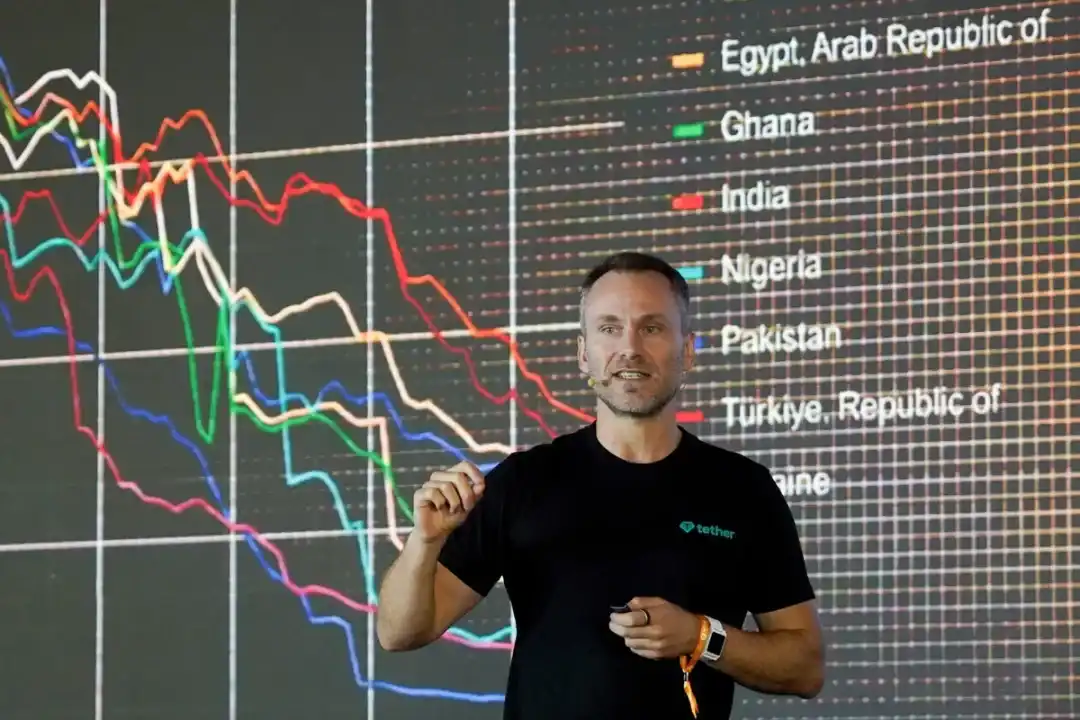
Tether CEO Paolo Ardoino stated in a recent interview with Bloomberg News, "Law enforcement reached out to us, provided relevant information, and after we verified the information, we took action in accordance with the laws of the relevant jurisdiction. We follow this process when cooperating with U.S. Department of Justice, FBI, and other agencies."
Tether did not provide further comment on the case. Bloomberg's attempts to contact Sahin were unsuccessful. A Turkish official also refused to disclose the name of the company mentioned in the prosecutor's statement.
The €460 million (approximately $544 million) in assets frozen in this operation is part of a large-scale law enforcement action in Turkey, where the total frozen assets related to the case now exceed $1 billion. According to Turkish TV channel NTV, a few days after the announcement of Sahin's asset freeze, another individual is under investigation for alleged money laundering and illegal gambling, with $500 million worth of cryptocurrency assets under their name also frozen. It is currently unclear whether this asset freeze involves tokens issued by Tether.
A Turkish official, who spoke on condition of anonymity to Bloomberg regarding sensitive legal matters, revealed that authorities, by tracing fund flows and analyzing cryptocurrency assets, discovered the "financial traces" of this suspected illicit income. They further stated that similar asset freeze actions will be taken in the future against individuals involved in illegal gambling and payment systems.
For Tether, this freezing action is just one of its increasingly frequent fund freezing operations, highlighting the cryptocurrency giant's ongoing efforts to enhance collaboration with global law enforcement agencies.
A report released by the analytics firm Elliptic in January showed that by the end of 2025, Tether and its competitor Circle Internet Group Inc. had blacklisted approximately 5700 wallets, involving around $25 billion in assets, a stark contrast to almost none two years ago. At the time of freezing, three-quarters of these wallets held USDT.
Arda Akartuna, Head of Cryptocurrency Threat Intelligence for the Asia-Pacific region at Elliptic, stated, "As legitimate cryptocurrency use and global payment integration accelerate, illicit activities are also on the rise, prompting stablecoin issuers to more actively intervene."
Tether often touts its efforts to combat criminal activities, including in its communications to attract potential investors, as the company seeks to raise funding at a valuation of up to $500 billion. According to its official website, Tether has assisted law enforcement agencies in 62 countries in handling over 1800 cases, freezing $3.4 billion worth of USDT associated with suspected illegal activities.
Nathan McCauley, Co-founder and CEO of Tether's partner Anchorage Digital Bank, said in an interview, "Their (Tether's) cooperative attitude is extremely positive, and among stablecoin issuers, the company has the 'best-known reputation' within law enforcement agencies."
Anchorage is the issuer of Tether's compliant USD stablecoin USAT, which was launched in late January, marking Tether's return to the U.S. market.
This represents a significant shift compared to a few years ago when Tether had a tense relationship with U.S. regulatory agencies. After a conflict with regulators in 2018, Tether largely exited the U.S. market and reached a $41 million settlement in 2021 over allegations of misrepresenting its reserve holdings.
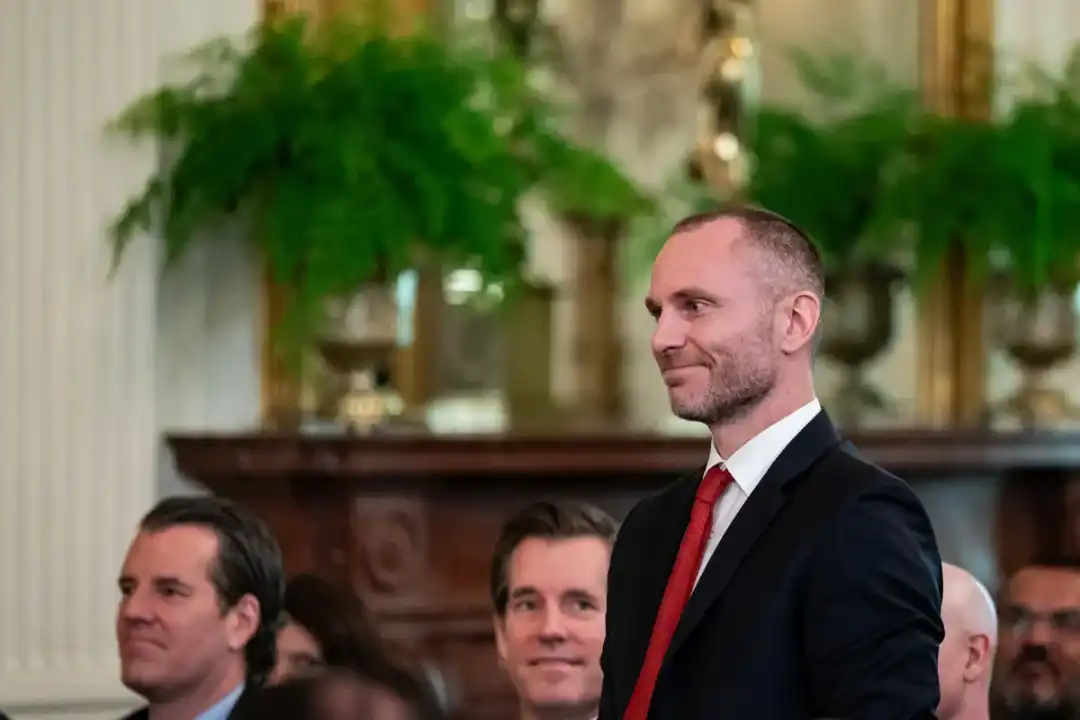
However, the second Trump administration welcomed the cryptocurrency industry. Last year, Ardoino, along with several other executives, attended the signing ceremony where President Trump signed a stablecoin regulation bill.
Nevertheless, Tether's USDT continues to face regulatory scrutiny due to its widespread use by criminal elements.
On January 9, the U.S. Eastern District Federal Prosecutor's Office announced charges against a Venezuelan citizen for laundering $1 billion using USDT. A recent report by Elliptic revealed that the Central Bank of Iran had purchased over $500 million worth of USDT to alleviate a currency crisis and circumvent U.S. sanctions.
Turkish fugitive Sahin has been accused of leading an organization that laundered money for an illegal online gambling platform. According to local media, Sahin was sentenced to 10 years in prison in 2017, released in 2023, then sentenced to another 21 years a month later. Currently, his whereabouts are unknown, but Turkey's state-run news agency Anadolu Agency reported on January 30 that "relevant authorities are advancing the legal process to extradite him to Turkey."
You may also like
Raising interest rates to protect STRC and selling coins to maintain credit, this time the strategy has chosen the two most expensive paths
Why Is Bitcoin Lagging Stocks in 2026? AI Stocks, ETF Outflows, and the Nasdaq Rally Explained
Morning Report | Samsung announces a 265.5 trillion won investment plan, focusing on semiconductor and AI computing power data centers; Vitalik publishes an article detailing the entire technology tree behind the confusion protocol (iO) mainline
What you bought on CEX is really not US stocks: Analyzing the 94% liquidation monopoly and the evaporation of equity under a five-layer pipeline
In such a crowded cross-border payment arena, where is the next stop for the future?
Why Is Bitcoin Down in 2026? What We Can Learn From 2022
The large models in the United States are moving towards closure in the name of security
From the white-haired stock god to the billionaire fund mogul, the smart people shorting Nvidia are all getting rich using the same framework
Morning Report | CoinEx becomes a key hub for Iran to evade sanctions, involving over $3.8 billion in funds; Kalshi seeks a new round of financing, with a valuation potentially rising to $40 billion
Global Launch: As predictions become the most scarce asset in the AI era, Manadia is defining the next generation of the value internet
Why do cryptocurrency projects always like to change their names?
Who is footing the bill for the $64 billion accounting frenzy?
I never expected that the first application of AI x Crypto would be in security auditing
What is your view on Binance's competitive advantages?
ETH has entered a non-consensus phase, and the turning point is approaching!
The shift in the cloud of the air: from despising stablecoins a year ago to the high-profile entry of capital today
The survival dilemma of small and medium exchanges behind the withdrawal anomalies exposed by AscendEX
Why Is Bitcoin Falling Below $60K? 5 Key Market Drivers Explained
Bitcoin has dropped sharply amid ETF outflows, Strategy stock weakness, AI stock rallies, and changing Fed expectations. Explore the key forces driving BTC’s latest correction and what traders should watch next.
Raising interest rates to protect STRC and selling coins to maintain credit, this time the strategy has chosen the two most expensive paths
Why Is Bitcoin Lagging Stocks in 2026? AI Stocks, ETF Outflows, and the Nasdaq Rally Explained
Morning Report | Samsung announces a 265.5 trillion won investment plan, focusing on semiconductor and AI computing power data centers; Vitalik publishes an article detailing the entire technology tree behind the confusion protocol (iO) mainline
What you bought on CEX is really not US stocks: Analyzing the 94% liquidation monopoly and the evaporation of equity under a five-layer pipeline
In such a crowded cross-border payment arena, where is the next stop for the future?
Why Is Bitcoin Down in 2026? What We Can Learn From 2022

Popular coins
Latest Crypto News


