
Crypto Billionaire's Space Dream: Investing $1 Billion to Build Commercial Space Station

By: blockbeats|2025/03/22 09:15:02
0
Share
copy
Original Article Title: A Crypto Billionaire's Gamble to Replace the International Space Station
Original Article Authors: Kiel Porter, Loren Grush, Bloomberg Businessweek
Original Article Translation: Luffy, Foresight News

Jed McCaleb, who has amassed wealth in the cryptocurrency field, is now prepared to invest a significant portion of it in his space dream.

The infamous founder of the Bitcoin exchange Mt. Gox and the cryptocurrency XRP, now a billionaire, is single-handedly funding an ambitious plan: to build the world's first commercial space station and send it into orbit.

If successful, his startup company, Vast Space LLC, could win a contract from NASA next year worth potentially billions of dollars to replace the International Space Station. McCaleb has stated that if the endeavor fails, he is prepared to absorb a $1 billion loss. By the end of 2023, McCaleb, through two foundations, controls assets worth billions of dollars, with $3.3 billion of the foundation's assets originating from his personal donations.

"For humanity to live beyond Earth, this step is crucial," said the 50-year-old McCaleb at his company's headquarters in Long Beach, California. "Not many people are willing to commit as many resources, time, and tolerate risks as I am."

Since then, he has hired an industry veteran as CEO, and SpaceX has been providing partial technical support to Vast. Meanwhile, Elon Musk is urging the U.S. to expedite the International Space Station's retirement schedule (currently planned for the end of 2030). Established in 2021, Vast's spacecraft incorporates some components developed by SpaceX, particularly the docking adapter for connecting SpaceX's Dragon spacecraft to the Vast space station and a space-based internet system through Starlink to provide Wi-Fi for the station. Vast has already booked SpaceX's launch services to send its hardware into orbit and transport astronauts to the space station, with SpaceX agreeing to ferry astronauts for Vast pending NASA approval.

However, the task remains formidable, and from McCaleb's background, it is hard to see him as the person capable of pulling it off. The Arkansas farm boy and UC Berkeley dropout has no aerospace industry experience. His career has been characterized by seizing early advantages in emerging technology fields, then pivoting timely before government regulation and other unfavorable factors disrupt the industry—a short-term mindset that seems to clash with the long-term focus required to win a high-stakes race to create a technological marvel.
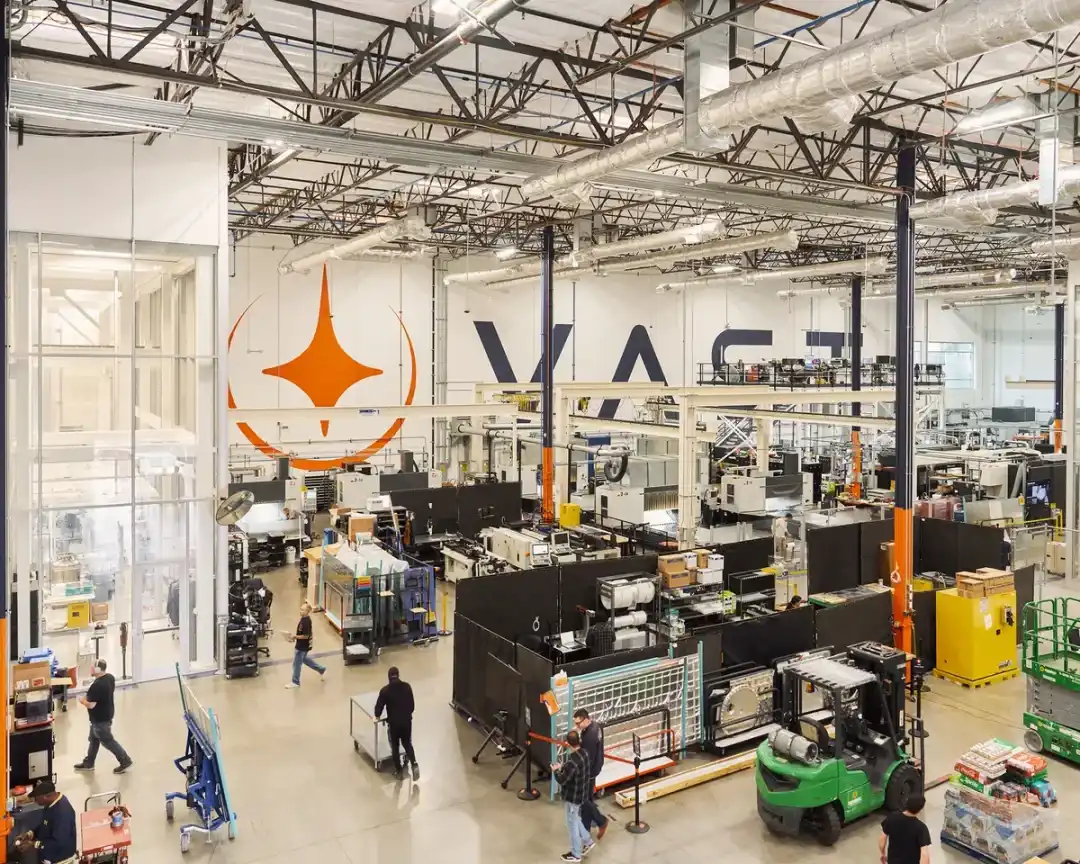
Crypto Billionaire's Space Dream: Investing src=

Headquartered in Long Beach, Vast, Source: Bloomberg Businessweek

Sam Yagan is a friend of McCaleb's, having co-founded an online file-sharing company with him over two decades ago. Yagan is now the Co-Founder and Managing Director of Corazon Capital, and he describes the entrepreneur as a thoughtful adventurer. "He's very rational about these things," Yagan says, "but he's willing to take what you and I would consider enormous risks, a bit of a maverick."

Many of Vast's employees are former SpaceX staff. The parking lot at the company's headquarters is filled with cars made by Musk's Tesla. One of the Cybertrucks belongs to Max Haot, who joined Vast in 2023 after McCaleb acquired his company. Haot then became Vast's CEO, prompting McCaleb (who drives a more standard Model 3) to fly in from his home in San Francisco once a week to oversee the project's progress.

Prior to the acquisition, Haot had not been focused on the space station sector. Instead, he had been trying to emulate Musk by founding another rocket launch startup called Launcher. The company received a $30 million investment, made progress in developing rocket engines and launch vehicles, but saw both satellites it built fail after reaching space. In 2022, Haot encountered McCaleb while seeking investors.

McCaleb proposed the acquisition and agreed that Haot would serve as Vast's president, eventually becoming the CEO. Haot initially resisted the deal but changed his mind when he realized Launcher was struggling to secure the needed funding.
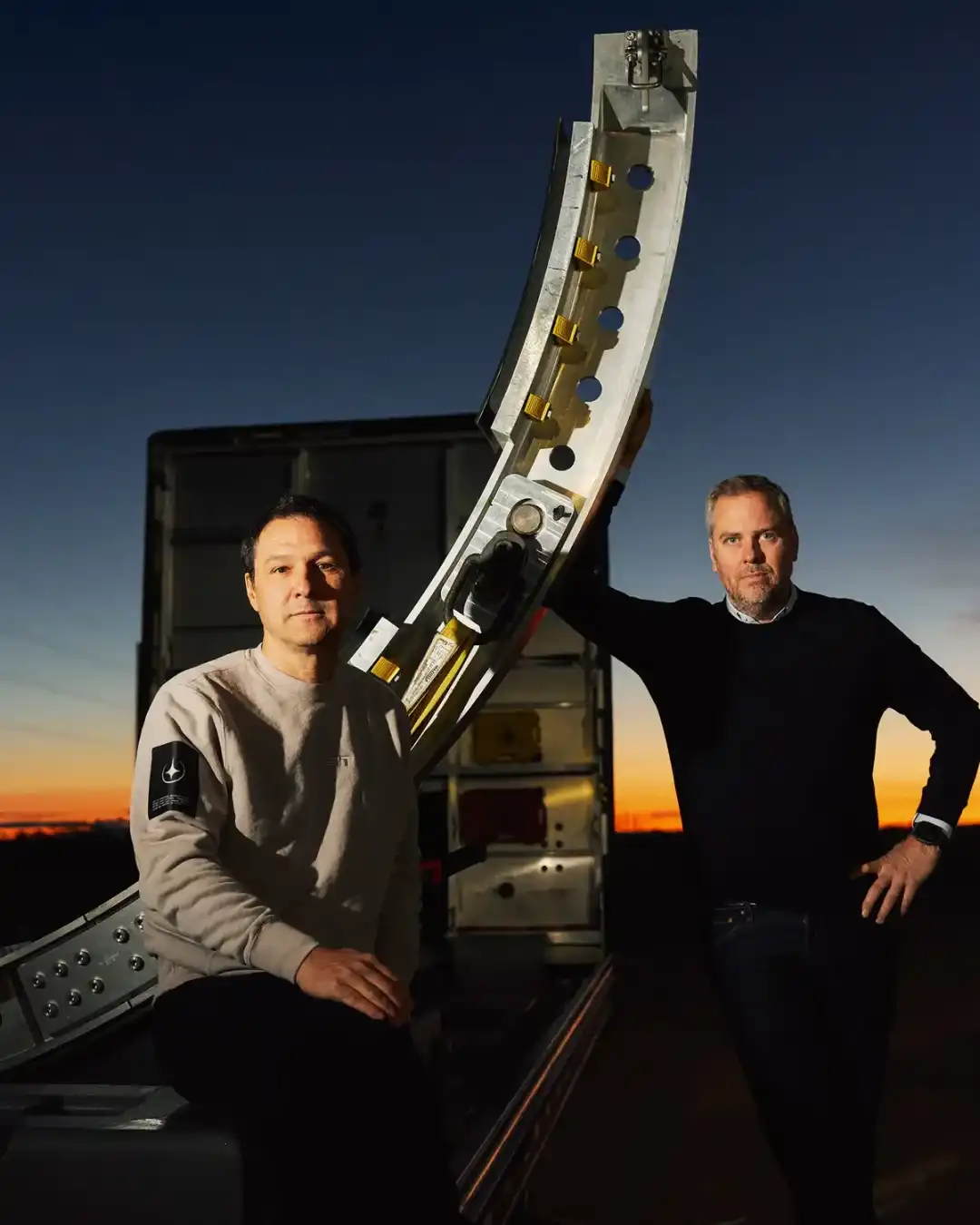
Vast Founder and Chairman Jed McCaleb with CEO Max Haot at the Mojave, California testing site, Source: Bloomberg Businessweek

Vast's grand vision is not only to build the first private space station but also to develop an artificial gravity system to simulate Earth's environment for future astronauts. This endeavor is highly complex, requiring the use of centrifugal force to set up large rotating habitat sections in space. The proposal is compelling as human experience on the International Space Station has shown that prolonged exposure to microgravity can harm various biological systems.

However, all of this is still far off. Currently, Vast needs to send its first space station into orbit. The company's workforce has grown rapidly from less than 200 people a year ago to 740 people, covering a wide range of talents from technical engineers to spacesuit manufacturers. Vast's headquarters operates 24 hours a day, with engineers and construction workers working in shifts, either expanding the Long Beach facilities or constructing Vast's first prototype space station, "Haven-1".

Space stations are a common element in popular culture, such as the Death Star in "Star Wars" and the eponymous space station in "Star Trek: Deep Space Nine". Since astronauts first boarded the experimental Skylab in 1973, space stations have been a significant part of U.S. space exploration. Decades later, following the end of the Cold War, NASA collaborated with countries like Russia to build the larger International Space Station. Since November 2000, there has always been at least one astronaut on the International Space Station, often conducting research on materials and human behavior in a microgravity environment.
A technician at Vast's headquarters, Source: Bloomberg Businessweek

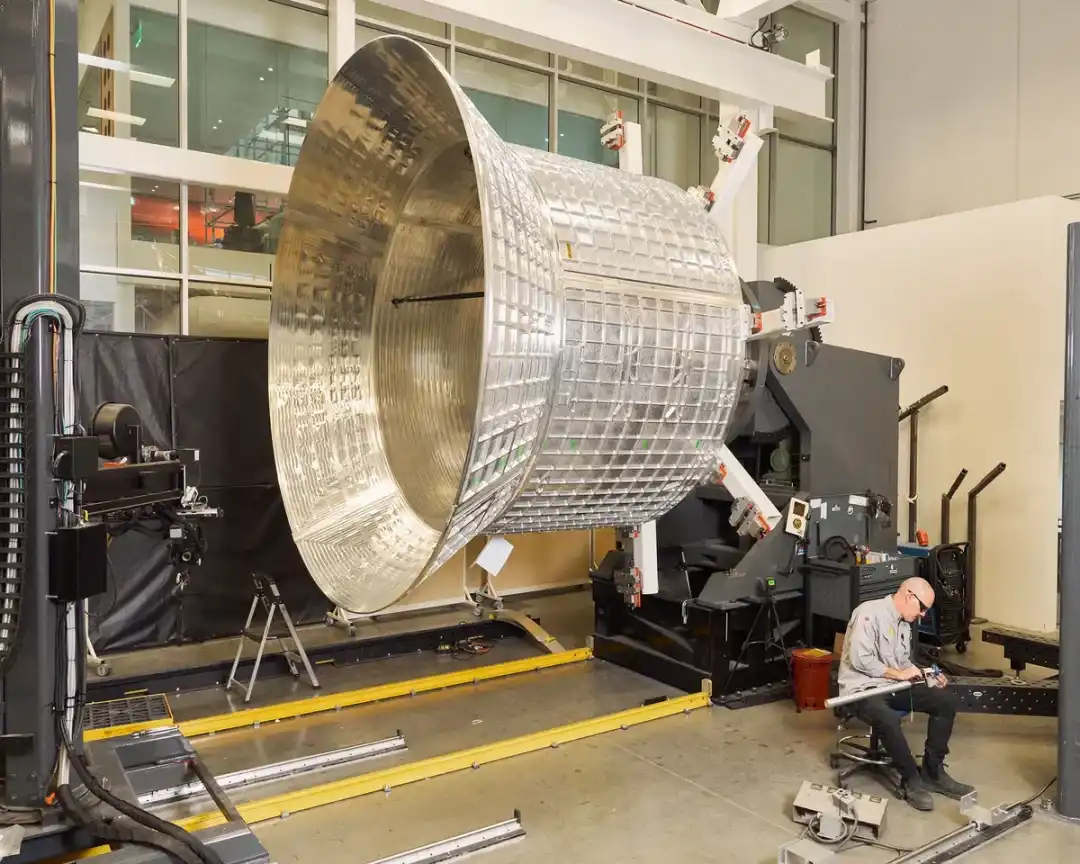
Haven-1 is approximately 33 feet high (about 10 meters) and 14.5 feet wide (about 4.4 meters), designed to snugly fit into the nose cone of a SpaceX Falcon 9 rocket. The livable space of this space station is about 1600 cubic feet (45 cubic meters), roughly double the size of a typical RV. It will be equipped with private sleeping pods, a large window, wood paneling, and a table for four.

At least, that's the goal. In January of this year, the company began building Haven-1, scheduled for launch in May 2026, a delay from the initial plan of this August. The company recently tested a prototype to confirm its structure could withstand internal pressure and is developing power systems, propulsion units, and other key components for manned missions. Its shell must endure the harsh environment and temperatures of space while maintaining the atmospheric pressure and gas composition humans are accustomed to on Earth.

"Right now, we are not yet a true space station company," Haot said. "We are an aspirational space station company."

The main structure of Haven-1 awaits further testing at Vast's Mojave base, Source: Bloomberg Businessweek

Assuming all goes well, after the launch of Haven-1, Vast will use a Falcon 9 rocket to send four astronauts into space to dock with the space station. If the first launch is successful, Vast plans to launch the first module of the Haven-2 space station by 2028. It will serve as a starting point for a larger base intended to replace NASA's International Space Station.

One of the biggest challenges will be to create an effective life support system. The International Space Station employs regenerative systems that recycle all wastewater into drinking water and convert carbon dioxide into breathable oxygen. Such a system is essential if passengers are to stay long term on the space station, but Haven-1 will not be equipped with one as the astronauts are expected to only have a short stay. Vast plans to eventually equip Haven-2 with such a system, but it is not expected to be continuously manned in the first few years.

Rival companies including Axiom Space, Blue Origin, and Voyager Space Holdings are also competing to build their own space stations, but one of Vast's advantages is McCaleb's willingness to invest heavily in the project. "Vast is the only major player relying on its own funds and ready to go," said Chad Anderson, founder and managing partner of Space Capital, an investment firm focused on the aerospace industry. "In this regard, they are an interesting choice." (Anderson has no financial ties to Vast but has invested in SpaceX.)

While these competitors have a background in aerospace and some launch contracts, they do not have such a close working relationship with SpaceX.
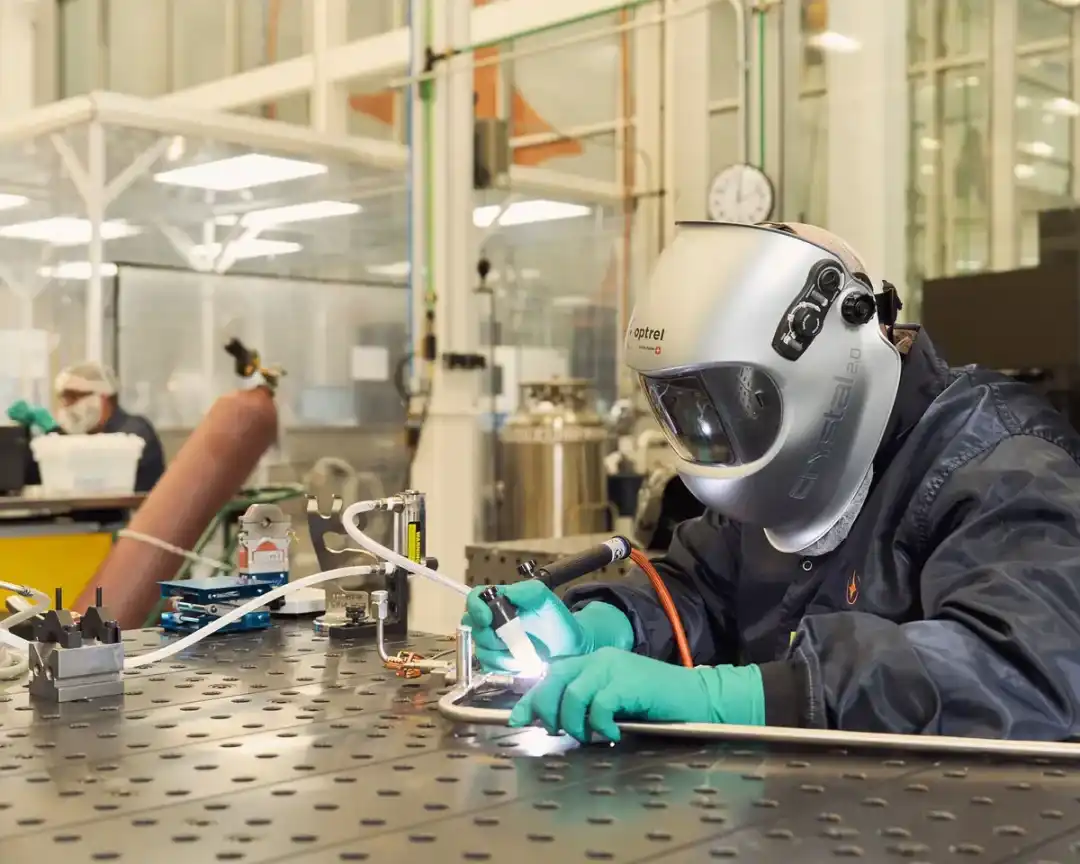
Engineers working on the life support system at Vast's headquarters clean room, Source: Bloomberg Businessweek

McCaleb is eager to downplay any personal connection, stating he has met Musk "a few times, he probably doesn't remember me," even though both have invested in OpenAI. Despite their differences in approach and demeanor, they have many similarities in interests and non-traditional paths to wealth: both dropped out of college (Musk dropped out later), founded software companies in emerging fields, and turned their passion for fantasy and games into financial success.

McCaleb's first project, eDonkey, was one of the earliest file-sharing services on the internet and a competitor to Napster. Founded in 2000, the company allowed users to share music and movies for free, bringing in millions of dollars in revenue annually through advertisements. In 2006, in order to avoid copyright infringement lawsuits, the company agreed to pay $30 million to the Recording Industry Association of America and subsequently shut down.

McCaleb's next success was Mt. Gox, one of the world's first Bitcoin exchanges. The website was founded by McCaleb in 2010, and a year later, he sold most of his stake at an undisclosed price. In February 2014, the exchange filed for bankruptcy, and users lost over $400 million worth of Bitcoin at the time, marking the largest cryptocurrency disaster in history until FTX's collapse in 2023. Despite still being a minority shareholder, McCaleb faced no sanctions and stated that he also suffered losses in this disaster.

At that time, McCaleb had already started his next venture: XRP, a cryptocurrency on the Ripple protocol, of which he was also a co-founder. McCaleb initially owned 9% of XRP. After disagreements with other co-founders, he left the company in 2013 but retained his XRP, gradually selling it off in the following years. According to XRPScan's analysis, during the cryptocurrency bull run at the end of 2017, XRP's value surged, eventually reaching a market capitalization of $130 billion in January 2018. Between 2014 and 2022, McCaleb netted approximately $3.2 billion by selling XRP and Ripple equity.

"He is one of the ten most important founders in the cryptocurrency space, although few really understand him," said Nic Carter, founding partner of Castle Island Ventures, a venture capital firm focused on public blockchains. "Interestingly, other key figures are mostly those flamboyant, high-profile, spendthrift types."

Despite his massive success, McCaleb's social circle is small, primarily collaborating with Yagan and other longtime partners. He has a house in the surfing haven of Costa Rica, a residence in Berkeley, and owns his private jet.

McCaleb has provided a stable source of investment for the notoriously volatile aerospace industry. In this field, once-promising startups often fold due to a lack of funding. While a former employee filed a lawsuit alleging that Vast attempted to cut corners, the company does not seem to have the same negative press as SpaceX. Its billionaire CEO spends most of his time at home with his wife and three kids rather than trying to take on the federal government.
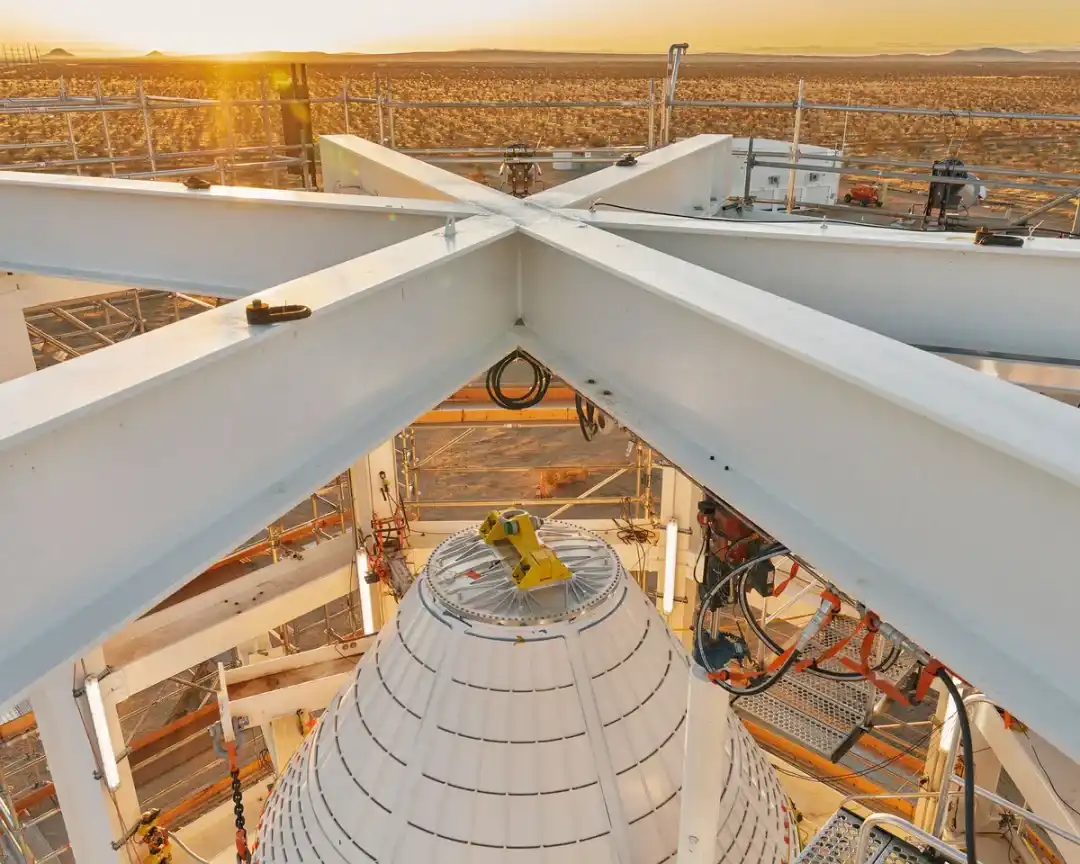
Haven-1 at Vast's testing facility, Source: Bloomberg Businessweek

If McCaleb's plan succeeds, Vast has already booked multiple crewed missions with SpaceX to send astronauts into orbit. McCaleb and Haot have both expressed their willingness to take these flights themselves. "As a kid, I spent a lot of time outdoors exploring, looking up at the sky in awe of its wonder," McCaleb said. However, all of this hinges on whether the company can secure the final contract for the NASA program aimed at launching a commercial space station project that could potentially replace the International Space Station. The plan comes with a soft guarantee that NASA will purchase time and space on any station that makes it to orbit. This contract is expected to be signed by mid-2026.

Haot said that without the NASA contract, the commercial viability of any space station is questionable. "Winning this competition is a matter of life and death for us."

Original Article Link

You may also like

Token Cannot Compound, Where Is the Real Investment Opportunity?

The next chapter in the crypto industry will undoubtedly be written by Crypto-empowered Stocks.

February 6th Market Key Intelligence, How Much Did You Miss?

1. On-chain Flows: $508.2M USD inflow to Ethereum today; $390.8M USD outflow from Arbitrum 2. Biggest Gainers/Losers: $HBTC, $AIO 3. Top News: Current Bitcoin weekly RSI oversold signal comparable to June 2022

China's Central Bank and Eight Other Departments' Latest Regulatory Focus: Key Attention to RWA Tokenized Asset Risk


Foreword: Today, the People's Bank of China's website published the "Notice of the People's Bank of China, National Development and Reform Commission, Ministry of Industry and Information Technology, Ministry of Public Security, State Administration for Market Regulation, China Banking and Insurance Regulatory Commission, China Securities Regulatory Commission, State Administration of Foreign Exchange on Further Preventing and Dealing with Risks Related to Virtual Currency and Others (Yinfa [2026] No. 42)", the latest regulatory requirements from the eight departments including the central bank, which are basically consistent with the regulatory requirements of recent years. The main focus of the regulation is on speculative activities such as virtual currency trading, exchanges, ICOs, overseas platform services, and this time, regulatory oversight of RWA has been added, explicitly prohibiting RWA tokenization, stablecoins (especially those pegged to the RMB). The following is the full text:


To the people's governments of all provinces, autonomous regions, and municipalities directly under the Central Government, the Xinjiang Production and Construction Corps:


  Recently, there have been speculative activities related to virtual currency and Real-World Assets (RWA) tokenization, disrupting the economic and financial order and jeopardizing the property security of the people. In order to further prevent and address the risks related to virtual currency and Real-World Assets tokenization, effectively safeguard national security and social stability, in accordance with the "Law of the People's Republic of China on the People's Bank of China," "Law of the People's Republic of China on Commercial Banks," "Securities Law of the People's Republic of China," "Law of the People's Republic of China on Securities Investment Funds," "Law of the People's Republic of China on Futures and Derivatives," "Cybersecurity Law of the People's Republic of China," "Regulations of the People's Republic of China on the Administration of Renminbi," "Regulations on Prevention and Disposal of Illegal Fundraising," "Regulations of the People's Republic of China on Foreign Exchange Administration," "Telecommunications Regulations of the People's Republic of China," and other provisions, after reaching consensus with the Cyberspace Administration of China, the Supreme People's Court, and the Supreme People's Procuratorate, and with the approval of the State Council, the relevant matters are notified as follows:


  I. Clarify the essential attributes of virtual currency, Real-World Assets tokenization, and related business activities


  (I) Virtual currency does not possess the legal status equivalent to fiat currency. Virtual currencies such as Bitcoin, Ether, Tether, etc., have the main characteristics of being issued by non-monetary authorities, using encryption technology and distributed ledger or similar technology, existing in digital form, etc. They do not have legal tender status, should not and cannot be circulated and used as currency in the market.


  The business activities related to virtual currency are classified as illegal financial activities. The exchange of fiat currency and virtual currency within the territory, exchange of virtual currencies, acting as a central counterparty in buying and selling virtual currencies, providing information intermediary and pricing services for virtual currency transactions, token issuance financing, and trading of virtual currency-related financial products, etc., fall under illegal financial activities, such as suspected illegal issuance of token vouchers, unauthorized public issuance of securities, illegal operation of securities and futures business, illegal fundraising, etc., are strictly prohibited across the board and resolutely banned in accordance with the law. Overseas entities and individuals are not allowed to provide virtual currency-related services to domestic entities in any form.


  A stablecoin pegged to a fiat currency indirectly fulfills some functions of the fiat currency in circulation. Without the consent of relevant authorities in accordance with the law and regulations, any domestic or foreign entity or individual is not allowed to issue a RMB-pegged stablecoin overseas.


(II)Tokenization of Real-World Assets refers to the use of encryption technology and distributed ledger or similar technologies to transform ownership rights, income rights, etc., of assets into tokens (tokens) or other interests or bond certificates with token (token) characteristics, and carry out issuance and trading activities.


  Engaging in the tokenization of real-world assets domestically, as well as providing related intermediary, information technology services, etc., which are suspected of illegal issuance of token vouchers, unauthorized public offering of securities, illegal operation of securities and futures business, illegal fundraising, and other illegal financial activities, shall be prohibited; except for relevant business activities carried out with the approval of the competent authorities in accordance with the law and regulations and relying on specific financial infrastructures. Overseas entities and individuals are not allowed to illegally provide services related to the tokenization of real-world assets to domestic entities in any form.


  II. Sound Work Mechanism


  (III) Inter-agency Coordination. The People's Bank of China, together with the National Development and Reform Commission, the Ministry of Industry and Information Technology, the Ministry of Public Security, the State Administration for Market Regulation, the China Banking and Insurance Regulatory Commission, the China Securities Regulatory Commission, the State Administration of Foreign Exchange, and other departments, will improve the work mechanism, strengthen coordination with the Cyberspace Administration of China, the Supreme People's Court, and the Supreme People's Procuratorate, coordinate efforts, and overall guide regions to carry out risk prevention and disposal of virtual currency-related illegal financial activities.


  The China Securities Regulatory Commission, together with the National Development and Reform Commission, the Ministry of Industry and Information Technology, the Ministry of Public Security, the People's Bank of China, the State Administration for Market Regulation, the China Banking and Insurance Regulatory Commission, the State Administration of Foreign Exchange, and other departments, will improve the work mechanism, strengthen coordination with the Cyberspace Administration of China, the Supreme People's Court, and the Supreme People's Procuratorate, coordinate efforts, and overall guide regions to carry out risk prevention and disposal of illegal financial activities related to the tokenization of real-world assets.


  (IV) Strengthening Local Implementation. The people's governments at the provincial level are overall responsible for the prevention and disposal of risks related to virtual currencies and the tokenization of real-world assets in their respective administrative regions. The specific leading department is the local financial regulatory department, with participation from branches and dispatched institutions of the State Council's financial regulatory department, telecommunications regulators, public security, market supervision, and other departments, in coordination with cyberspace departments, courts, and procuratorates, to improve the normalization of the work mechanism, effectively connect with the relevant work mechanisms of central departments, form a cooperative and coordinated working pattern between central and local governments, effectively prevent and properly handle risks related to virtual currencies and the tokenization of real-world assets, and maintain economic and financial order and social stability.


  III. Strengthened Risk Monitoring, Prevention, and Disposal


  (5) Enhanced Risk Monitoring. The People's Bank of China, China Securities Regulatory Commission, National Development and Reform Commission, Ministry of Industry and Information Technology, Ministry of Public Security, State Administration of Foreign Exchange, Cyberspace Administration of China, and other departments continue to improve monitoring techniques and system support, enhance cross-departmental data analysis and sharing, establish sound information sharing and cross-validation mechanisms, promptly grasp the risk situation of activities related to virtual currency and real-world asset tokenization. Local governments at all levels give full play to the role of local monitoring and early warning mechanisms. Local financial regulatory authorities, together with branches and agencies of the State Council's financial regulatory authorities, as well as departments of cyberspace and public security, ensure effective connection between online monitoring, offline investigation, and fund tracking, efficiently and accurately identify activities related to virtual currency and real-world asset tokenization, promptly share risk information, improve early warning information dissemination, verification, and rapid response mechanisms.


  (6) Strengthened Oversight of Financial Institutions, Intermediaries, and Technology Service Providers. Financial institutions (including non-bank payment institutions) are prohibited from providing account opening, fund transfer, and clearing services for virtual currency-related business activities, issuing and selling financial products related to virtual currency, including virtual currency and related financial products in the scope of collateral, conducting insurance business related to virtual currency, or including virtual currency in the scope of insurance liability. Financial institutions (including non-bank payment institutions) are prohibited from providing custody, clearing, and settlement services for unauthorized real-world asset tokenization-related business and related financial products. Relevant intermediary institutions and information technology service providers are prohibited from providing intermediary, technical, or other services for unauthorized real-world asset tokenization-related businesses and related financial products.


  (7) Enhanced Management of Internet Information Content and Access. Internet enterprises are prohibited from providing online business venues, commercial displays, marketing, advertising, or paid traffic diversion services for virtual currency and real-world asset tokenization-related business activities. Upon discovering clues of illegal activities, they should promptly report to relevant departments and provide technical support and assistance for related investigations and inquiries. Based on the clues transferred by the financial regulatory authorities, the cyberspace administration, telecommunications authorities, and public security departments should promptly close and deal with websites, mobile applications (including mini-programs), and public accounts engaged in virtual currency and real-world asset tokenization-related business activities in accordance with the law.


  (8) Strengthened Entity Registration and Advertisement Management. Market supervision departments strengthen entity registration and management, and enterprise and individual business registrations must not contain terms such as "virtual currency," "virtual asset," "cryptocurrency," "crypto asset," "stablecoin," "real-world asset tokenization," or "RWA" in their names or business scopes. Market supervision departments, together with financial regulatory authorities, legally enhance the supervision of advertisements related to virtual currency and real-world asset tokenization, promptly investigating and handling relevant illegal advertisements.


  (IX) Continued Rectification of Virtual Currency Mining Activities. The National Development and Reform Commission, together with relevant departments, strictly controls virtual currency mining activities, continuously promotes the rectification of virtual currency mining activities. The people's governments of various provinces take overall responsibility for the rectification of "mining" within their respective administrative regions. In accordance with the requirements of the National Development and Reform Commission and other departments in the "Notice on the Rectification of Virtual Currency Mining Activities" (NDRC Energy-saving Building [2021] No. 1283) and the provisions of the "Guidance Catalog for Industrial Structure Adjustment (2024 Edition)," a comprehensive review, investigation, and closure of existing virtual currency mining projects are conducted, new mining projects are strictly prohibited, and mining machine production enterprises are strictly prohibited from providing mining machine sales and other services within the country.


  (X) Severe Crackdown on Related Illegal Financial Activities. Upon discovering clues to illegal financial activities related to virtual currency and the tokenization of real-world assets, local financial regulatory authorities, branches of the State Council's financial regulatory authorities, and other relevant departments promptly investigate, determine, and properly handle the issues in accordance with the law, and seriously hold the relevant entities and individuals legally responsible. Those suspected of crimes are transferred to the judicial authorities for processing according to the law.


 (XI) Severe Crackdown on Related Illegal and Criminal Activities. The Ministry of Public Security, the People's Bank of China, the State Administration for Market Regulation, the China Banking and Insurance Regulatory Commission, the China Securities Regulatory Commission, as well as judicial and procuratorial organs, in accordance with their respective responsibilities, rigorously crack down on illegal and criminal activities related to virtual currency, the tokenization of real-world assets, such as fraud, money laundering, illegal business operations, pyramid schemes, illegal fundraising, and other illegal and criminal activities carried out under the guise of virtual currency, the tokenization of real-world assets, etc.


  (XII) Strengthen Industry Self-discipline. Relevant industry associations should enhance membership management and policy advocacy, based on their own responsibilities, advocate and urge member units to resist illegal financial activities related to virtual currency and the tokenization of real-world assets. Member units that violate regulatory policies and industry self-discipline rules are to be disciplined in accordance with relevant self-regulatory management regulations. By leveraging various industry infrastructure, conduct risk monitoring related to virtual currency, the tokenization of real-world assets, and promptly transfer issue clues to relevant departments.


  IV. Strict Supervision of Domestic Entities Engaging in Overseas Business Activities


(XIII) Without the approval of relevant departments in accordance with the law and regulations, domestic entities and foreign entities controlled by them may not issue virtual currency overseas.


  (XIV) Domestic entities engaging directly or indirectly in overseas external debt-based tokenization of real-world assets, or conducting asset securitization activities abroad based on domestic ownership rights, income rights, etc. (hereinafter referred to as domestic equity), should be strictly regulated in accordance with the principles of "same business, same risk, same rules." The National Development and Reform Commission, the China Securities Regulatory Commission, the State Administration of Foreign Exchange, and other relevant departments regulate it according to their respective responsibilities. For other forms of overseas real-world asset tokenization activities based on domestic equity by domestic entities, the China Securities Regulatory Commission, together with relevant departments, supervise according to their division of responsibilities. Without the consent and filing of relevant departments, no unit or individual may engage in the above-mentioned business.


  (15) Overseas subsidiaries and branches of domestic financial institutions providing Real World Asset Tokenization-related services overseas shall do so legally and prudently. They shall have professional personnel and systems in place to effectively mitigate business risks, strictly implement customer onboarding, suitability management, anti-money laundering requirements, and incorporate them into the domestic financial institutions' compliance and risk management system. Intermediaries and information technology service providers offering Real World Asset Tokenization services abroad based on domestic equity or conducting Real World Asset Tokenization business in the form of overseas debt for domestic entities directly or indirectly venturing abroad must strictly comply with relevant laws and regulations. They should establish and improve relevant compliance and internal control systems in accordance with relevant normative requirements, strengthen business and risk control, and report the business developments to the relevant regulatory authorities for approval or filing.


  V. Strengthen Organizational Implementation


  (16) Strengthen organizational leadership and overall coordination. All departments and regions should attach great importance to the prevention of risks related to virtual currencies and Real World Asset Tokenization, strengthen organizational leadership, clarify work responsibilities, form a long-term effective working mechanism with centralized coordination, local implementation, and shared responsibilities, maintain high pressure, dynamically monitor risks, effectively prevent and mitigate risks in an orderly and efficient manner, legally protect the property security of the people, and make every effort to maintain economic and financial order and social stability.


  (17) Widely carry out publicity and education. All departments, regions, and industry associations should make full use of various media and other communication channels to disseminate information through legal and policy interpretation, analysis of typical cases, and education on investment risks, etc. They should promote the illegality and harm of virtual currencies and Real World Asset Tokenization-related businesses and their manifestations, fully alert to potential risks and hidden dangers, and enhance public awareness and identification capabilities for risk prevention.


  VI. Legal Responsibility


  (18) Engaging in illegal financial activities related to virtual currencies and Real World Asset Tokenization in violation of this notice, as well as providing services for virtual currencies and Real World Asset Tokenization-related businesses, shall be punished in accordance with relevant regulations. If it constitutes a crime, criminal liability shall be pursued according to the law. For domestic entities and individuals who knowingly or should have known that overseas entities illegally provided virtual currency or Real World Asset Tokenization-related services to domestic entities and still assisted them, relevant responsibilities shall be pursued according to the law. If it constitutes a crime, criminal liability shall be pursued according to the law.


  (19) If any unit or individual invests in virtual currencies, Real World Asset Tokens, and related financial products against public order and good customs, the relevant civil legal actions shall be invalid, and any resulting losses shall be borne by them. If there are suspicions of disrupting financial order and jeopardizing financial security, the relevant departments shall deal with them according to the law.


  This notice shall enter into force upon the date of its issuance. The People's Bank of China and ten other departments' "Notice on Further Preventing and Dealing with the Risks of Virtual Currency Trading Speculation" (Yinfa [2021] No. 237) is hereby repealed.


Former Partner's Perspective on Multicoin: Kyle's Exit, But the Game He Left Behind Just Getting Started

Kyle knew his game, so he decided to focus on playing the game he was good at and interested in.

Why Bitcoin Is Falling Now: The Real Reasons Behind BTC's Crash & WEEX's Smart Profit Playbook

Bitcoin's ongoing crash explained: Discover the 5 hidden triggers behind BTC's plunge & how WEEX's Auto Earn and Trade to Earn strategies help traders profit from crypto market volatility.

Wall Street's Hottest Trades See Exodus

This time there is no single triggering factor, but rather market anxiety about asset valuation, with many already skeptical of these valuations being too high, leading to investors choosing to retreat almost simultaneously.