
Cryptocurrency, the Unraveling of Cyber Religion in Progress?


At the end of last year, during a dinner with a friend I met on a trip, I was asked, "What interesting things are still happening in the crypto world?"
I mentioned the trend of Bitcoin epitaphs in 2023, the approval of a Bitcoin spot ETF in the U.S., the meme coin speculation frenzy on Solana, Bitcoin hitting a new all-time high, and so on.
After listening, my friend just smiled and shook her head, saying, "It's all meaningless."
This friend of mine, who bought various concept assets during the time when celebrities were rushing to buy or even issue NFTs, Facebook rebranded to Meta embracing the metaverse, various DAO organizations were popular in trying to buy the U.S. Constitution, an NBA team, or an island to build a utopia, has not sold any of them to this day.
These narratives have become stale in the eyes of the crypto world, even considered a "scam." So, for someone who just had a taste of the crypto world, an "outsider" to the crypto definition like her, I was curious to know how she viewed such opinions and whether she thought these investments were failures.
Her response was:
Of course not. Before buying, I had no knowledge or interest in the crypto world, but NFTs, the metaverse, DAOs were the trends at that time. I felt that if I didn't participate, I would be left behind. I know my NFT has since dropped significantly, but I have hardly paid attention since then, and I do not consider it a failed investment. It's like the Pentium computer my family bought me in my childhood; who would say that buying a computer back then was a failed action just because the Pentium processor became outdated over time?
I said that this example was not quite right because buying a computer is consumption, whereas buying NFTs, metaverse land is an investment. She smiled and said that at least for her, NFTs and metaverse land are not investments but consumption. Because investments are rational and are not driven by novelty and trendy emotional factors, and investments cannot bring about a sense of novelty and trendiness.
Blockchain belongs to young people, Web3 belongs to young people. We can use it to change the world or create a world of our own. But now, the crypto world is rapidly losing this kind of appeal.
Belief cannot make money, so all that's left is the belief in making money
The current crypto world is struggling in the myth of "out of ideas" and disillusionment, and is sinking.
What can blockchain technology really do? In the years of the cryptocurrency industry's development history, endless new narratives have provided a constant source of energy for industry development, allowing the cryptocurrency's "dream market" pace to be maintained. From the legendary story of buying 2 pizzas with 10,000 Bitcoins, which spontaneously established the value of a new generation of currency, to the Ethereum ICO frenzy that transformed blockchain into a new, decentralized asset issuance and financing platform, and then to DeFi (Decentralized Finance) elevating blockchain to a bank that can perform a series of financial operations such as lending and leverage, and to the emergence of "consumer-grade applications" such as NFTs, the metaverse, games, and more.
Blockchain has the power to change the world, and cryptocurrency has the power to change the world. As long as one holds such a belief, stays in this community with a curiosity for all new technological innovations, one will eventually find their opportunity and reap their rewards. Once, many young people were attracted by the vitality of cryptocurrency, immersing themselves in the crypto wave as brave trendsetters of their time, transforming their lives in the marvelous cryptocurrency journey.
From the end of 2021 to 2022, stars from around the world rushed to buy or even personally issue NFTs, Facebook rebranded to Meta diving into the metaverse, aiming to buy a copy of the U.S. Constitution, purchase an NBA team, acquire an island to build a utopia, and various DAOs (Decentralized Autonomous Organizations) sprouted up like mushrooms after the rain. In my mind, this is the "Golden Age" of blockchain, or rather Web3. In 2022, in Dali, there was a very lively and "artistic" Web3 street party organized by a small group, gradually expanding from two or three members of the local youth community to around thirty to nearly one hundred people, completing it in a very decentralized manner powered by passion.
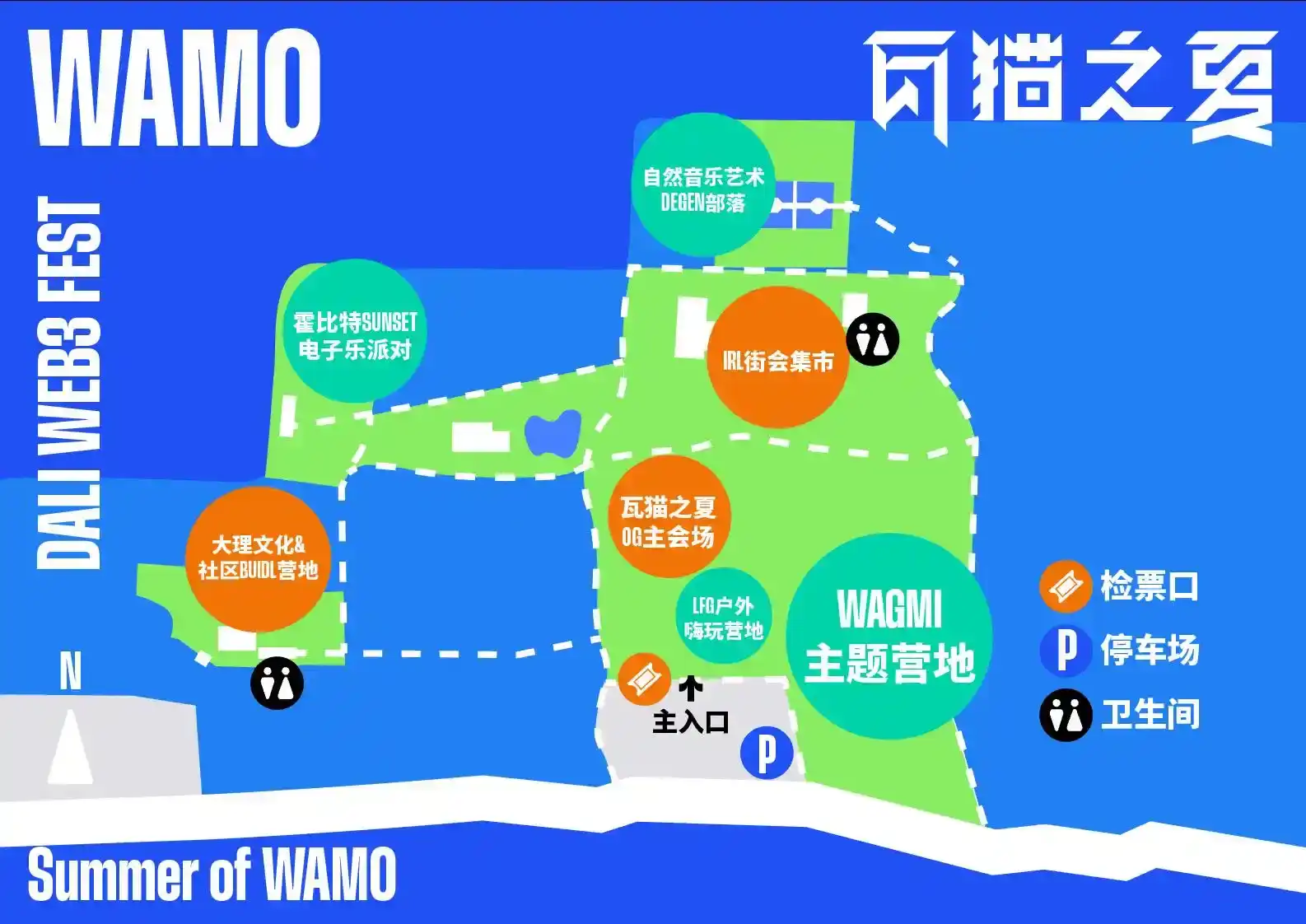
Also in 2022, the "Leap Sea" Tavern, which later received tens of millions of yuan in angel investment, gained more attention due to its unique "Web3" features. Liang You, the owner of this tavern, said in an interview at the time that he was not an insider of the Web3 circle, but the organizational structure of the "Leap Sea" Tavern adopted the DAO model from Web3 and even released the first domestic collaborative beer with the Bored Ape Yacht Club.

Twitter is the most active social media platform in the crypto community. In the past, you could see various cryptocurrency industry analyses and insights into the industry's development directions or debates. Nowadays, such content has lost its appeal and has become scarce. In its place are posts about what Binance founder CZ's dog is named, success tips from various "crypto gods," and discussions about "college girls" and "business K."
This change reflects the direct result of the crypto community falling into the misconception of "value innovation" and having their "dao hearts shattered." As the U.S. government becomes increasingly crypto-friendly, the community naturally rejoices but also feels anxious about "this being the last bull market." Initially, when NFTs, "digital luxury goods," or metaverse land, "digital real estate dreams," experienced a downturn, the community blamed the project teams for not doing well enough. Gradually, they stopped complaining and became indifferent, sneering at various narratives.
In this disillusionment, exchanges, market makers, and KOLs have become the most dominant forces in the crypto world. If a coin can be listed on an exchange, it means there can be enough users, not transacting on the blockchain, participating. If a coin has a market maker behind it, it means there is funding to "set up the game," artificially creating price trends to liven up the "game." In the crypto world, these "game setups" are often referred to as "conspiracy groups." If a coin has KOL participation, it means that KOL must also cheer for their holdings, with the most influential KOLs being called the "front row," even if they do not directly promote on Twitter, some will track their on-chain behavior to buy in.
Recently, at the Consensus 2025 conference just concluded in Hong Kong, many crypto people self-mockingly noted that although the conference was named "Consensus Conference," it seems that those seeking consensus did not find it. During the conference, project teams were still able to spare no expense, renting various high-end venues to hold exquisite events, even spending HKD 600,000 in one night on drinks.
However, the revelry does not eliminate the confusion and anxiety in the crypto world about "where are we heading." In the crypto world, without the fairy tale that belief can bring profits, only the belief in making money remains.
The "Nasdaq"-ization of the Crypto World, the Original Sin of the "Second Crypto Religion"
As the crypto world began subconsciously analogizing itself to the decentralized "Nasdaq," the schism of cryptocurrency, the world's largest "cyber religion," had already begun to show.
The value of cryptocurrency can be interpreted in different ways by different people, with the most common perspective possibly starting from finance. But in my view, the value of cryptocurrency has always been the value of belief, the value of the "cyber religion."
From buying 2 pizzas with 10,000 Bitcoins, to becoming "dark web currency," to becoming the legal tender of El Salvador, and further to the U.S. establishing a Bitcoin strategic reserve. One great achievement after another cannot be planned, nor can it be predicted. It is the belief of people around the world in Bitcoin that has allowed this "cyber religion" to undergo a magnificent 16 years. If no one truly believed from the bottom of their hearts that Bitcoin would become the world's currency in the future, if no one believed that Satoshi Nakamoto would never touch the roughly 1 million Bitcoins they owned, Bitcoin would never have steadily developed to where it is today.
The "Nasdaq"-ization of the crypto world began with the birth of Ethereum. This was actually the first split of the "cyber religion," the formal formation of the "Second Crypto Religion." Bitcoin purists adhere to the "currency" positioning and do not want the Bitcoin blockchain to pursue more capabilities at the expense of even a little security, stability, or decentralization. Bitcoin believers believe in the intrinsic value of Bitcoin itself, while Ethereum believers believe they can and should create more value.
“Bitcoin is gold, Ethereum is silver.” Through new blockchain technologies such as ICOs, DeFi, NFTs, the Metaverse, blockchain games, and more, Ethereum has steadily climbed to its peak, ultimately winning such a position in the hearts of the crypto community. Ethereum's founder, Vitalik Buterin, also soared to fame at that time, becoming the second “god” in the crypto world after Satoshi Nakamoto.
However, in reality, the “Second Crypto Religion” was never quite stable from the beginning. Because whether gold or silver, the world does not need these two precious metals to present their “what can they do” answer sheet to prove their value. From this perspective, Bitcoin can fully rival gold, but Ethereum cannot be compared to silver. Since Ethereum's inception, Ethereum has been on a path that constantly requires validation of its value, much like our helpless lives, always needing to present an answer sheet.
Rather than calling Vitalik Buterin a “god,” it is more accurate to say he is the Steve Jobs of the crypto world. Now, his situation seems to be echoing the early days of Steve Jobs. In 1985, Apple faced declining performance due to competition from IBM. Steve Jobs was ousted from the Apple board of directors due to disagreements with most of the management. Nearly 20 years later, Ethereum faced declining performance due to competition from Solana. When Vitalik Buterin expressed that he would not proactively engage with governments for “surrender” as a positive move, he transitioned from being the “V God” to the “V Dog.”
On the crowdfunding platform Kickstarter, many games have gone through a long period from fundraising to final development and delivery. “Star Citizen” has been in the alpha testing phase for over 12 years. However, in the highly speculative cryptocurrency market, Vitalik Buterin cannot receive such enduring patience from the market.
However, whether the various new blockchain technology explorations that have taken place on Ethereum can truly “take off” and be useful depends on a combination of timing, opportunity, and people. Taking NFTs as an example, from the birth of CryptoPunks to the explosion of NFTs took about four years. If NFTs have enabled blockchain technology to find a new application direction in “new art medium,” computer-generated art through the computer vision (art) algorithm has its origins in the 1950s. It took about 70 years before blockchain technology endowed this art category with uniqueness and traceability, finding the perfect form of presentation. After all, if the images generated by computer algorithms are simply printed out using a printer, their charm would undoubtedly be greatly diminished.
Why Did the Cryptocurrency Community Lose Patience This Time?
A Real Bull Market or a Fake One?
Because Bitcoin hit a new all-time high last year.
In the cryptocurrency community, the term "familiarity bias" is used to specifically refer to referencing past bullish experiences to capture the next major upward trend. One of the iron laws of "familiarity bias" is that each Bitcoin halving, which occurs every 4 years, will kick off a major bull run. Bitcoin is expected to rise and hit a new all-time high, then consolidate at a high level, while Ethereum-led "altcoins" will take center stage in the bull market's "second half," and various new blockchain technology narratives will bring forth one after another wealth myth of tens to hundreds of times returns.
When Bitcoin hit a new all-time high again last year, the cryptocurrency community still believed in this iron law. What sets this round apart from previous bull markets is that this time, the community is more anxious. This anxiety still stems from a loss of faith—the U.S. government even stepped in to "buy the dip," and moving forward, the opportunities left for retail investors will become fewer and fewer.
For most people in the cryptocurrency community, Bitcoin's new all-time high does not directly translate into profits because Bitcoin's market cap is too large, making it difficult to achieve financial freedom through Bitcoin investments quickly. What people are hoping for is the frenzy of "altcoins" after Bitcoin's new all-time high.
Interestingly, there are actually no objective conditions this time around to replicate the frenzy of "altcoins." First, the funds buying Bitcoin spot ETFs are actually active in the traditional financial markets and do not directly enter the on-chain activities, such as DeFi, NFTs, metaverse, as was the case in the past. Second, there hasn't been a new, refreshing, unified native crypto narrative within the community, let alone one that can attract attention and participation from outside the community.
However, after waiting patiently for 3 years, is this the result everyone was expecting? The cryptocurrency community is unwilling to accept this outcome. This "unwillingness" has formed a false bull market, and insiders refer to this market situation as "PvP"—in the previous bull market, everyone spread the new narrative with a shared passion and vision, and the Web3 concept even spread to some non-blockchain industries. This time, there is no consensus on the new narrative; everyone just wants to be a "smart person" and achieve victory by profiting from others' losses.
This situation closely resembles the ending of "Alice, the Last Time of Her Empire"—a series of tough survival games created by those on the brink of death from a natural disaster of asteroid impact, all coming together to create a hallucination.
For the "cyber religion," this is a very bad situation that reveals a very dangerous sign—the cryptocurrency community, in confusion and loss, in the anxiety of making money, has willingly stripped away the idealism and sacredness of the cryptocurrency community.
Pessimistic Honesty is Actually Helplessness Self-Abasement
The crypto community has started calling cryptocurrency a "casino."
Last year, I met up with a friend I had known for a while offline, who specializes in trading meme coins. Meme coins were his entry point into the cryptocurrency market, and it was almost the only track he was interested in within the cryptocurrency market.
"I just find this thing fun, something our generation plays with. Meme coins, or even if you take out the word 'coin,' this kind of thing is whimsical, not well understood in reality but in the cryptocurrency market, everyone recognizes this thing, this culture. When I discovered that I could make money based on my sense of these contents or aesthetic, I thought meme coins were really cool and fun."
After he finished speaking, we both took a big gulp of our drinks. As alcohol spread through my body, memories of those meme coins that had once excited me quickly flashed through my mind, such as $DOGE derived from that globally renowned Shiba Inu meme, repeatedly mentioned by Musk, $PEOPLE, which had a huge pump to fund the purchase of a copy of the U.S. Constitution...
But now, even the "fun" that was once the key to meme coins has almost malfunctioned. Setting everything aside, closing my eyes, only one word remains:
"Gamble"
Solana, the most vibrant "crypto casino" of this fake bull market, has seen over 640,000 meme coins appear since April 1st last year, and this data was only up to early July last year. In other words, in a span of three months, over 7,000 new meme coins were appearing on Solana on average every day.
The disappearance of "cyber religious believers" corresponds to the emergence of "crypto gamblers." These "crypto gamblers" post a series of English and number-laden "addresses" on various chat apps every day, which is referred to as "CA," meaning the token's contract address. With this address, they can precisely locate the token they need to trade.
"Smart money" and "dev" are the key success factors that "crypto gamblers" care most about. "Smart money" is equivalent to the "crypto gambling god." These addresses on the blockchain are sought after in daily transactions due to their high win rates, and their trading actions attract many "crypto gamblers" to follow suit with buy-ins. "Dev" is the abbreviation for "developer," referring to the creators of the tokens. "Crypto gamblers" need a relatively reliable "game initiator" to participate and try to avoid participating in games initiated by token creators with a history of massive sell-offs right after the start.
Objectively speaking, the most prominent narrative of wealth creation during this fake bull run has been the "Crypto Casino" narrative. However, what was originally meant to be a helpless, honest reflection of the current state of affairs has ultimately turned into a numb and self-righteous stance.
This is the most severe challenge that the "cyber-religion" of cryptocurrency has faced to date—a time when the industry's idealism and sanctity have been fractured. No one knows when or how this fracture will be healed.
Can this fracture even be healed?
The consensus of cryptocurrency is not unbreakable; it needs to continue to evolve
The most significant value created by the coin circle's "New Narrative," born out of blockchain technological innovation attempts, lies in presenting the "cyber-religion" in a more diverse light to the world, allowing more individuals to become interested in and gain a deeper understanding of cryptocurrency through different perspectives. Previously, this was in a positive feedback loop with cryptocurrency price growth, but now, it has become detached.
The rise in cryptocurrency prices serves more to reinforce the beliefs of existing "disciples." The astounding wealth narratives created by cryptocurrency do not directly aid in the "preaching" of cryptocurrency.
Does the coin circle need a new narrative? Yes. Is there a rush? Not really. The world is constantly evolving, and technological advancements will bring forth a continuous stream of new demands. It is highly likely that tomorrow or even later today, the answer to "What else can blockchain do" will naturally emerge. Even if not, has the original narrative been good enough? No, it can still be improved upon, and there is still a need for further exploration.
If cryptocurrency is merely a "casino," just a speculator's paradise, then its doomsday clock has already started ticking. How the coin circle views this industry will determine how it presents itself to the world.
Perhaps the current generation of young people still finds cryptocurrency cool, but what about the next generation, and the one after that? How will they perceive cryptocurrency?
I do not know, my friend, the answer is blowing in the wind.
You may also like

Bitcoin Market Analysis 2026: Can BTC Reach $150K by Year-End?

STRC unanchored by 11%, can the perpetual motion machine of Strategy still operate?

Bitcoin ETF Outflows Hit a Record $4.4 Billion: What Are Traders Doing With Their Cash?

WEEX App Just Got Smarter – New Tabs for Faster Trades & Easy Asset Management

Blockchain Capital Partner: The Core Secret of Arbitrage

WEEX All-New Search Features: Find, Trade & Earn Faster Than Ever

Will MicroStrategy fall into a death spiral? What will the macro trend be in the second half of the year?

Morning Report | Illinois signs the strictest digital asset tax law in the U.S.; RWA tokenization market size surpasses $43 billion, institutions accelerate the migration of on-chain assets

Full version of the debut Q&A! Federal Reserve Chairman Waller: Sticking to the 2% inflation target, establishing five special working groups, individual did not submit the dot plot

From Disruptor to Shadow Market: The Crypto Market is Becoming a Colony of Traditional Finance
Dalio's important long article: How to position in the current market environment?

OKX Star analyzes Binance's competitive advantages: when regulation levels the playing field, competition has just begun

New gameplay for participating in initial offerings on cryptocurrency exchanges
Why Is Bitcoin Down Today? What the Hawkish FOMC Means for SpaceX, Gold and Nasdaq

DeepSeek Financing Story

Morning Report | DeepSeek completes over $7 billion in financing, with a valuation exceeding $50 billion; Musk's personal wealth has surpassed the total market value of Bitcoin
Cursor, why did you get on Musk's spaceship?
In the name of charity, for the benefit of the family: How the Trump family turned charity into profit?
Bitcoin Market Analysis 2026: Can BTC Reach $150K by Year-End?
STRC unanchored by 11%, can the perpetual motion machine of Strategy still operate?
Bitcoin ETF Outflows Hit a Record $4.4 Billion: What Are Traders Doing With Their Cash?
WEEX App Just Got Smarter – New Tabs for Faster Trades & Easy Asset Management
Blockchain Capital Partner: The Core Secret of Arbitrage
WEEX All-New Search Features: Find, Trade & Earn Faster Than Ever


