DeFi's Comeback Secret Weapon: Buyback, Fee Switch, and Dividend Future Vision

By: blockbeats|2025/03/12 16:30:03
0
Share
copy
Original Article Title: DeFi's Growing Focus on Token Value Accrual
Original Article Author: @ManoppoMarco, primitivecrypto Investor
Original Article Translation: zhouzhou, BlockBeats

Editor's Note: DeFi protocols are accelerating the accumulation of value for token holders, with protocols such as Aave, Ethena, Hyperliquid, and Jupiter implementing buyback plans, fee switches, and new incentive structures. Ethena plans to enable a fee switch to share revenue with stakers and is currently achieving key milestones. Other protocols are also enhancing token value through buybacks, fee distribution, and governance optimization.

The following is the original content (reorganized for better readability):

If you've spent 8-9 figures on growth but haven't seen at least linear revenue growth, buybacks may not be a bad thing. DeFi protocols are facing increasing pressure to distribute some of the revenue to token holders. Major projects like Aave, Ethena, and Hyperliquid are exploring how to introduce a value accrual mechanism for their native tokens.

The key driving force behind this trend? Donald Trump's election, which has brought a more favorable regulatory environment for DeFi. Here are the latest updates on the tokenomics of Aave, Athena, Jupiter, and Hyperliquid, including their buyback plans and fee adjustments.

AAVE


Aave has just introduced a significant tokenomics reform focusing on buybacks, fee distribution, and providing better incentives for token holders. According to Marc Zeller, founder of the Aave Chan Initiative (ACI), this is one of the most important proposals in Aave's history.

DeFi's Comeback Secret Weapon: Buyback, Fee Switch, and Dividend Future Vision

Buyback & Fee Adjustment


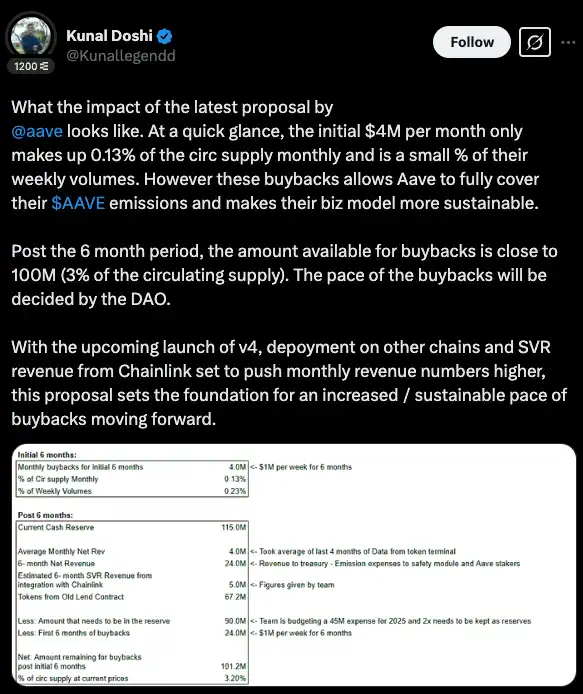
Aave has launched a six-month buyback plan, committing $1 million weekly (approximately $4 million monthly) to cover AAVE token emissions and enhance protocol sustainability. After six months, the buyback treasury could reach $100 million (roughly 3% of the circulating supply), and the specific deployment pace will be determined by the DAO.


What is the goal? To control token emissions while enhancing Aave's treasury strength.

New Financial & Governance Initiatives


Aave is establishing the Aave Financial Committee (AFC), dedicated to treasury fund management and liquidity strategy. Additionally, Aave is completing the transition from the LEND token, reclaiming 320,000 AAVE tokens (approximately $65 million) for future use.

Umbrella: Aave's New Risk Management System:


Aave spends $27 million annually on liquidity costs, so the Umbrella system has been introduced to optimize capital efficiency and reduce risk. This system will be integrated across multiple blockchains, including Ethereum, Avalanche, Arbitrum, Gnosis, and Base.

Anti-GHO: A New Incentive Mechanism for Stablecoin Holders:


Anti-GHO, as a brand-new incentive mechanism, will replace the old discount model for GHO holders. Held tokens can be burned at a 1:1 ratio to offset GHO debt or converted to StkGHO, aligning the incentive mechanism directly with Aave's revenue. This mechanism is still in development and may be introduced as part of a future "Aavenomics Part Two" update.

What's Next?


With the release of Aave v4, more on-chain deployments, and additional income from Chainlink SVR, this update sets the foundation for a larger-scale, more sustainable buyback in the future.

Jupiter
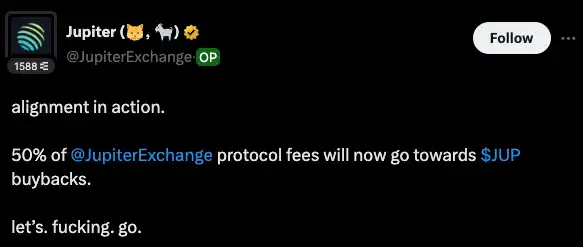
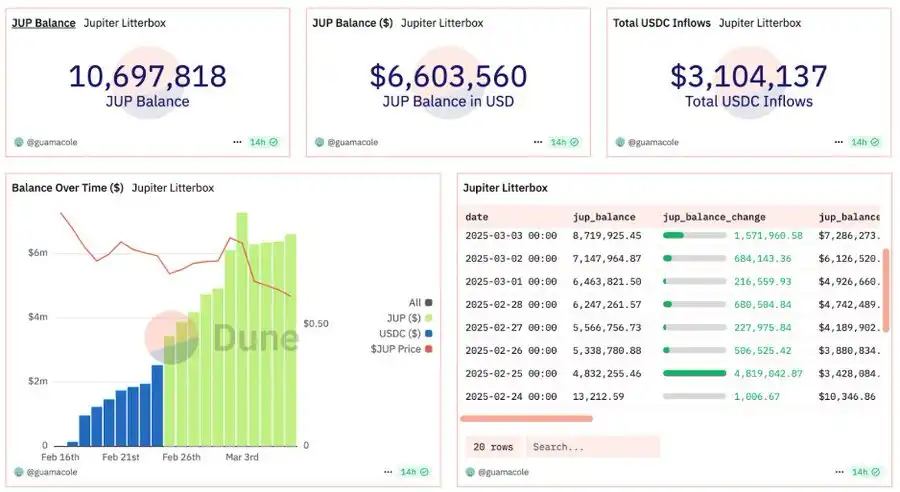
Since February 17, 2025, Jupiter has started allocating 50% of protocol fees to buy back and lock up JUP tokens for three years. This initiative aims to reduce circulating supply, enhance long-term stability, and promote user participation in the Solana ecosystem. In February of this year, Jupiter completed its first buyback, purchasing 48,800 JUP tokens for $3.33 million. Currently, Jupiter's Litterbox Trust buyback program has accumulated repurchases of over 10 million JUP tokens (approximately $6 million).
What's Next?


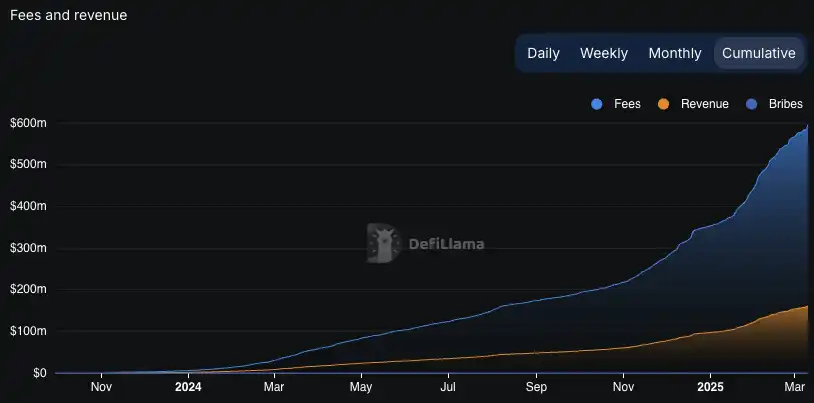
On an annual basis, Jupiter's $3.33 million buyback size is equivalent to an annual buyback amount exceeding $35 million. If we take a more aggressive estimate, with Jupiter's 2024 revenue projected at $102 million, this implies that the buyback size could exceed $50 million.
Hyperliquid

Token Distribution


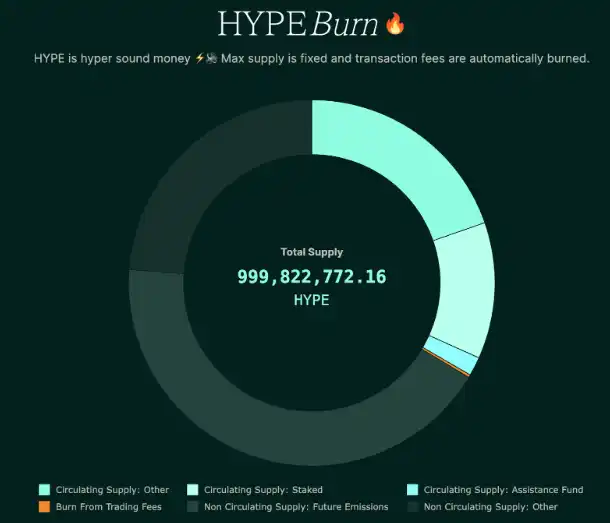
Hyperliquid's native token HYPE has a total supply of 1 billion, with no fundraising and no investor allocation. The specific distribution is as follows:

· 31.0%: Airdropped to early users (fully circulating)

· 38.888%: Reserved for future emission and community rewards

· 23.8%: Team allocation, locked for 1 year, with most unlocking in 2027-2028

· 6.0%: Hyper Foundation

· 0.3%: Community grants

· 0.012%: HIP-2

The team-to-community token ratio is 3:7, with the largest non-team holder being the Assistance Fund (AF), holding 1.16% of the total supply, accounting for 3.74% of the circulating supply.

Revenue Model & Buyback Mechanism


Hyperliquid's main sources of revenue include transaction fees (spot + derivatives) and HIP-1 auction fees. As Hyperliquid L1 currently does not charge Gas fees, Gas-related revenue is not included for now.

Revenue Distribution

· 46% of perpetual contract trading fees allocated to HLP holders (supply-side rewards)

· 54% used to buy back HYPE via the Assistance Fund (AF)

In addition, HIP-1 auction fees and the spot trading fees (USDC portion) are currently all used for HYPE token buybacks.

Dual Deflation Mechanism

· Buyback: AF uses a portion of revenue to buy back HYPE tokens, which are not burned but held by the AF

·Burn:

 1. All HYPE-denominated spot trading fees (such as the HYPE-USDC pair) will be directly burned

 2. After the HyperEVM mainnet launch, all Gas fees will also be paid in HYPE and burned
Buyback Impact & Staking Mechanism

Based on publicly available Hyperliquid transaction fee data, estimated as of March 2025, AF will initiate a buyback using 54% of perpetual contract revenue, expecting to repurchase approximately 2.5 million HYPE tokens monthly, worth around $35 million. HYPE staking was launched on December 30, 2024, utilizing a PoS reward mechanism (similar to Ethereum), with a current annual return rate of about 2.5%. Currently, 30 million HYPE tokens have been staked (excluding the 3 billion tokens held by the team/foundation).

Future Outlook

Hyperliquid may introduce a fee-sharing model to allocate a portion of on-chain transaction fees directly to HYPE holders to create a more sustainable incentive system. However, some believe that the current model can generate a stronger flywheel effect in market fluctuations.

Hyperliquid's revenue mainly comes from transaction fees and HIP-1 auction fees and may also expand to include revenue sources such as HyperEVM transactions in the future. Currently, apart from being used for buybacks and incentives, a portion of the transaction fees can also:

· Be distributed based on holdings or staking amounts to HYPE holders.

· Reward long-term stakers to drive deeper community participation.

· Be deposited into a community treasury for governance-determined purposes.

Possible Distribution Models:

· Direct Fee Sharing:

 A portion of the transaction fees converted to USDC or HYPE, regularly distributed to token holders (similar to dividends).

· Staking Enhancement Rewards:

 Only users staking HYPE will receive a share to incentivize long-term holding.

·Hybrid Mode:

 Combining Fee Sharing + HYPE Buyback, balancing price support with holding incentives.

Ethena
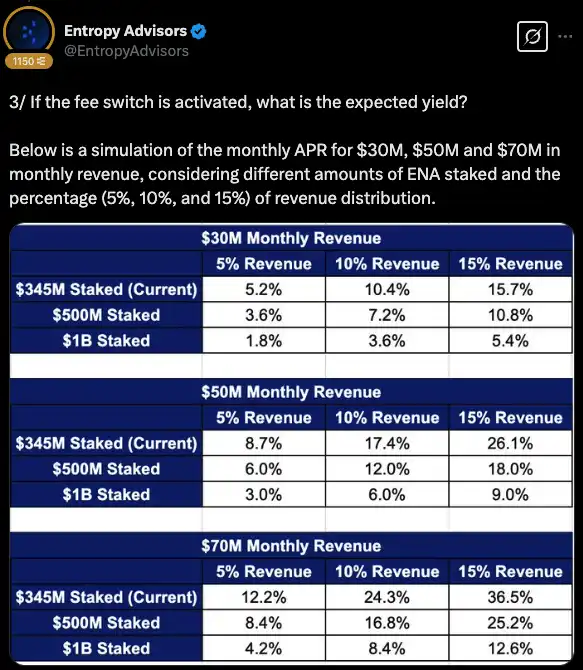
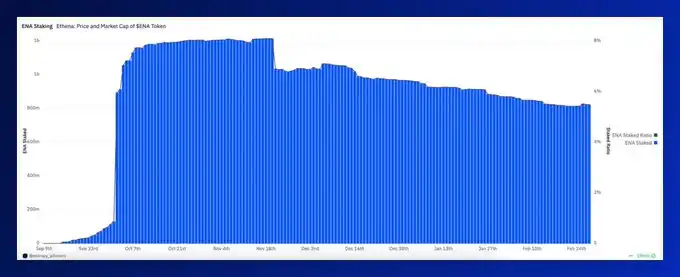
Ethena Labs has now entered the top five DeFi protocols by TVL, with annual revenue exceeding 300 million USD. As the protocol grows, Wintermute's fee-sharing proposal has been approved by the Ethena Risk Committee. Currently, 824 million ENA tokens (worth 324 million USD) are staked, accounting for 5.5% of the total supply, but stakers can only receive governance rewards and unclaimed ENA airdrops, without benefiting from Ethena's generated revenue sharing.
Ethena Fee Switch and Future Plans:

The activation of the fee switch will provide stakers with a direct revenue-sharing opportunity and enhance DAO governance effectiveness through alignment with ENA holders' incentives. Ethena's revenue primarily comes from perpetual contract market funding rates. Currently, 100% of the revenue is distributed to USDe stakers and the reserve fund. In the past three months, the average monthly revenue has been 50 million USD.

Preparation before Enabling Fee Switch: The Risk Committee has set five key metrics to ensure Ethena is in a stable position before sharing revenue.

Current Metrics Progress:

·USDe Supply Target: 6B – Target gap is now only 9%.

·Cumulative Revenue: 250M+ – Reached 330 million USD in January, exceeding the target.

·Exchange Integration: Binance/OKX – No schedule yet, but Binance currently holds 4 million USDe.

·Reserve Fund Share ≥ 1% of USDe Supply – A 61 million USD reserve supports 6.1 billion USDe.

·sUSDe vs. sUSDS APY Spread ≥ 5% – Due to market downturn, the spread has narrowed, but it may widen again in the future.

Future Outlook

Ethena is nearing its target, but the fee switch will remain paused until all metrics are met. During this time, the team will focus on USDe supply growth, ensuring more exchange integrations, and monitoring the market situation.
Once all conditions are met, ENA stakers will be able to start enjoying revenue sharing.

Summary

Key DeFi protocols are accelerating the transition towards token holder value accrual, with Aave, Ethena, Hyperliquid, and Jupiter implementing buyback programs, fee switches, and new incentive structures to make their tokens more valuable beyond speculation.

This trend reflects the industry's overall shift towards sustainable tokenomics, with projects placing more emphasis on real revenue distribution rather than inflationary incentives.


Aave leverages its deep reserves to support buybacks and governance improvements, Ethena is committed to providing direct revenue sharing to stakers, Hyperliquid optimizes its buyback and fee distribution model, and Jupiter locks up buyback tokens to stabilize the supply.


With the gradual improvement of the regulatory environment and the maturation of DeFi, protocols that succeed in aligning with community incentives will experience significant growth.

Original Article Link

You may also like

Token Cannot Compound, Where Is the Real Investment Opportunity?

The next chapter in the crypto industry will undoubtedly be written by Crypto-empowered Stocks.

February 6th Market Key Intelligence, How Much Did You Miss?

1. On-chain Flows: $508.2M USD inflow to Ethereum today; $390.8M USD outflow from Arbitrum 2. Biggest Gainers/Losers: $HBTC, $AIO 3. Top News: Current Bitcoin weekly RSI oversold signal comparable to June 2022

China's Central Bank and Eight Other Departments' Latest Regulatory Focus: Key Attention to RWA Tokenized Asset Risk


Foreword: Today, the People's Bank of China's website published the "Notice of the People's Bank of China, National Development and Reform Commission, Ministry of Industry and Information Technology, Ministry of Public Security, State Administration for Market Regulation, China Banking and Insurance Regulatory Commission, China Securities Regulatory Commission, State Administration of Foreign Exchange on Further Preventing and Dealing with Risks Related to Virtual Currency and Others (Yinfa [2026] No. 42)", the latest regulatory requirements from the eight departments including the central bank, which are basically consistent with the regulatory requirements of recent years. The main focus of the regulation is on speculative activities such as virtual currency trading, exchanges, ICOs, overseas platform services, and this time, regulatory oversight of RWA has been added, explicitly prohibiting RWA tokenization, stablecoins (especially those pegged to the RMB). The following is the full text:


To the people's governments of all provinces, autonomous regions, and municipalities directly under the Central Government, the Xinjiang Production and Construction Corps:


  Recently, there have been speculative activities related to virtual currency and Real-World Assets (RWA) tokenization, disrupting the economic and financial order and jeopardizing the property security of the people. In order to further prevent and address the risks related to virtual currency and Real-World Assets tokenization, effectively safeguard national security and social stability, in accordance with the "Law of the People's Republic of China on the People's Bank of China," "Law of the People's Republic of China on Commercial Banks," "Securities Law of the People's Republic of China," "Law of the People's Republic of China on Securities Investment Funds," "Law of the People's Republic of China on Futures and Derivatives," "Cybersecurity Law of the People's Republic of China," "Regulations of the People's Republic of China on the Administration of Renminbi," "Regulations on Prevention and Disposal of Illegal Fundraising," "Regulations of the People's Republic of China on Foreign Exchange Administration," "Telecommunications Regulations of the People's Republic of China," and other provisions, after reaching consensus with the Cyberspace Administration of China, the Supreme People's Court, and the Supreme People's Procuratorate, and with the approval of the State Council, the relevant matters are notified as follows:


  I. Clarify the essential attributes of virtual currency, Real-World Assets tokenization, and related business activities


  (I) Virtual currency does not possess the legal status equivalent to fiat currency. Virtual currencies such as Bitcoin, Ether, Tether, etc., have the main characteristics of being issued by non-monetary authorities, using encryption technology and distributed ledger or similar technology, existing in digital form, etc. They do not have legal tender status, should not and cannot be circulated and used as currency in the market.


  The business activities related to virtual currency are classified as illegal financial activities. The exchange of fiat currency and virtual currency within the territory, exchange of virtual currencies, acting as a central counterparty in buying and selling virtual currencies, providing information intermediary and pricing services for virtual currency transactions, token issuance financing, and trading of virtual currency-related financial products, etc., fall under illegal financial activities, such as suspected illegal issuance of token vouchers, unauthorized public issuance of securities, illegal operation of securities and futures business, illegal fundraising, etc., are strictly prohibited across the board and resolutely banned in accordance with the law. Overseas entities and individuals are not allowed to provide virtual currency-related services to domestic entities in any form.


  A stablecoin pegged to a fiat currency indirectly fulfills some functions of the fiat currency in circulation. Without the consent of relevant authorities in accordance with the law and regulations, any domestic or foreign entity or individual is not allowed to issue a RMB-pegged stablecoin overseas.


(II)Tokenization of Real-World Assets refers to the use of encryption technology and distributed ledger or similar technologies to transform ownership rights, income rights, etc., of assets into tokens (tokens) or other interests or bond certificates with token (token) characteristics, and carry out issuance and trading activities.


  Engaging in the tokenization of real-world assets domestically, as well as providing related intermediary, information technology services, etc., which are suspected of illegal issuance of token vouchers, unauthorized public offering of securities, illegal operation of securities and futures business, illegal fundraising, and other illegal financial activities, shall be prohibited; except for relevant business activities carried out with the approval of the competent authorities in accordance with the law and regulations and relying on specific financial infrastructures. Overseas entities and individuals are not allowed to illegally provide services related to the tokenization of real-world assets to domestic entities in any form.


  II. Sound Work Mechanism


  (III) Inter-agency Coordination. The People's Bank of China, together with the National Development and Reform Commission, the Ministry of Industry and Information Technology, the Ministry of Public Security, the State Administration for Market Regulation, the China Banking and Insurance Regulatory Commission, the China Securities Regulatory Commission, the State Administration of Foreign Exchange, and other departments, will improve the work mechanism, strengthen coordination with the Cyberspace Administration of China, the Supreme People's Court, and the Supreme People's Procuratorate, coordinate efforts, and overall guide regions to carry out risk prevention and disposal of virtual currency-related illegal financial activities.


  The China Securities Regulatory Commission, together with the National Development and Reform Commission, the Ministry of Industry and Information Technology, the Ministry of Public Security, the People's Bank of China, the State Administration for Market Regulation, the China Banking and Insurance Regulatory Commission, the State Administration of Foreign Exchange, and other departments, will improve the work mechanism, strengthen coordination with the Cyberspace Administration of China, the Supreme People's Court, and the Supreme People's Procuratorate, coordinate efforts, and overall guide regions to carry out risk prevention and disposal of illegal financial activities related to the tokenization of real-world assets.


  (IV) Strengthening Local Implementation. The people's governments at the provincial level are overall responsible for the prevention and disposal of risks related to virtual currencies and the tokenization of real-world assets in their respective administrative regions. The specific leading department is the local financial regulatory department, with participation from branches and dispatched institutions of the State Council's financial regulatory department, telecommunications regulators, public security, market supervision, and other departments, in coordination with cyberspace departments, courts, and procuratorates, to improve the normalization of the work mechanism, effectively connect with the relevant work mechanisms of central departments, form a cooperative and coordinated working pattern between central and local governments, effectively prevent and properly handle risks related to virtual currencies and the tokenization of real-world assets, and maintain economic and financial order and social stability.


  III. Strengthened Risk Monitoring, Prevention, and Disposal


  (5) Enhanced Risk Monitoring. The People's Bank of China, China Securities Regulatory Commission, National Development and Reform Commission, Ministry of Industry and Information Technology, Ministry of Public Security, State Administration of Foreign Exchange, Cyberspace Administration of China, and other departments continue to improve monitoring techniques and system support, enhance cross-departmental data analysis and sharing, establish sound information sharing and cross-validation mechanisms, promptly grasp the risk situation of activities related to virtual currency and real-world asset tokenization. Local governments at all levels give full play to the role of local monitoring and early warning mechanisms. Local financial regulatory authorities, together with branches and agencies of the State Council's financial regulatory authorities, as well as departments of cyberspace and public security, ensure effective connection between online monitoring, offline investigation, and fund tracking, efficiently and accurately identify activities related to virtual currency and real-world asset tokenization, promptly share risk information, improve early warning information dissemination, verification, and rapid response mechanisms.


  (6) Strengthened Oversight of Financial Institutions, Intermediaries, and Technology Service Providers. Financial institutions (including non-bank payment institutions) are prohibited from providing account opening, fund transfer, and clearing services for virtual currency-related business activities, issuing and selling financial products related to virtual currency, including virtual currency and related financial products in the scope of collateral, conducting insurance business related to virtual currency, or including virtual currency in the scope of insurance liability. Financial institutions (including non-bank payment institutions) are prohibited from providing custody, clearing, and settlement services for unauthorized real-world asset tokenization-related business and related financial products. Relevant intermediary institutions and information technology service providers are prohibited from providing intermediary, technical, or other services for unauthorized real-world asset tokenization-related businesses and related financial products.


  (7) Enhanced Management of Internet Information Content and Access. Internet enterprises are prohibited from providing online business venues, commercial displays, marketing, advertising, or paid traffic diversion services for virtual currency and real-world asset tokenization-related business activities. Upon discovering clues of illegal activities, they should promptly report to relevant departments and provide technical support and assistance for related investigations and inquiries. Based on the clues transferred by the financial regulatory authorities, the cyberspace administration, telecommunications authorities, and public security departments should promptly close and deal with websites, mobile applications (including mini-programs), and public accounts engaged in virtual currency and real-world asset tokenization-related business activities in accordance with the law.


  (8) Strengthened Entity Registration and Advertisement Management. Market supervision departments strengthen entity registration and management, and enterprise and individual business registrations must not contain terms such as "virtual currency," "virtual asset," "cryptocurrency," "crypto asset," "stablecoin," "real-world asset tokenization," or "RWA" in their names or business scopes. Market supervision departments, together with financial regulatory authorities, legally enhance the supervision of advertisements related to virtual currency and real-world asset tokenization, promptly investigating and handling relevant illegal advertisements.


  (IX) Continued Rectification of Virtual Currency Mining Activities. The National Development and Reform Commission, together with relevant departments, strictly controls virtual currency mining activities, continuously promotes the rectification of virtual currency mining activities. The people's governments of various provinces take overall responsibility for the rectification of "mining" within their respective administrative regions. In accordance with the requirements of the National Development and Reform Commission and other departments in the "Notice on the Rectification of Virtual Currency Mining Activities" (NDRC Energy-saving Building [2021] No. 1283) and the provisions of the "Guidance Catalog for Industrial Structure Adjustment (2024 Edition)," a comprehensive review, investigation, and closure of existing virtual currency mining projects are conducted, new mining projects are strictly prohibited, and mining machine production enterprises are strictly prohibited from providing mining machine sales and other services within the country.


  (X) Severe Crackdown on Related Illegal Financial Activities. Upon discovering clues to illegal financial activities related to virtual currency and the tokenization of real-world assets, local financial regulatory authorities, branches of the State Council's financial regulatory authorities, and other relevant departments promptly investigate, determine, and properly handle the issues in accordance with the law, and seriously hold the relevant entities and individuals legally responsible. Those suspected of crimes are transferred to the judicial authorities for processing according to the law.


 (XI) Severe Crackdown on Related Illegal and Criminal Activities. The Ministry of Public Security, the People's Bank of China, the State Administration for Market Regulation, the China Banking and Insurance Regulatory Commission, the China Securities Regulatory Commission, as well as judicial and procuratorial organs, in accordance with their respective responsibilities, rigorously crack down on illegal and criminal activities related to virtual currency, the tokenization of real-world assets, such as fraud, money laundering, illegal business operations, pyramid schemes, illegal fundraising, and other illegal and criminal activities carried out under the guise of virtual currency, the tokenization of real-world assets, etc.


  (XII) Strengthen Industry Self-discipline. Relevant industry associations should enhance membership management and policy advocacy, based on their own responsibilities, advocate and urge member units to resist illegal financial activities related to virtual currency and the tokenization of real-world assets. Member units that violate regulatory policies and industry self-discipline rules are to be disciplined in accordance with relevant self-regulatory management regulations. By leveraging various industry infrastructure, conduct risk monitoring related to virtual currency, the tokenization of real-world assets, and promptly transfer issue clues to relevant departments.


  IV. Strict Supervision of Domestic Entities Engaging in Overseas Business Activities


(XIII) Without the approval of relevant departments in accordance with the law and regulations, domestic entities and foreign entities controlled by them may not issue virtual currency overseas.


  (XIV) Domestic entities engaging directly or indirectly in overseas external debt-based tokenization of real-world assets, or conducting asset securitization activities abroad based on domestic ownership rights, income rights, etc. (hereinafter referred to as domestic equity), should be strictly regulated in accordance with the principles of "same business, same risk, same rules." The National Development and Reform Commission, the China Securities Regulatory Commission, the State Administration of Foreign Exchange, and other relevant departments regulate it according to their respective responsibilities. For other forms of overseas real-world asset tokenization activities based on domestic equity by domestic entities, the China Securities Regulatory Commission, together with relevant departments, supervise according to their division of responsibilities. Without the consent and filing of relevant departments, no unit or individual may engage in the above-mentioned business.


  (15) Overseas subsidiaries and branches of domestic financial institutions providing Real World Asset Tokenization-related services overseas shall do so legally and prudently. They shall have professional personnel and systems in place to effectively mitigate business risks, strictly implement customer onboarding, suitability management, anti-money laundering requirements, and incorporate them into the domestic financial institutions' compliance and risk management system. Intermediaries and information technology service providers offering Real World Asset Tokenization services abroad based on domestic equity or conducting Real World Asset Tokenization business in the form of overseas debt for domestic entities directly or indirectly venturing abroad must strictly comply with relevant laws and regulations. They should establish and improve relevant compliance and internal control systems in accordance with relevant normative requirements, strengthen business and risk control, and report the business developments to the relevant regulatory authorities for approval or filing.


  V. Strengthen Organizational Implementation


  (16) Strengthen organizational leadership and overall coordination. All departments and regions should attach great importance to the prevention of risks related to virtual currencies and Real World Asset Tokenization, strengthen organizational leadership, clarify work responsibilities, form a long-term effective working mechanism with centralized coordination, local implementation, and shared responsibilities, maintain high pressure, dynamically monitor risks, effectively prevent and mitigate risks in an orderly and efficient manner, legally protect the property security of the people, and make every effort to maintain economic and financial order and social stability.


  (17) Widely carry out publicity and education. All departments, regions, and industry associations should make full use of various media and other communication channels to disseminate information through legal and policy interpretation, analysis of typical cases, and education on investment risks, etc. They should promote the illegality and harm of virtual currencies and Real World Asset Tokenization-related businesses and their manifestations, fully alert to potential risks and hidden dangers, and enhance public awareness and identification capabilities for risk prevention.


  VI. Legal Responsibility


  (18) Engaging in illegal financial activities related to virtual currencies and Real World Asset Tokenization in violation of this notice, as well as providing services for virtual currencies and Real World Asset Tokenization-related businesses, shall be punished in accordance with relevant regulations. If it constitutes a crime, criminal liability shall be pursued according to the law. For domestic entities and individuals who knowingly or should have known that overseas entities illegally provided virtual currency or Real World Asset Tokenization-related services to domestic entities and still assisted them, relevant responsibilities shall be pursued according to the law. If it constitutes a crime, criminal liability shall be pursued according to the law.


  (19) If any unit or individual invests in virtual currencies, Real World Asset Tokens, and related financial products against public order and good customs, the relevant civil legal actions shall be invalid, and any resulting losses shall be borne by them. If there are suspicions of disrupting financial order and jeopardizing financial security, the relevant departments shall deal with them according to the law.


  This notice shall enter into force upon the date of its issuance. The People's Bank of China and ten other departments' "Notice on Further Preventing and Dealing with the Risks of Virtual Currency Trading Speculation" (Yinfa [2021] No. 237) is hereby repealed.


Former Partner's Perspective on Multicoin: Kyle's Exit, But the Game He Left Behind Just Getting Started

Kyle knew his game, so he decided to focus on playing the game he was good at and interested in.

Why Bitcoin Is Falling Now: The Real Reasons Behind BTC's Crash & WEEX's Smart Profit Playbook

Bitcoin's ongoing crash explained: Discover the 5 hidden triggers behind BTC's plunge & how WEEX's Auto Earn and Trade to Earn strategies help traders profit from crypto market volatility.

Wall Street's Hottest Trades See Exodus

This time there is no single triggering factor, but rather market anxiety about asset valuation, with many already skeptical of these valuations being too high, leading to investors choosing to retreat almost simultaneously.

Popular coins

Latest Crypto News

Read more