
EF Foundation's Self-Salvation: Wang Xiaowei "Steps Up," Technical Bureaucrats on the Rise

By: blockbeats|2025/03/14 11:15:02
0
Share
copy
Original Article Title: "Who Will Save Ethereum from the 'Midlife Crisis'? Can Hsiao-Wei Wang Help?"
Original Article Author: Ethan, Odaily Planet Daily

On March 10, 2025, the Ethereum Foundation (EF) announced that Hsiao-Wei Wang had been promoted to the board of directors, becoming the first ethnic Chinese leader to be promoted from a technical background to the board of directors in the seven-year history of the EF. This appointment is seen as a key signal of the EF's response to the ecosystem crisis and the restructuring of its governance system—in the context of Ethereum facing challenges such as the Solana ecosystem impact, Layer 2 ecosystem fragmentation, and community trust deficit, a rise of technical bureaucrats may herald a silent revolution.

Who is Hsiao-Wei Wang? The 'Boundary Breaker' from Code to Power

Hsiao-Wei Wang (@hwwonx), known in Chinese as Wang Xiaowei (hereinafter referred to as Hsiao-Wei Wang): one of the newly appointed executive directors, early core researcher, and community and technical connector.

Technical Authority: The Driving Force behind Sharding and The Merge

Hsiao-Wei Wang's career began with a deep connection to code and protocol. In 2017, she joined EF as a core researcher and, with a technical background in Network Engineering from National Chiao Tung University in Taiwan, she led the design of the Ethereum Beacon Chain architecture and the smooth implementation of "The Merge" in 2022. Her proposed sharding scalability solution was praised by Vitalik as the "crystallization of Asian wisdom," and her authored EIP-4844 proposal even reduced Layer 2 gas fees by 90%, directly driving the Base chain's daily active users to exceed 2 million.

Community Bridge: Pioneer of the Asia-Pacific Ecosystem

The 2018 Taipei Sharding Workshop was Hsiao-Wei Wang's "breakthrough battle"—this event brought global core developers to Asia for the first time, breaking the Western tech circle's bias against the capabilities of Asia-Pacific developers. Celer Network founder Mo Dong commented, "She made the EF hear the voice of Eastern developers." Subsequently, she traveled to South Korea, Vietnam, and other places to establish a fast lane for developer funding, increasing the percentage of Asian teams receiving EF Grants from 5% (2017) to 22% (2024), successfully transforming the dual identity of 'technical geek' and 'community operator' into a capital of power.

The New Paradigm of Power: The Rise Logic of Technocracy

Wang Hsiao-Wei's career path (Core Researcher→APAC Community Lead→Co-Executive Director) reflects a shift in the EF governance logic: from "Vitalik's Monopoly Authority" to "Dual-Track of Technology + Infrastructure". She forms a complementary duo with Nethermind founder Tomasz Stanczak—while she delves deep into sharding scalability and the APAC ecosystem, he leads client development and MEV mechanism optimization. This "Eastern Tech Geek + Western Infrastructure Architect" power structure is precisely the EF's proactive response to ecosystem fragmentation.
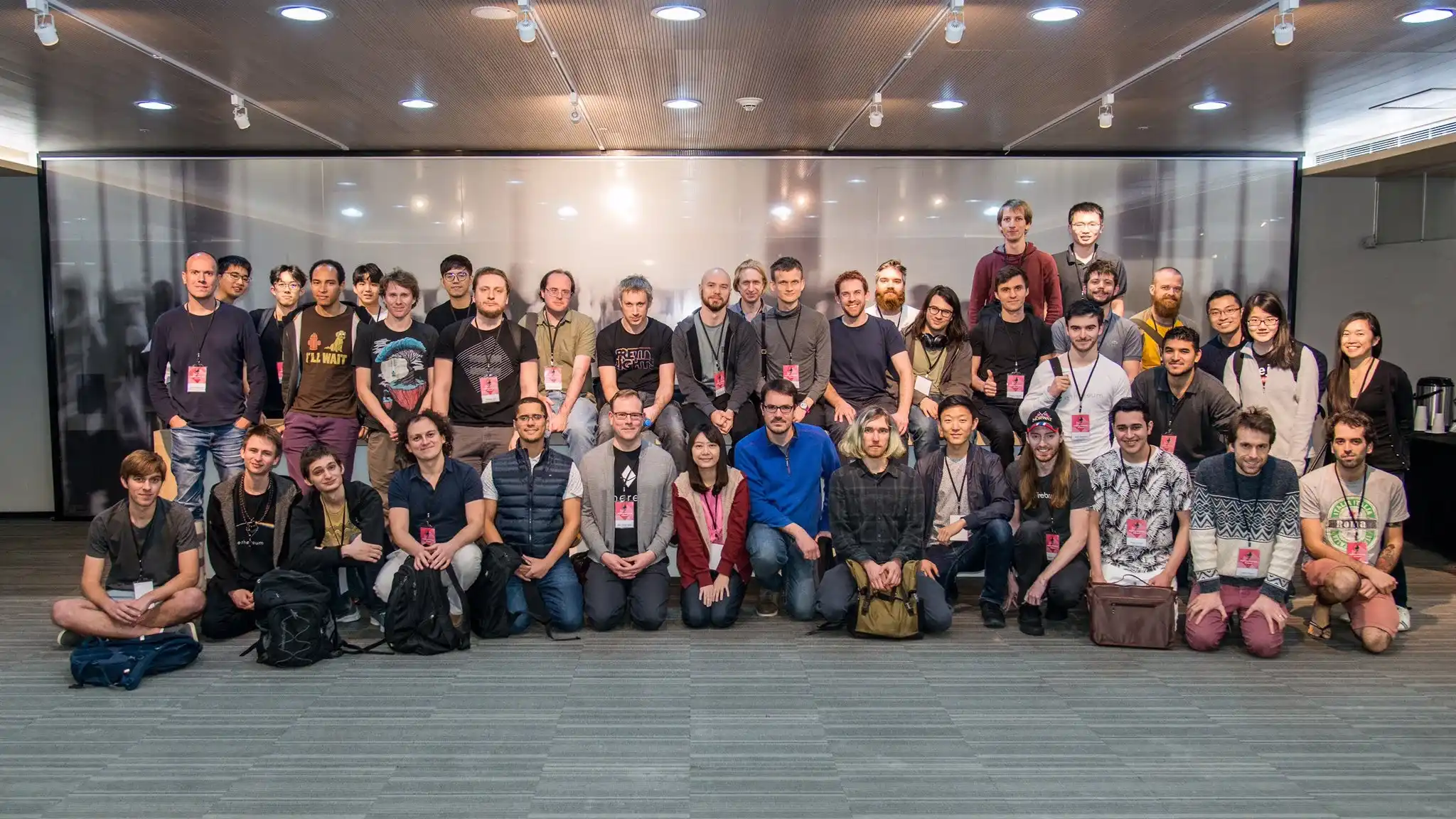
EF Foundation's Self-Salvation: Wang Xiaowei

Sharding workshop in Taipei, image from Wang Hsiao-Wei's X platform sharing

The founder of Celer Network, Dr. Dong, highly praises Hsiao-Wei Wang. He mentioned that between 2018 and 2019, Wang jointly led the Ethereum Foundation's Grant Program with Ken, who is now in charge of the Uniswap Foundation. She not only actively promoted project implementation but also had a deep understanding of the Asian developer community, advocating for more voice for many Chinese and Asian builders and facilitating many effective collaborations with a pragmatic attitude.

Today, as the Executive Director of the Ethereum Foundation, Hsiao-Wei Wang has a dual mission of R&D insight and community building. Her joining is seen as an important signal of Ethereum returning to its technical roots and grassroots spirit.

The Ethereum Dilemma and Hsiao-Wei Wang's "Technical Scalpel"

The Triple Crisis of Ethereum

· Technical Debt and Ecosystem Fragmentation: Ethereum's mainnet TPS has long hovered around 90 transactions per second, while Solana, with its high throughput and MEME wealth effect, has attracted users. The brutal growth of Layer 2 has exacerbated ecosystem division: L2 solutions such as Base route 90% of revenue to Coinbase, leaving less than 1% to support the mainnet, and even instances of teams like Optimism openly clashing with the EF over the "Blob Data Rent Protocol." Wang Hsiao-Wei's advocated "Sharding+ZK-Rollup" solution needs to achieve a million TPS by 2026; otherwise, the community may question it as a "paper blueprint."

· Governance Trust Deficit: In 2024, the Ethereum Foundation (EF) sold 4,466 ETH, causing a 30% market value plunge and leading the community to accuse it of "dumping ETH." Although Vitalik explained that the sale was for employee compensation and ecosystem donations, after analyzing the budget report, Aave founder Stani Kulechov pointed out that the EF's annual burn rate reached $130 million, requiring a reduction to $30 million and a downsizing of the team. More critically, core developer Eric Conner announced his departure citing "EF resistance to change," while Lido founder Konstantin Lomashuk hinted at establishing a "Second Foundation," directly challenging the EF's monopoly on power.

· Value Narrative Weakness: The era of DeFi and NFT dual-wheel drive came to an end, with Ethereum's "world computer" narrative being overtaken by Solana's "casino economics." Trump's issuance of TRUMP coin on Solana triggered a FOMO frenzy, with its on-chain USDC supply growing 600% in six months, while high gas fees on the Ethereum mainnet forced meme coin developers to collectively migrate. Wang Xiaowei's EIP-4844 proposal, which reduced Layer 2 fees by 90%, did not translate the prosperity of a Base chain with 2 million daily active users into ETH value capture.
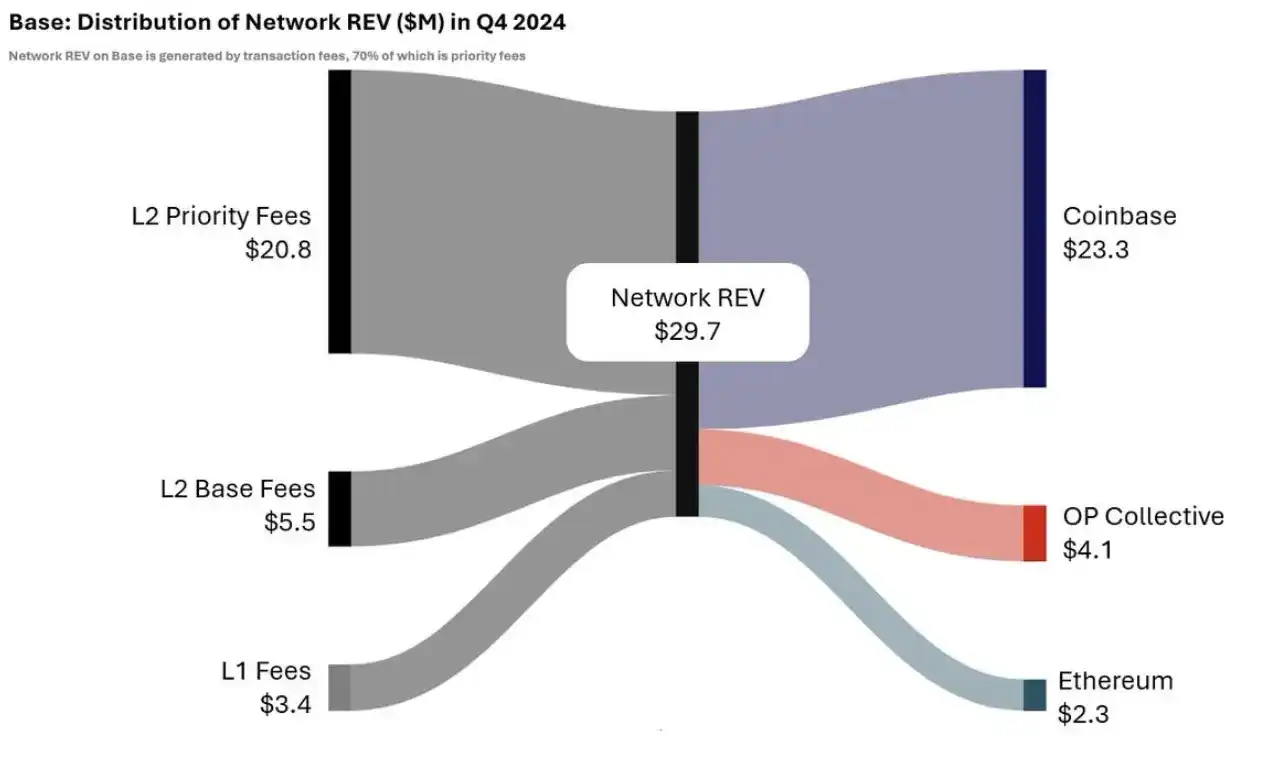
Coinbase 2024 Q4 Revenue Allocation, image source: X

The Breakthrough Experiment of Technocratic Bureaucracy

· Power Coding at the Protocol Layer: Wang Xiaowei is transforming technical ideals into governance rules. Through the Cancun upgrade, a "social consensus layer" was introduced to dynamically link the EF's ETH sale quota with the mainnet staking rate to alleviate market panic. By mandating L2 to pay royalties to the mainnet based on Blob data volume (similar to fees on Web2 platforms), despite facing opposition from Optimism, this move could reshape Ethereum's value distribution mechanism.

· Game Theory Model of Dynamic Sell-Off Mechanism

Wang Xiaowei's designed rule of "EF's ETH sale quota being linked to the mainnet staking rate" is not a simple administrative directive but is based on an algorithmic constraint rooted in Nash equilibrium:

· When the mainnet staking rate is ≥ 25%, the EF's monthly sell-off limit is 300 ETH;

· If the staking rate falls below 20%, the selling quota is automatically reset to zero.

This mechanism forces the EF to form a community of interest with stakers—when the staking rate fell to 18% in August 2024, the EF's pause of selling action caused a 12% single-day rebound in ETH price, validating the market's positive feedback on rule transparency.

The Economic Rationality of L2 Fee Sharing Mechanism

Forced Layer 2 to pay a 5% income based on Blob data volume (3% injected into the mainnet staking pool, 2% allocated to core developers), essentially addressing the "tragedy of the commons":

· The base chain generates approximately 2000 Blobs per day (worth $20,000), under this rule, it needs to pay $7.3 million annually to the mainnet, equivalent to Coinbase taking a 15% profit cut;

· Compared to competitor chains like Polygon charging 10%-20% fees to node validators, Ethereum's share is relatively mild. This move could increase the mainnet's annual revenue by at least $50 million, easing EF's financial pressure.

· Fusion of Eastern and Western Governance Philosophy: Its leading "Technology Teahouse" mechanism invites Vitalik to dialogue with grassroots developers monthly, weakening the authoritarian worship of "V-godism"; meanwhile, it tacitly approves Chinese teams to test a shard variant on a compliant chain in Hong Kong, as a reserve technical upgrade option for the future.

· Agenda Setting of the Technology Teahouse

The monthly developer dialogues are not just "empty talks," but adopt an improved version of the Robert's Rules of Order:

· The priority of topics is determined by the number of GitHub issue likes (to avoid EF's internal manipulation);

· Each proposal must be accompanied by feasibility assessment reports from at least 3 Layer 2 teams. The "EIP-7624 Proposal" approved at the November 2024 meeting (optimizing cross-chain gas fee prediction model) was precisely put forward by the Metis team at the teahouse meeting and passed unanimously.

· The Technical Strategy of Hong Kong Shard Experiment

Allowing Chinese teams to test "dynamic sharding" technology on a compliant chain (automatically adjusting the number of shards based on transaction load), it serves as a "technical sandbox" to address geopolitical risks.

· Hong Kong Cyberport Chain has achieved a single-shard throughput of 5000 TPS and boasts 95% compatibility with Ethereum mainnet's ZK-Rollup;

· This trial has reserved a switchable "China Option" for the 2026 mainnet upgrade — if U.S. regulations escalate, Hong Kong Chain's technical modules can be quickly transplanted to the mainnet.

· Compliance Game of DeFi Staking: Establish a 5-of-3 Multisig Wallet, deposit $1.5 billion worth of ETH into protocols like Aave for interest generation, attempting to reverse the Ethereum Foundation's "only sell, not earn" image, and testing the compliance flexibility of decentralized finance on the edge of SEC regulations.

The balancing mechanism of the Multisig Wallet $1.5 billion worth of ETH is injected into a 5-of-3 multisig wallet composed of Chainlink, Aave, EF, Gnosis, and Lido, with each step of operation leaving an on-chain trace:

· Distribution formula for returns is written into the smart contract (60% for developer grants, 30% for ETH buyback and burn, 10% as a risk reserve);

· Even if facing an SEC investigation, this structure can argue through "protocol autonomy" (as established by the 2024 Uniswap lawsuit precedent). After running for half a year, the fund's annualized return reached 8.2% (around $12.3 million), far exceeding the cash flow return from EF's ETH sell-off.

Unfinished Battle and Hidden Perils

· Collision of Technical Idealism and Reality: Under the threat of Solana's single-chain million TPS, Wang Xiaowei's "Sharding + ZK-Rollup" solution needs to be implemented before 2026, or else it will be questioned as a "paper blueprint";

· Community Split Risk: Lido founder Konstantin Lomashuk hints at establishing a "Second Foundation," with radical reforms potentially angering "V God fundamentalists";

· Compliance Minefield: The privacy cross-chain bridge co-developed by EF and Coinbase may violate the U.S. "Hybrid Asset Act," and Wang Xiaowei still needs to prove "protocol neutrality" in a congressional hearing to avoid following in Ripple's footsteps.

· Cultural Conflict: Western developers criticize its "Asian Efficiency First" strategy for causing a 30% increase in testnet bug rates, necessitating a recalibration between code rigor and iteration speed.

Western developers' criticism of the "30% Increase in Test Network Vulnerability Rate" is actually the inevitable result of the trade-off between iteration speed and security:

· The EF Asia Pacific team adopts a Toyota-style "kanban management" system, reducing the upgrade cycle from 6 months to 3 months. However, according to research from the Linux Foundation, a 50% reduction in code review time can lead to a 25%-40% increase in vulnerability rates;

· Wang Xiaowei introduced Formal Verification tools (such as Certora) for automated auditing, reducing the number of Critical Bugs by 60%. However, this came at a cost of a $2 million/year increase in development expenses.

Conclusion: A Silent "Technological Breakthrough"

Wang Xiaowei's entry also indirectly confirms Ethereum's transformation from a "young genius" to a "middle-aged technologist" – no longer relying solely on Vitalik's bursts of inspiration, but on systematic engineering thinking and incremental reform. This "Chinese technical bureaucrat"'s involvement in the transformation may herald Ethereum's inevitable "midlife crisis" battle. It is also the intersection of code politics with Confucian and Daoist wisdom, injecting Eastern governance philosophy into a new chapter of decentralized systems.

Original Article Link

You may also like

Token Cannot Compound, Where Is the Real Investment Opportunity?

The next chapter in the crypto industry will undoubtedly be written by Crypto-empowered Stocks.

February 6th Market Key Intelligence, How Much Did You Miss?

1. On-chain Flows: $508.2M USD inflow to Ethereum today; $390.8M USD outflow from Arbitrum 2. Biggest Gainers/Losers: $HBTC, $AIO 3. Top News: Current Bitcoin weekly RSI oversold signal comparable to June 2022

China's Central Bank and Eight Other Departments' Latest Regulatory Focus: Key Attention to RWA Tokenized Asset Risk


Foreword: Today, the People's Bank of China's website published the "Notice of the People's Bank of China, National Development and Reform Commission, Ministry of Industry and Information Technology, Ministry of Public Security, State Administration for Market Regulation, China Banking and Insurance Regulatory Commission, China Securities Regulatory Commission, State Administration of Foreign Exchange on Further Preventing and Dealing with Risks Related to Virtual Currency and Others (Yinfa [2026] No. 42)", the latest regulatory requirements from the eight departments including the central bank, which are basically consistent with the regulatory requirements of recent years. The main focus of the regulation is on speculative activities such as virtual currency trading, exchanges, ICOs, overseas platform services, and this time, regulatory oversight of RWA has been added, explicitly prohibiting RWA tokenization, stablecoins (especially those pegged to the RMB). The following is the full text:


To the people's governments of all provinces, autonomous regions, and municipalities directly under the Central Government, the Xinjiang Production and Construction Corps:


  Recently, there have been speculative activities related to virtual currency and Real-World Assets (RWA) tokenization, disrupting the economic and financial order and jeopardizing the property security of the people. In order to further prevent and address the risks related to virtual currency and Real-World Assets tokenization, effectively safeguard national security and social stability, in accordance with the "Law of the People's Republic of China on the People's Bank of China," "Law of the People's Republic of China on Commercial Banks," "Securities Law of the People's Republic of China," "Law of the People's Republic of China on Securities Investment Funds," "Law of the People's Republic of China on Futures and Derivatives," "Cybersecurity Law of the People's Republic of China," "Regulations of the People's Republic of China on the Administration of Renminbi," "Regulations on Prevention and Disposal of Illegal Fundraising," "Regulations of the People's Republic of China on Foreign Exchange Administration," "Telecommunications Regulations of the People's Republic of China," and other provisions, after reaching consensus with the Cyberspace Administration of China, the Supreme People's Court, and the Supreme People's Procuratorate, and with the approval of the State Council, the relevant matters are notified as follows:


  I. Clarify the essential attributes of virtual currency, Real-World Assets tokenization, and related business activities


  (I) Virtual currency does not possess the legal status equivalent to fiat currency. Virtual currencies such as Bitcoin, Ether, Tether, etc., have the main characteristics of being issued by non-monetary authorities, using encryption technology and distributed ledger or similar technology, existing in digital form, etc. They do not have legal tender status, should not and cannot be circulated and used as currency in the market.


  The business activities related to virtual currency are classified as illegal financial activities. The exchange of fiat currency and virtual currency within the territory, exchange of virtual currencies, acting as a central counterparty in buying and selling virtual currencies, providing information intermediary and pricing services for virtual currency transactions, token issuance financing, and trading of virtual currency-related financial products, etc., fall under illegal financial activities, such as suspected illegal issuance of token vouchers, unauthorized public issuance of securities, illegal operation of securities and futures business, illegal fundraising, etc., are strictly prohibited across the board and resolutely banned in accordance with the law. Overseas entities and individuals are not allowed to provide virtual currency-related services to domestic entities in any form.


  A stablecoin pegged to a fiat currency indirectly fulfills some functions of the fiat currency in circulation. Without the consent of relevant authorities in accordance with the law and regulations, any domestic or foreign entity or individual is not allowed to issue a RMB-pegged stablecoin overseas.


(II)Tokenization of Real-World Assets refers to the use of encryption technology and distributed ledger or similar technologies to transform ownership rights, income rights, etc., of assets into tokens (tokens) or other interests or bond certificates with token (token) characteristics, and carry out issuance and trading activities.


  Engaging in the tokenization of real-world assets domestically, as well as providing related intermediary, information technology services, etc., which are suspected of illegal issuance of token vouchers, unauthorized public offering of securities, illegal operation of securities and futures business, illegal fundraising, and other illegal financial activities, shall be prohibited; except for relevant business activities carried out with the approval of the competent authorities in accordance with the law and regulations and relying on specific financial infrastructures. Overseas entities and individuals are not allowed to illegally provide services related to the tokenization of real-world assets to domestic entities in any form.


  II. Sound Work Mechanism


  (III) Inter-agency Coordination. The People's Bank of China, together with the National Development and Reform Commission, the Ministry of Industry and Information Technology, the Ministry of Public Security, the State Administration for Market Regulation, the China Banking and Insurance Regulatory Commission, the China Securities Regulatory Commission, the State Administration of Foreign Exchange, and other departments, will improve the work mechanism, strengthen coordination with the Cyberspace Administration of China, the Supreme People's Court, and the Supreme People's Procuratorate, coordinate efforts, and overall guide regions to carry out risk prevention and disposal of virtual currency-related illegal financial activities.


  The China Securities Regulatory Commission, together with the National Development and Reform Commission, the Ministry of Industry and Information Technology, the Ministry of Public Security, the People's Bank of China, the State Administration for Market Regulation, the China Banking and Insurance Regulatory Commission, the State Administration of Foreign Exchange, and other departments, will improve the work mechanism, strengthen coordination with the Cyberspace Administration of China, the Supreme People's Court, and the Supreme People's Procuratorate, coordinate efforts, and overall guide regions to carry out risk prevention and disposal of illegal financial activities related to the tokenization of real-world assets.


  (IV) Strengthening Local Implementation. The people's governments at the provincial level are overall responsible for the prevention and disposal of risks related to virtual currencies and the tokenization of real-world assets in their respective administrative regions. The specific leading department is the local financial regulatory department, with participation from branches and dispatched institutions of the State Council's financial regulatory department, telecommunications regulators, public security, market supervision, and other departments, in coordination with cyberspace departments, courts, and procuratorates, to improve the normalization of the work mechanism, effectively connect with the relevant work mechanisms of central departments, form a cooperative and coordinated working pattern between central and local governments, effectively prevent and properly handle risks related to virtual currencies and the tokenization of real-world assets, and maintain economic and financial order and social stability.


  III. Strengthened Risk Monitoring, Prevention, and Disposal


  (5) Enhanced Risk Monitoring. The People's Bank of China, China Securities Regulatory Commission, National Development and Reform Commission, Ministry of Industry and Information Technology, Ministry of Public Security, State Administration of Foreign Exchange, Cyberspace Administration of China, and other departments continue to improve monitoring techniques and system support, enhance cross-departmental data analysis and sharing, establish sound information sharing and cross-validation mechanisms, promptly grasp the risk situation of activities related to virtual currency and real-world asset tokenization. Local governments at all levels give full play to the role of local monitoring and early warning mechanisms. Local financial regulatory authorities, together with branches and agencies of the State Council's financial regulatory authorities, as well as departments of cyberspace and public security, ensure effective connection between online monitoring, offline investigation, and fund tracking, efficiently and accurately identify activities related to virtual currency and real-world asset tokenization, promptly share risk information, improve early warning information dissemination, verification, and rapid response mechanisms.


  (6) Strengthened Oversight of Financial Institutions, Intermediaries, and Technology Service Providers. Financial institutions (including non-bank payment institutions) are prohibited from providing account opening, fund transfer, and clearing services for virtual currency-related business activities, issuing and selling financial products related to virtual currency, including virtual currency and related financial products in the scope of collateral, conducting insurance business related to virtual currency, or including virtual currency in the scope of insurance liability. Financial institutions (including non-bank payment institutions) are prohibited from providing custody, clearing, and settlement services for unauthorized real-world asset tokenization-related business and related financial products. Relevant intermediary institutions and information technology service providers are prohibited from providing intermediary, technical, or other services for unauthorized real-world asset tokenization-related businesses and related financial products.


  (7) Enhanced Management of Internet Information Content and Access. Internet enterprises are prohibited from providing online business venues, commercial displays, marketing, advertising, or paid traffic diversion services for virtual currency and real-world asset tokenization-related business activities. Upon discovering clues of illegal activities, they should promptly report to relevant departments and provide technical support and assistance for related investigations and inquiries. Based on the clues transferred by the financial regulatory authorities, the cyberspace administration, telecommunications authorities, and public security departments should promptly close and deal with websites, mobile applications (including mini-programs), and public accounts engaged in virtual currency and real-world asset tokenization-related business activities in accordance with the law.


  (8) Strengthened Entity Registration and Advertisement Management. Market supervision departments strengthen entity registration and management, and enterprise and individual business registrations must not contain terms such as "virtual currency," "virtual asset," "cryptocurrency," "crypto asset," "stablecoin," "real-world asset tokenization," or "RWA" in their names or business scopes. Market supervision departments, together with financial regulatory authorities, legally enhance the supervision of advertisements related to virtual currency and real-world asset tokenization, promptly investigating and handling relevant illegal advertisements.


  (IX) Continued Rectification of Virtual Currency Mining Activities. The National Development and Reform Commission, together with relevant departments, strictly controls virtual currency mining activities, continuously promotes the rectification of virtual currency mining activities. The people's governments of various provinces take overall responsibility for the rectification of "mining" within their respective administrative regions. In accordance with the requirements of the National Development and Reform Commission and other departments in the "Notice on the Rectification of Virtual Currency Mining Activities" (NDRC Energy-saving Building [2021] No. 1283) and the provisions of the "Guidance Catalog for Industrial Structure Adjustment (2024 Edition)," a comprehensive review, investigation, and closure of existing virtual currency mining projects are conducted, new mining projects are strictly prohibited, and mining machine production enterprises are strictly prohibited from providing mining machine sales and other services within the country.


  (X) Severe Crackdown on Related Illegal Financial Activities. Upon discovering clues to illegal financial activities related to virtual currency and the tokenization of real-world assets, local financial regulatory authorities, branches of the State Council's financial regulatory authorities, and other relevant departments promptly investigate, determine, and properly handle the issues in accordance with the law, and seriously hold the relevant entities and individuals legally responsible. Those suspected of crimes are transferred to the judicial authorities for processing according to the law.


 (XI) Severe Crackdown on Related Illegal and Criminal Activities. The Ministry of Public Security, the People's Bank of China, the State Administration for Market Regulation, the China Banking and Insurance Regulatory Commission, the China Securities Regulatory Commission, as well as judicial and procuratorial organs, in accordance with their respective responsibilities, rigorously crack down on illegal and criminal activities related to virtual currency, the tokenization of real-world assets, such as fraud, money laundering, illegal business operations, pyramid schemes, illegal fundraising, and other illegal and criminal activities carried out under the guise of virtual currency, the tokenization of real-world assets, etc.


  (XII) Strengthen Industry Self-discipline. Relevant industry associations should enhance membership management and policy advocacy, based on their own responsibilities, advocate and urge member units to resist illegal financial activities related to virtual currency and the tokenization of real-world assets. Member units that violate regulatory policies and industry self-discipline rules are to be disciplined in accordance with relevant self-regulatory management regulations. By leveraging various industry infrastructure, conduct risk monitoring related to virtual currency, the tokenization of real-world assets, and promptly transfer issue clues to relevant departments.


  IV. Strict Supervision of Domestic Entities Engaging in Overseas Business Activities


(XIII) Without the approval of relevant departments in accordance with the law and regulations, domestic entities and foreign entities controlled by them may not issue virtual currency overseas.


  (XIV) Domestic entities engaging directly or indirectly in overseas external debt-based tokenization of real-world assets, or conducting asset securitization activities abroad based on domestic ownership rights, income rights, etc. (hereinafter referred to as domestic equity), should be strictly regulated in accordance with the principles of "same business, same risk, same rules." The National Development and Reform Commission, the China Securities Regulatory Commission, the State Administration of Foreign Exchange, and other relevant departments regulate it according to their respective responsibilities. For other forms of overseas real-world asset tokenization activities based on domestic equity by domestic entities, the China Securities Regulatory Commission, together with relevant departments, supervise according to their division of responsibilities. Without the consent and filing of relevant departments, no unit or individual may engage in the above-mentioned business.


  (15) Overseas subsidiaries and branches of domestic financial institutions providing Real World Asset Tokenization-related services overseas shall do so legally and prudently. They shall have professional personnel and systems in place to effectively mitigate business risks, strictly implement customer onboarding, suitability management, anti-money laundering requirements, and incorporate them into the domestic financial institutions' compliance and risk management system. Intermediaries and information technology service providers offering Real World Asset Tokenization services abroad based on domestic equity or conducting Real World Asset Tokenization business in the form of overseas debt for domestic entities directly or indirectly venturing abroad must strictly comply with relevant laws and regulations. They should establish and improve relevant compliance and internal control systems in accordance with relevant normative requirements, strengthen business and risk control, and report the business developments to the relevant regulatory authorities for approval or filing.


  V. Strengthen Organizational Implementation


  (16) Strengthen organizational leadership and overall coordination. All departments and regions should attach great importance to the prevention of risks related to virtual currencies and Real World Asset Tokenization, strengthen organizational leadership, clarify work responsibilities, form a long-term effective working mechanism with centralized coordination, local implementation, and shared responsibilities, maintain high pressure, dynamically monitor risks, effectively prevent and mitigate risks in an orderly and efficient manner, legally protect the property security of the people, and make every effort to maintain economic and financial order and social stability.


  (17) Widely carry out publicity and education. All departments, regions, and industry associations should make full use of various media and other communication channels to disseminate information through legal and policy interpretation, analysis of typical cases, and education on investment risks, etc. They should promote the illegality and harm of virtual currencies and Real World Asset Tokenization-related businesses and their manifestations, fully alert to potential risks and hidden dangers, and enhance public awareness and identification capabilities for risk prevention.


  VI. Legal Responsibility


  (18) Engaging in illegal financial activities related to virtual currencies and Real World Asset Tokenization in violation of this notice, as well as providing services for virtual currencies and Real World Asset Tokenization-related businesses, shall be punished in accordance with relevant regulations. If it constitutes a crime, criminal liability shall be pursued according to the law. For domestic entities and individuals who knowingly or should have known that overseas entities illegally provided virtual currency or Real World Asset Tokenization-related services to domestic entities and still assisted them, relevant responsibilities shall be pursued according to the law. If it constitutes a crime, criminal liability shall be pursued according to the law.


  (19) If any unit or individual invests in virtual currencies, Real World Asset Tokens, and related financial products against public order and good customs, the relevant civil legal actions shall be invalid, and any resulting losses shall be borne by them. If there are suspicions of disrupting financial order and jeopardizing financial security, the relevant departments shall deal with them according to the law.


  This notice shall enter into force upon the date of its issuance. The People's Bank of China and ten other departments' "Notice on Further Preventing and Dealing with the Risks of Virtual Currency Trading Speculation" (Yinfa [2021] No. 237) is hereby repealed.


Former Partner's Perspective on Multicoin: Kyle's Exit, But the Game He Left Behind Just Getting Started

Kyle knew his game, so he decided to focus on playing the game he was good at and interested in.

Why Bitcoin Is Falling Now: The Real Reasons Behind BTC's Crash & WEEX's Smart Profit Playbook

Bitcoin's ongoing crash explained: Discover the 5 hidden triggers behind BTC's plunge & how WEEX's Auto Earn and Trade to Earn strategies help traders profit from crypto market volatility.

Wall Street's Hottest Trades See Exodus

This time there is no single triggering factor, but rather market anxiety about asset valuation, with many already skeptical of these valuations being too high, leading to investors choosing to retreat almost simultaneously.

Popular coins

Latest Crypto News

Read more