
Go Left? Go Right? The Crossroads of Cryptocurrency
The recent Libra incident has completely exposed the dark side of Crypto, once again fulfilling Plato's Allegory of the Cave. Even on the most transparent blockchain, we can only catch a glimpse of the shadows cast by the torches outside the cave. However, this Libra incident unprecedentedly revealed the outside scene to those inside the cave, creating a complex situation involving central aspects of national power, market makers, the core DeFi project on Solana, and key players in the industry.
After the event, it left behind many issues that the entire industry needs to address. Among them, Solana's core DEX, Jupiter, and Meteora were embroiled in the center of the whirlpool of this event. The joint statement released by BenChow, the co-founder of both projects, prompted a rethinking of a long-standing issue in the blockchain space—the debate between "permissioned" and "permissionless" blockchain projects, representing the two factions of blockchain. In light of this, Dapenti BlockBeats invited dForce's founder, MinDao, to discuss the reflections behind this event.
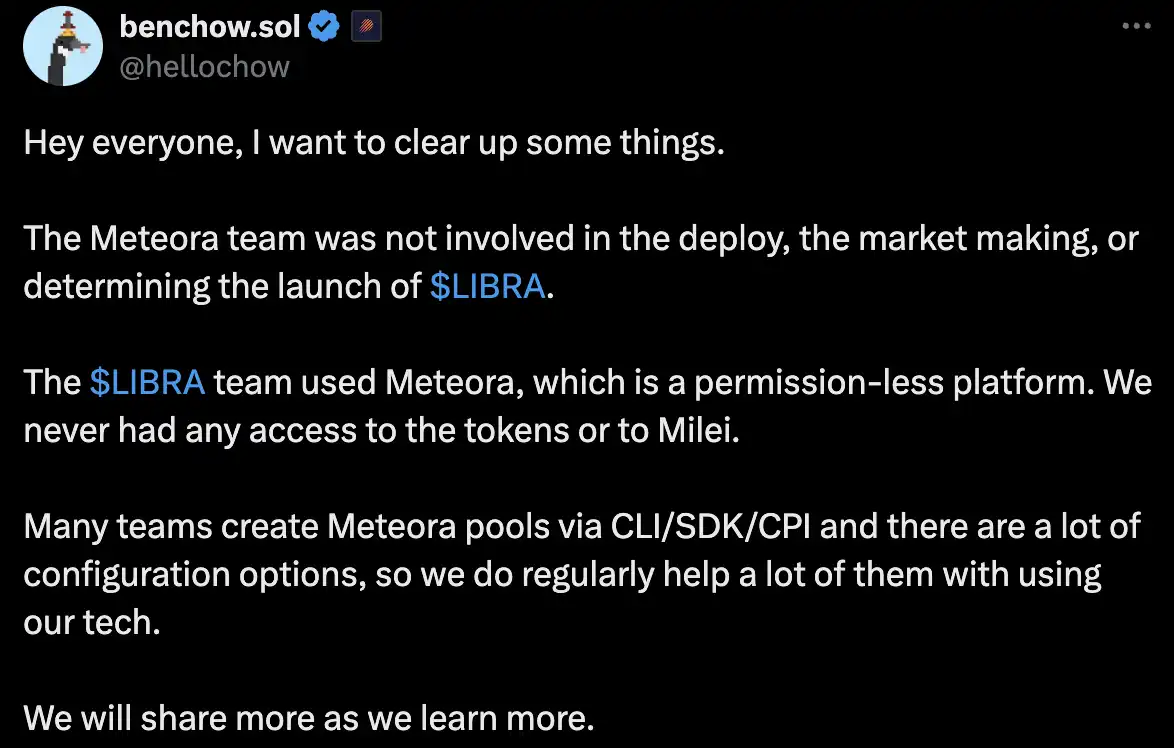
The Boundaries of "Permission"
As Jupiter and Meteora were deeply embroiled in confusion, social media was filled with discussions about their involvement in this event. DForce's founder, MinDao, stated, "The focus of the event is not on sniping but on using insider information to preemptively know about the authenticity of such events and then snipe. I don't understand why Libra chose to make such a complex setup through Meteora instead of easily issuing tokens using Uniswap."
When Ben pointed out that Meteora's DLMM pool required manual customization, the market naturally compared it to Uniswap V3's concentrated liquidity feature. The timeline goes back to the iconic vote initiated by Vitalik in 2018—over 80% of users supported "Uniswap should list freely," driving the blockchain from the ICO era to the DeFi permissionless era. Leveraging this mechanism, Uniswap once held over 80% of the DeFi market share at its peak, and its "permissionless" underlying logic still profoundly influences the industry's DeFi standards today.
During the same period of Uniswap's market dominance, Meteora quickly emerged as a prominent player in the Solana ecosystem after its launch. This was the time of DeFi Summer when all the stars aligned. However, Meteora effectively solved the slippage issue with its innovative routing algorithm, gaining a share of the DeFi market. After the team split off to create the aggregator Jupiter, the Jupiter ecosystem quickly surged ahead in market share, at one point occupying over 70% of Solana's liquidity inflows, becoming the most dominant entry infrastructure during Solana's DeFi tech boom.
Both are single-sided liquidity pools, one being the undisputed giant of the DeFi golden age, Uniswap, and the other being Jupiter, a grassroots-born underdog that rose to prominence. Despite Uniswap's 5-year history, enduring multiple bull and bear cycles, and launching countless rug tokens, it has not faced the same level of public outcry as Jupiter did in this incident. The reason behind this lies in a battle between open-source and closed-source.
Open Source or Closed Source? Ethereum or Solana?
Uniswap V3 enforces liquidity rules through mathematical formulas, with all parameters like fees and price ranges being publicly transparent and immutable. Therefore, even with single-sided liquidity, on-chain arbitrageurs can actively monitor on-chain data and conduct arbitrage to rebalance the market in real-time. This presents a high opportunity cost for projects expecting to control the market through partial price range manipulation. On the contrary, for DLMM, the project team needs Meteora's assistance to create a customized liquidity pool, a process that involves subjective judgments ("only Meteora can determine the reliability of the project team") and information asymmetry. For example, the Libra team may, under the guise of "enhancing user experience," request uncommon slippage parameters within special ranges or conceal liquidity lockup periods. These details often make it difficult for on-chain arbitrageurs to execute strategies quickly, leading to market price imbalances.
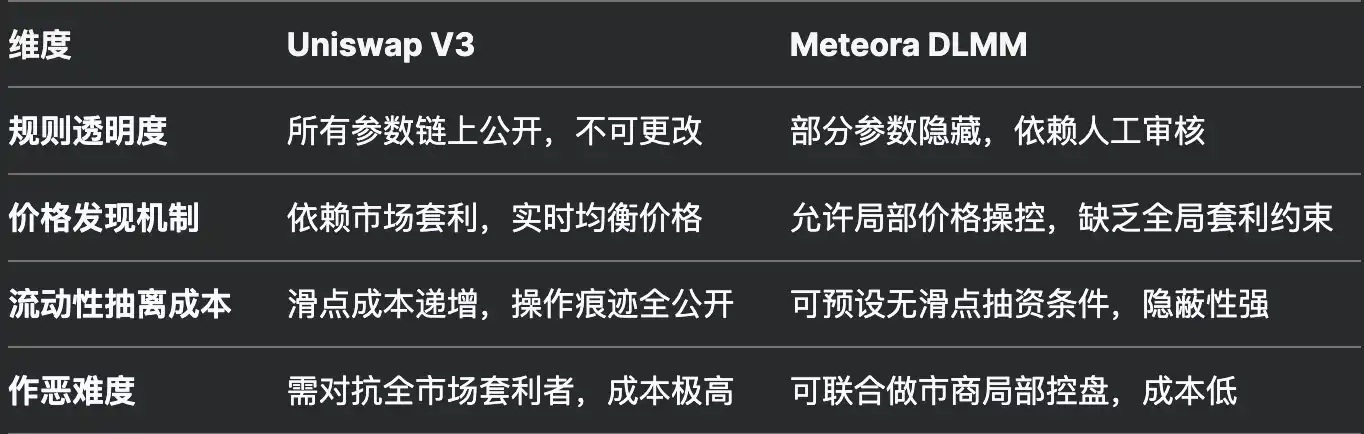
Related Reading: "Quickly Understand Meteora's Liquidity Price Range Viewing Method"
Meanwhile, the closed-source protocol and special liquidity pool settings allow celebrity tokens like $Libra to exit liquidity with ease and low risk when using Meteora DLMM. This indirectly enables teams behind malicious tokens to selectively harvest profits. According to Nansen's post-incident analysis report, among the 15,000 wallets with a PNL exceeding $1,000, 86.07% suffered losses totaling $250 million, while the remaining 2,100 wallets made profits of $180 million. Hayden, the founder of the main LP in this incident, KelsierVentures, openly stated that he profited $100 million from the trades and additionally received over $10 million in transaction fees.
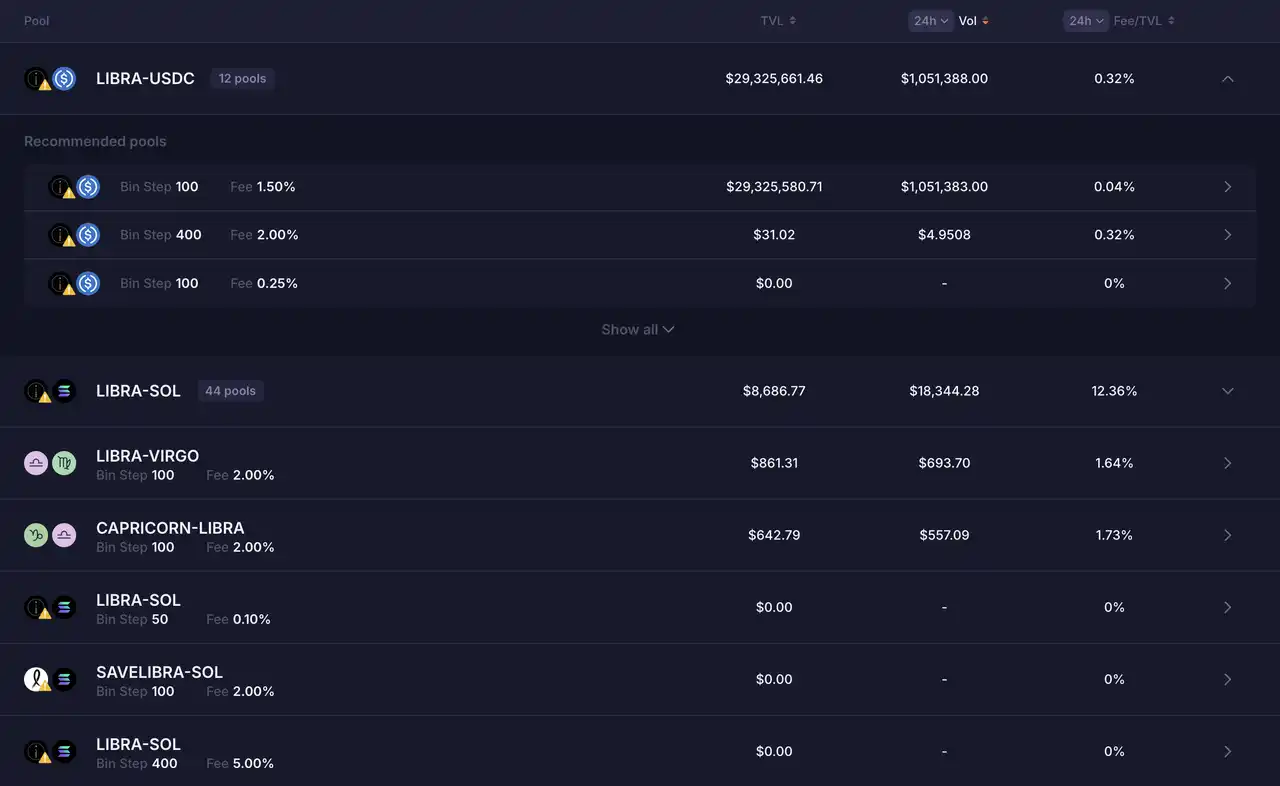
In fact, even in cases where the ecosystem cannot be open-sourced or for products that require customization, there are multiple ways to avoid malicious behavior from behind-the-scenes market makers. Olympus Pro's Bond mechanism "Market Maker Collateral Requirement to Prevent Malfeasance" and Trader Joe's liquidity ledger with a time-weighted exit model "Unlocking in stages based on trading volume and survival time" can both cater to the needs of large-scale token launches and customization while protecting users.
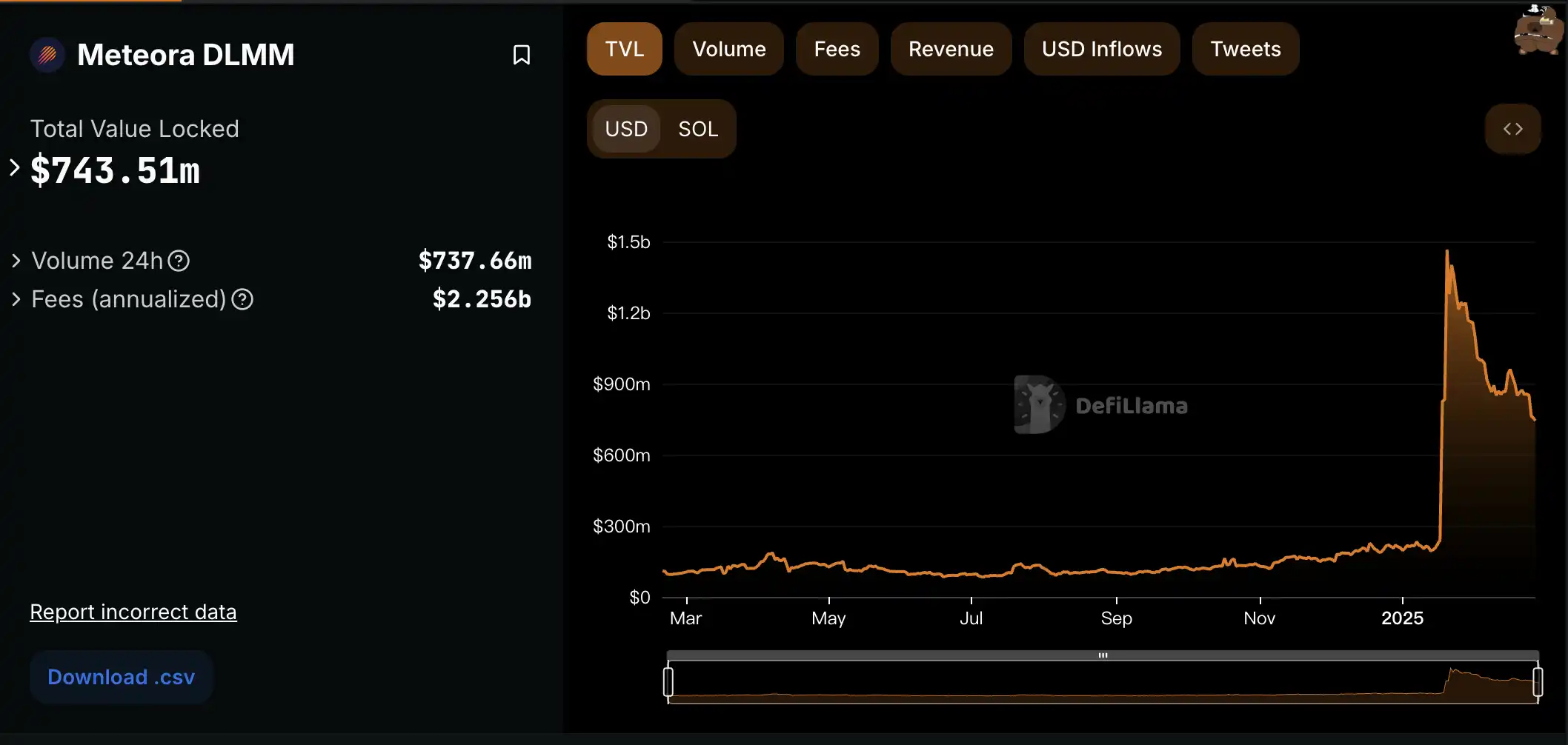
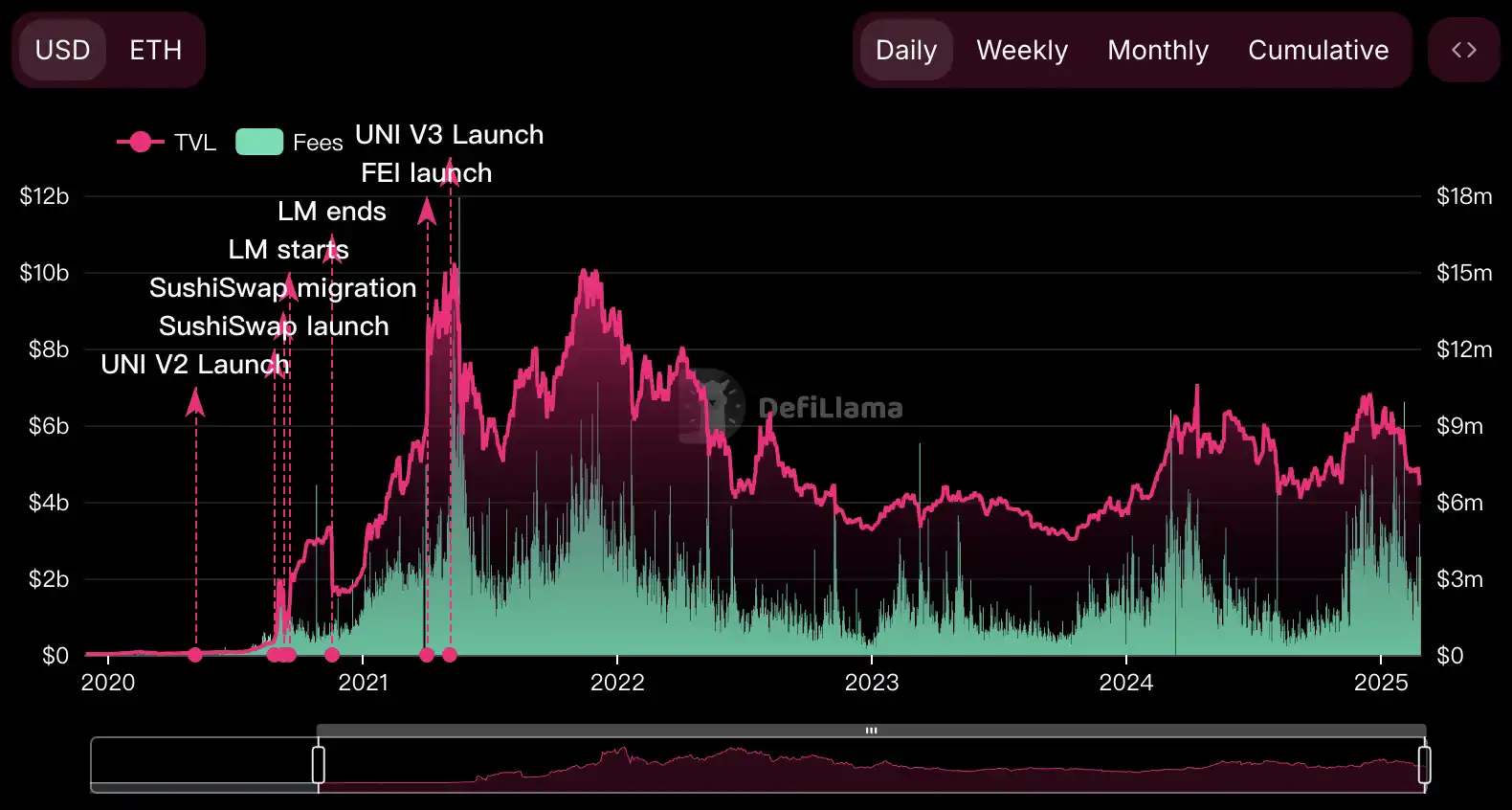
The rapid rise of DLMM TVL post-Trump event, data from DeFiLlama
「There is no middle ground in permissionless DeFi or in running a compliant CEX」 MinDao also pinpointed the core of this, adding, 「Where is the boundary, what kind of product is called DeFi, I think we need a clear framework on this. I feel that everyone in the crypto circle is also looking for various compromises, striving towards a balance of compliance and decentralization.」
Indeed, as long as humans are involved in the process, it cannot be called DeFi "decentralized" finance, and this product will inevitably face regulatory compliance issues. Faced with this issue, even Uniswap Labs, which is completely separate from the protocol and the company entity, could not escape. The U.S. SEC once attempted to charge Uniswap Labs with operating an unregistered broker, exchange, and clearinghouse, and issuing unregistered securities. From warnings, sending a Wells Notice, investigation, to formal charges, Uniswap underwent a 3-year-long self-certification process with the SEC, forcing the team to waste a significant amount of time and millions of dollars until now, on February 26, 2025, the U.S. SEC finally dropped its investigation into Uniswap Labs. We are in a phase where traditional financial rules are being abandoned to regulate DeFi by force, and in the midst of upcoming DeFi regulations.
The Double-Edged Sword of Liquidity
The above-mentioned artificial "permission" risk is just one of the reasons for community opposition, and Meteora itself does not hold a significant market share and cannot shake the entire industry. What is truly concerning is the vertical dominance of the Jupiter ecosystem.
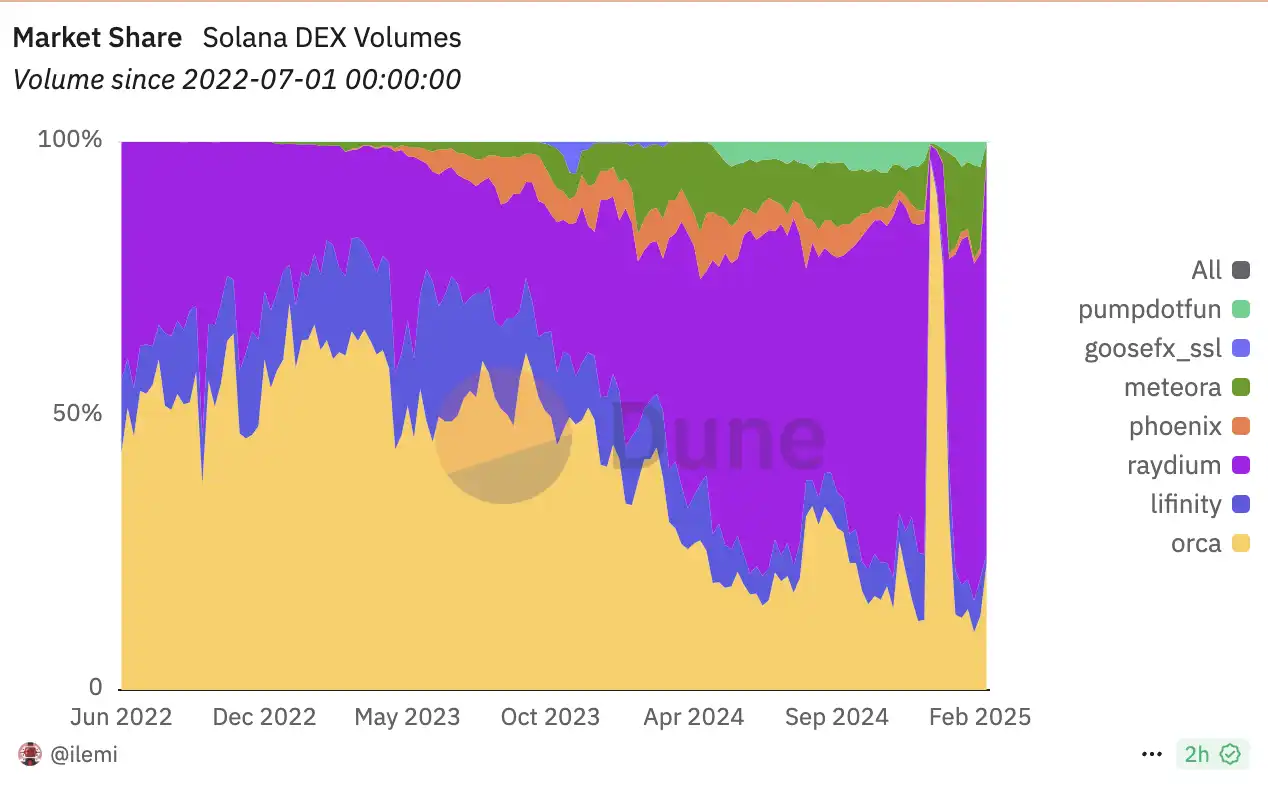
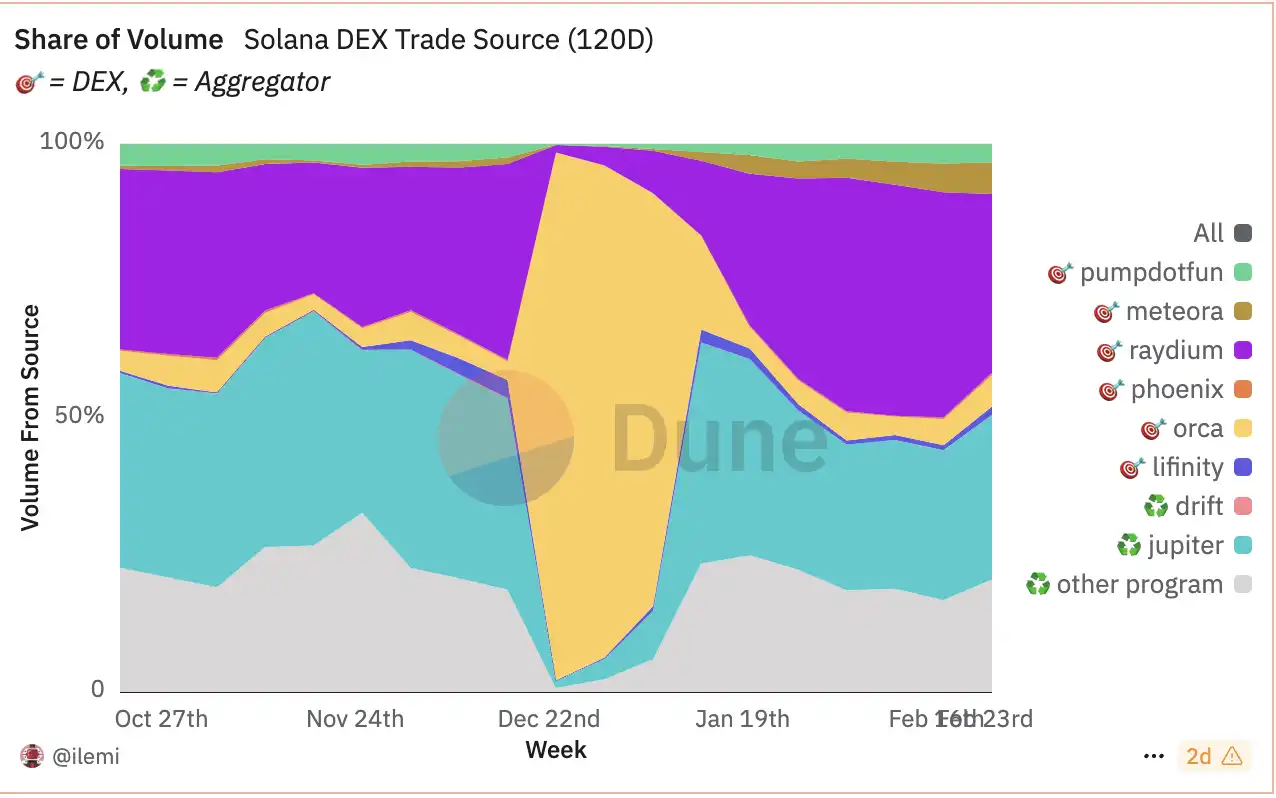
According to Dune data, Meteora's market share is only 5%
Starting in 2024, Jupiter began acquiring various ecosystem projects, from the user entry point Ultimate Wallet, to data analysis tool Coinhall, blockchain explorer SolanaFM, from the backend liquidity pool Meteora to the frontend Moonshot. By integrating wallet, data, and trading core infrastructure, Jupiter is building a self-contained DeFi service collection. Users can complete the entire process from depositing, trading to yield optimization within this ecosystem, and the recent launch of Jupnet indicates its intention to expand beyond Solana into the entire chain's DeFi ecosystem.
Such a powerful impact and product are like a double-edged sword. When nothing goes wrong, this is undoubtedly the best path for new users to enter the blockchain Mass Adoption, as seen from the potential demonstrated by the hundreds of thousands of non-crypto users added during the Moonshot to Trump Coin era. However, when it gets involved in an "insider trading" event, the market naturally becomes anxious about how to accept regulation for such a complex DeFi functionality and process, especially since it is tied to Solana, which currently has the largest liquidity in Crypto.
Just like the saying "everyone in the crypto world is making all sorts of compromises," the open-source Uniswap, for its own business logic, has set the shackles of the BSL "Business Source License" on V3 and V4 or has delisted some tokens from the frontend for regulatory legalization. How will the closed-source Jupiter compromise its own business blueprint and the balance between user trust and compliance?
Cultural DNA
When we extend the discussion to Uniswap and Jupiter, discussing whether ETH and Solana products have been influenced by the underlying culture of these two chains, MinDao believes that "Solana's closed-source pragmatism, pursuit of efficiency and value chain integration, is conducive to rapid expansion; while Ethereum's open-source freedom and diverse ecosystem require more considerations for development direction, and the underlying culture of the chain will profoundly influence the product's path."
In his article "Layer 2s as cultural extensions of Ethereum," Vitalik mentioned that Ethereum's underlying subculture is broadly divided into three camps: Crypto Punks, Regens, and Degens. Looking at it now, Ethereum's "crypto punk culture" is more vibrant, while the Degen culture has flourished in Solana. Ethereum leans more towards the white left, with its cultural DNA rooted in the spirit of open source and decentralized idealism, which is essentially a continuation of the BTC spirit, and its ecosystem evolution follows the logic of "common cooperation."
Ethereum core protocols like Uniswap and Aave are completely open source, allowing any developer to fork and iterate, as seen with Sushiswap forking Uniswap, forming a free-market competition. This has also led to the emergence of more niche products on Ethereum, each product excelling in its own field, with the product's moat being the "brand" itself. The speed of iteration and the solidity of the community significantly influence the project's dominance, while its development path is more horizontal.
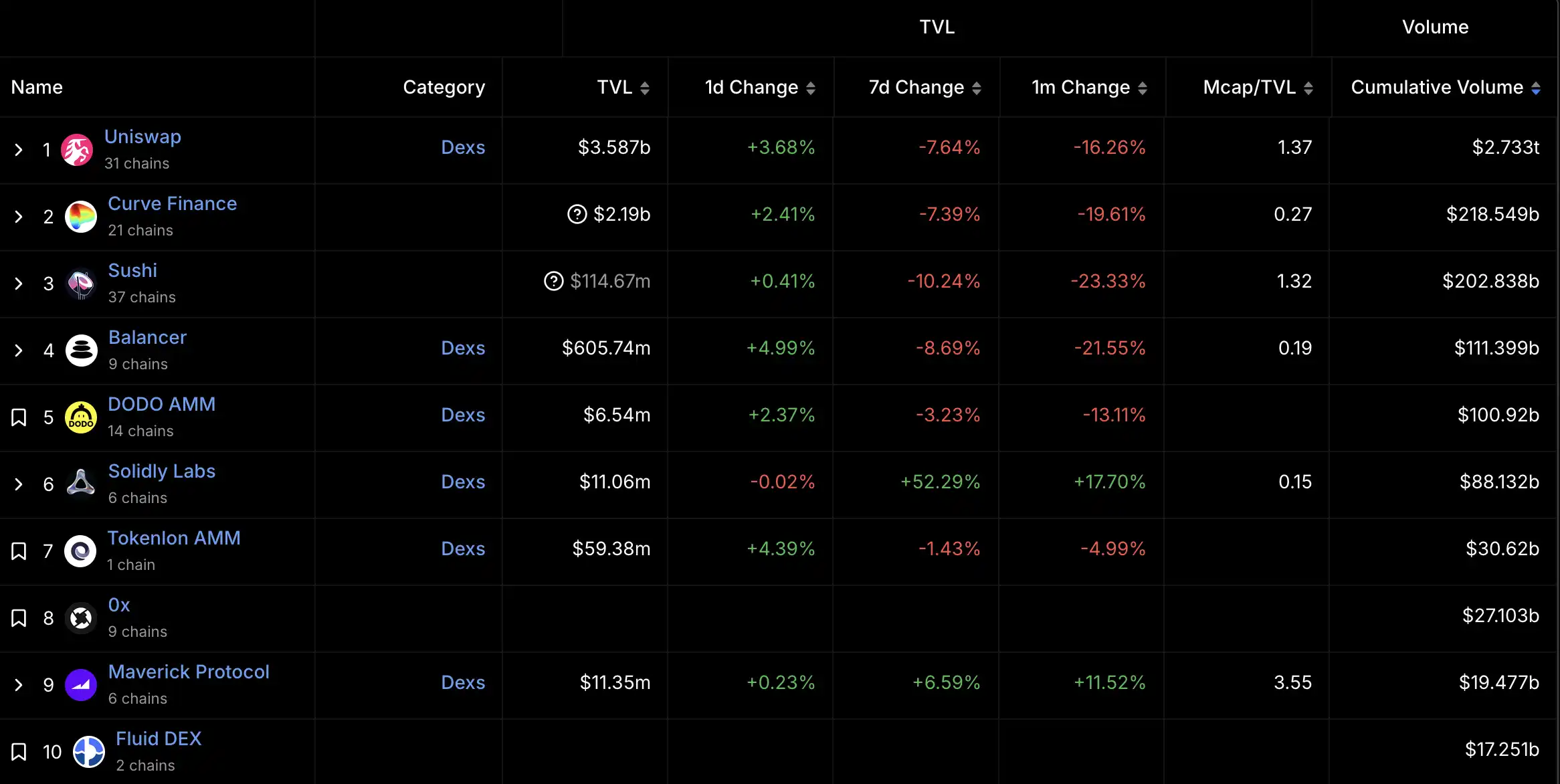
Protocols on the EVM are mostly multichain
While Solana embraces efficiency, its culture is based on a competitive sports spirit and relentless execution, closer to Web2's "winner-takes-all" mentality. This has allowed the "Degen culture" to take root extensively in this environment. The Solana Foundation excels in proactively integrating resources such as capital and government relations, enabling them to develop at an extraordinary pace. This mindset has permeated various products on the platform, where most mainstream projects on Solana are either difficult to integrate with other chains due to the underlying technology, or choose to keep their source code closed to prevent on-chain competitors from copying them. Solana is adept at leveraging various resources to develop and prioritize creating a value chain with the highest efficiency, monopolizing the entire value chain, and controlling the interest chain, similar to Tencent's "super-app" strategy. For example, Jupiter has acquired Meteora (DEX) and Moonshot (fiat gateway) to achieve "trade-mint-liquidity," or more recently, Pumpfun announced the abandonment of Raydium to directly launch a product business adding AMM pools on Pumpfun.
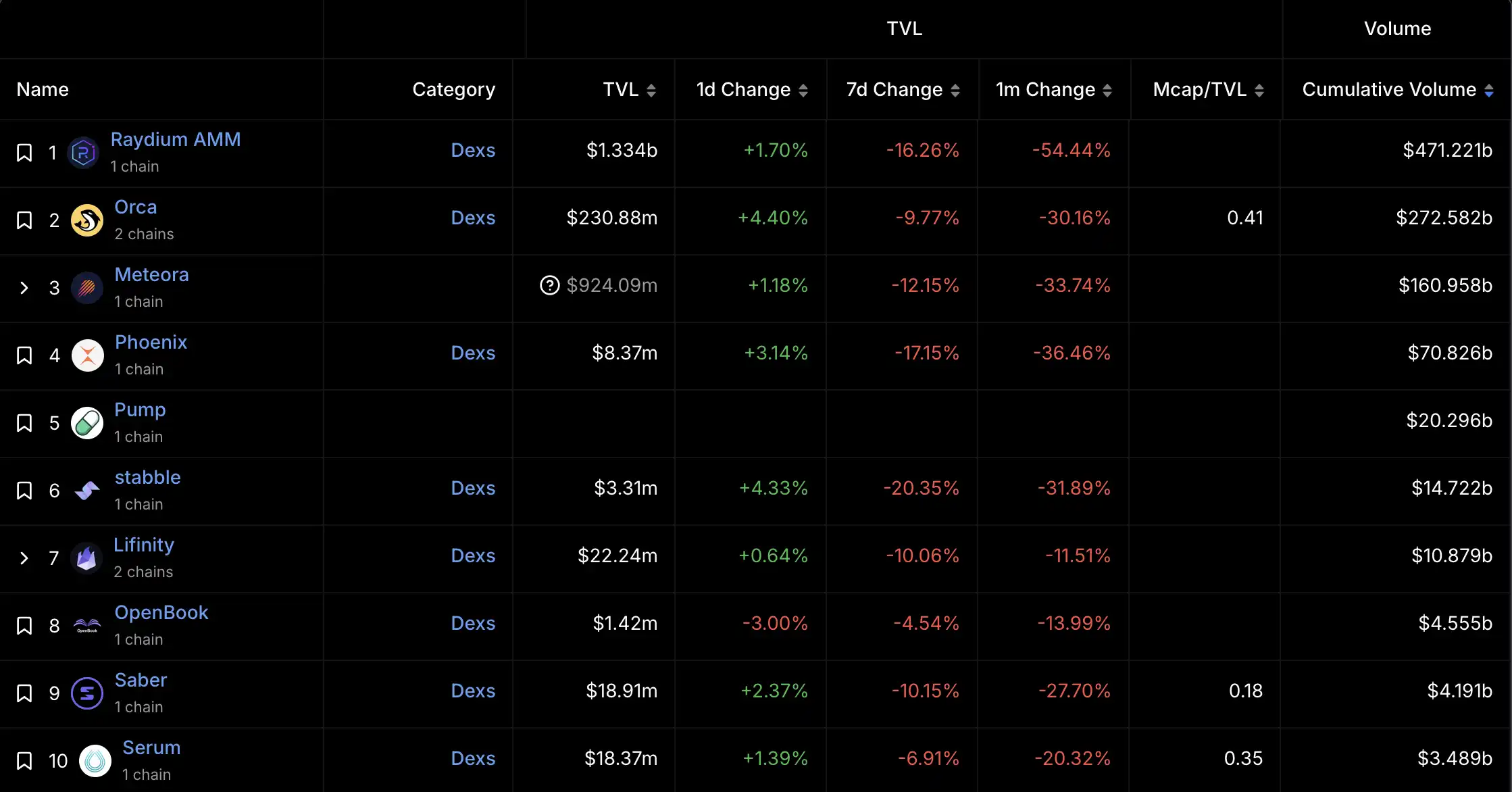
Protocols on Solana are mostly single-chain
The Future of Blockchain, Ethereum to the Left, Solana to the Right
The "Liberal" Ethereum
The underlying cultures of both sides have also shaped the paths they are currently on. Firstly, environmentalist Vitalik proposed transitioning Ethereum from PoW (Proof of Work) to PoS (Proof of Stake) due to the excessive energy consumption of PoW. In September 2022, Ethereum completed The Merge, officially transitioning from PoW to PoS. Energy consumption decreased from approximately 78 TWh per year, equivalent to Chile's national electricity consumption, to about 0.01 TWh. The PoS-introduced staking mechanism with a "32 ETH threshold" and the deflationary model of EIP-1559's burning mechanism have transformed Ethereum's tokenomics. Post-merge, the circulating ETH supply decreased by 3 million, the annual inflation rate dropped from 3.5% to -0.2%, and the number of validator nodes expanded from a few thousand miners in the PoW era to over 1 million stakers.
However, this initial choice has led to a phenomenon where the PoS staking threshold of "32 ETH" restricts the participation of most ordinary users. The top three staking service providers—Lido, Coinbase, and Kraken—control over 35% of the staked amount, sparking criticisms of the market becoming "the richer getting richer." Even Ethereum core developer Dankrad Feist acknowledged that "if Lido's share exceeds 33%, it may trigger social consensus intervention." Coupled with the exorbitant GasFee, this has led to "whales" becoming the primary users of Ethereum, leading to Ethereum being known as a "noble chain."
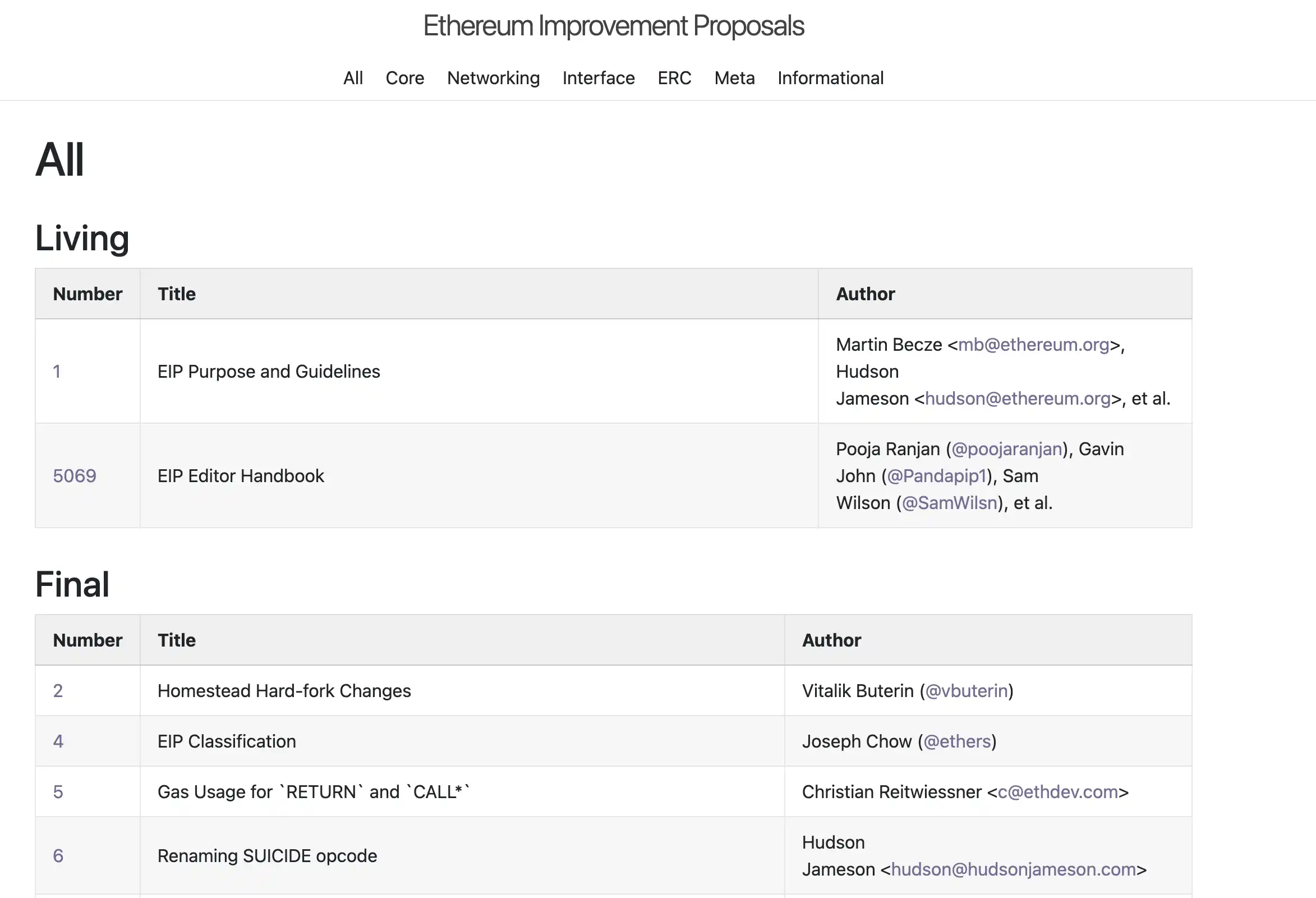
The Ethereum Improvement Proposal (EIP) voting process is lengthy, and community consensus is difficult to quickly achieve unless driven by core members. Reports have indicated that 68% of Ethereum Improvement Proposals are implemented by 10 individuals associated with the Ethereum Foundation. However, ecosystem decision-making often gets caught up in multi-party games, leading to low efficiency in key upgrades. For example, innovations like "account abstraction" have not been fully deployed yet, and the transition to Proof of Stake (PoS) mentioned above has been ongoing for 6 years. The complementary "EIP-1559" fee burning mechanism took two years of discussion to be implemented. YBB Capital researcher Zeke believes that the EIP process has lost its original democratic intent: "Governance tokens are meaningless until the Sybil problem is solved. Democratic voting can never be reflected in proposal governance. In the current Ethereum ecosystem, similar to big institutions like a16z, a few wallets can veto a large community's approval votes, rendering the vote meaningless."
On the same day Trump announced strong support for the "American" blockchain, Vitalik tweeted that the Ethereum Foundation will avoid including: promoting any ideology, actively lobbying regulatory bodies and powerful political figures, especially in the United States or any major country, risking damaging Ethereum's status as a globally neutral platform, becoming an arena for vested interests, and becoming a highly centralized organization. Vitalik still hopes to maintain Ethereum as a digital Tower of Babel against authoritarianism, guarded by a globally open network of validators using mathematics.

The "Pragmatic" Solana
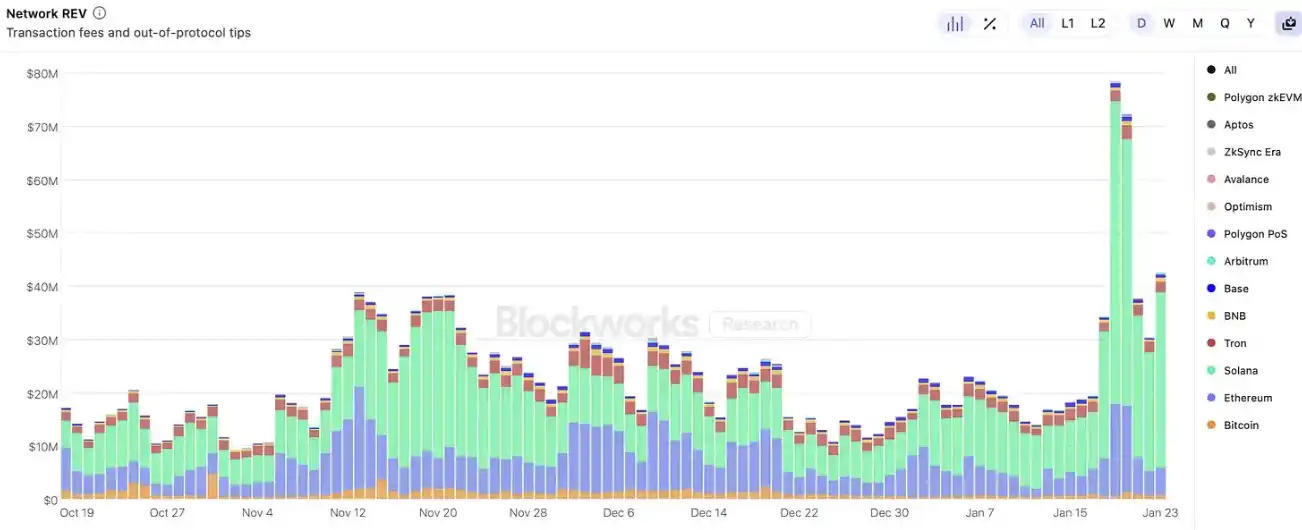
Image Source: Blockworks
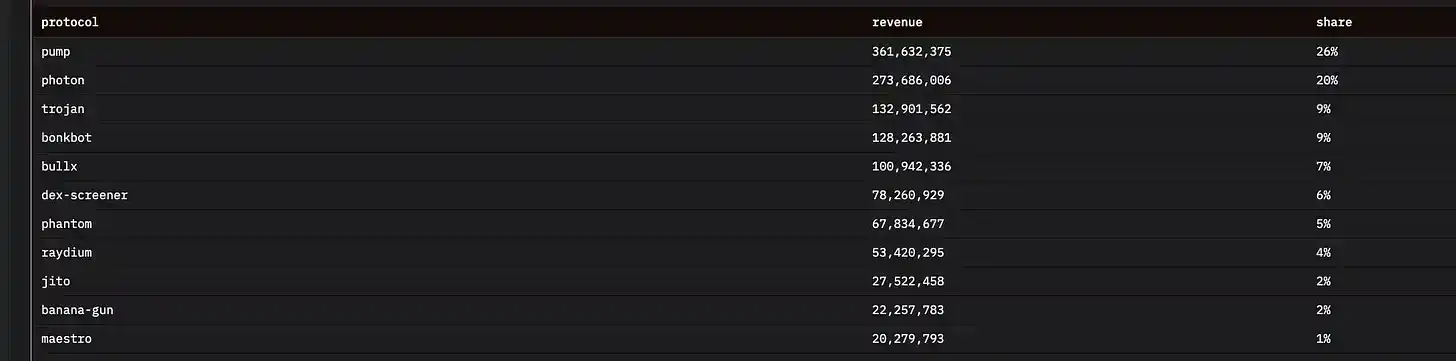
In contrast, Solana, heading to the right, has gradually turned its vision of Mass Adoption through ultra-fast transaction efficiency and throughput into a reality. It has established overwhelming superiority in a blockchain, from transaction volume and activity to liquidity, making Solana a well-deserved leader. The launch of the Trump Coin can be seen as the best stress test of Solana's performance. $5.6 billion in real value was generated in a day, and half of the value was generated by outsiders who had never participated in blockchain. Polygon co-founder Brendan Farmer, however, expressed concerns about Solana's structural issues. Most of Solana's economic value is derived from pump and trading bots, forming a derivative industry of Meme coins that does not create any economic value. The consequence is that they will extract liquidity from the ecosystem. Each dollar of REV paid means a reduction in funds for future Meme coin transactions, creating a vicious cycle.
Over the past five years, Solana has experienced a total of seven independent outage events, five of which were caused by client errors and two due to the network's inability to handle a large volume of spam transactions. However, some community leaders, including Helius founder Mert Mumtaz, predict that outages will continue to occur. The exposed issue of Solana's excessive centralization was widely discussed around 2022, but as the market sentiment shifted from geek culture to an application-centric mindset, with Solana demonstrating transaction throughput comparable to Web2 networks, this issue has been of little concern to most.

Source: Helius Report on Solana Outage History
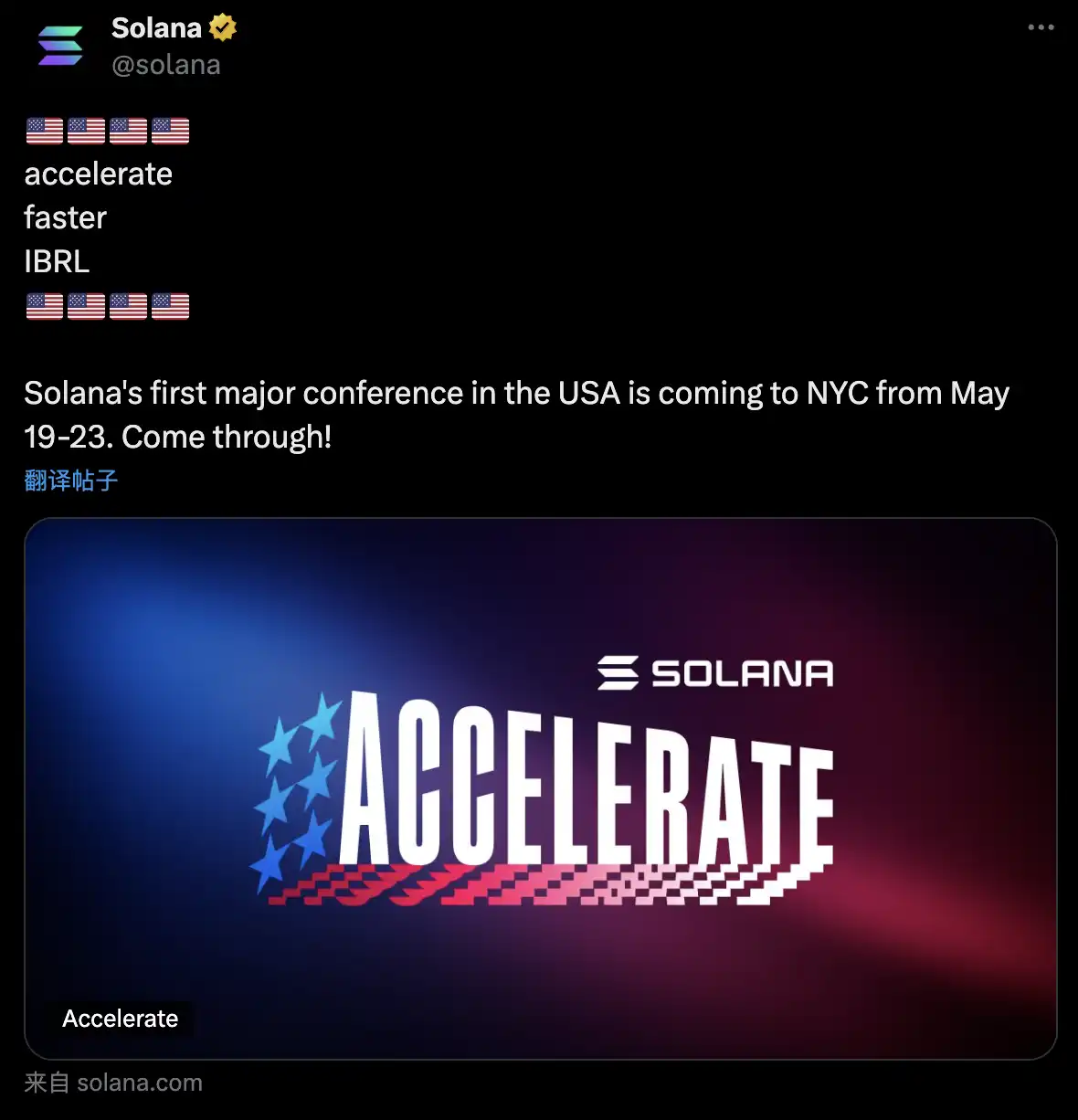
Unlike Vitalik, Lily Liu, the head of the Solana Foundation, mentioned in an interview, "We believe the new administration will recognize the role of blockchain in supporting the U.S. strategy, so we are very hopeful and have plans to collaborate with the U.S. government in the future." The Solana Foundation's excellent resource integration capabilities have shown that in this round of the market, opportunities have leaned towards Solana, from government support to even the U.S. president endorsing a memecoin. However, MinDao believes, "If Solana is too politically inclined, its politically interventionist nature will make it potentially vulnerable to political influences in the future globalized ecosystem. For example, if a Chinese company wants to issue a Layer2, they probably won't want to issue it on a chain that represents the U.S."
The Crossroads of Progress, Forward We Go
We are wandering between crossroads of left and right, seemingly facing a deadlock in Ethereum's governance gridlock and Solana's capital frenzy. However, this evolution movement that seems to "betray" its original intention may be forging the Holy Grail of a financial system that can accommodate both Hayek and Keynes.
Going left, Ethereum, after transitioning to PoS to reduce resource consumption and decrease the possibility of centralized regulation, has turned ETH into a chain for the elites. The initial intention to accept democratic voting through the EIP process has made Ethereum struggle. The ethos of being firm not to be involved in politics has also led it to lose to Solana in this round of large-scale application cycles. Even in 2024, Solana has surpassed Ethereum in ecosystem developer growth, despite Ethereum's status as a concentrated hub for ecosystem development.
The right-leaning Solana, with its high performance and cost efficiency, has rightfully become the "Liquidity King" amidst the Meme craze. However, by emitting hundreds of thousands of Meme tokens monthly, it has transformed Solana, originally envisioned as the decentralized "Nasdaq," into a perfect decentralized "casino." This situation simultaneously devours the potential value Solana could create in the future. Excessive involvement in geopolitics also limits its application on a global scale.
It seems that whichever path is taken, challenges are encountered.
Yet, MinDao remains optimistic about the left and right leanings towards "Ethereum" and "Solana." He believes that the competition between them is not a zero-sum game. The ultimate potential of blockchain is neither Ethereum's ideal state nor Solana's efficiency empire but a new species born through the confrontation and integration of both. This will undoubtedly include utilitarianism and perfect "decentralization" through a mechanism driven by economies of scale. This revolution is not a betrayal but a redefinition of the "revolution" itself.
Regarding the future path, Vitalik recently provided an answer in a Tako AMA, stating that it is no longer the era of infrastructure but the era of applications. Therefore, these stories cannot be abstract concepts like "freedom, openness, censorship resistance," etc. They require some clear application layer solutions. He proposed the concept of Ethereum as the world's finance and that it will further support application layer products such as info finance, AI + crypto, high-quality public goods financing methods, RWA, etc. Interestingly, the two factions represented by ETH and Solana are becoming more alike in their development process, akin to the obverse and reverse of a coin, the double helix of DNA. Only by transforming human game theory into a verifiable public knowledge core can blockchain evolve into a trustworthy value network.
a16z partner Chris Dixon believes that AI, the Internet, and Crypto all have their ups and downs. When we wait for things to improve before taking action, we find ourselves doing the same things as a large group. Thus, when people believe that a technology has reached its limit, it often conceals the best opportunities.
We are currently at a crossroads both horizontally and vertically. Whether we lean "left" or "right," the ultimate result will be moving forward. Perhaps the ultimate form of blockchain is neither the utopia of the "savior faction" nor the hegemony empire of the "apocalypse faction" but a hybrid that finds a dynamic balance between openness and efficiency, idealism and realism. The future belongs to those who can embed "imperfect human nature" in code yet maintain the system's robustness.
You may also like

Token Cannot Compound, Where Is the Real Investment Opportunity?

February 6th Market Key Intelligence, How Much Did You Miss?

China's Central Bank and Eight Other Departments' Latest Regulatory Focus: Key Attention to RWA Tokenized Asset Risk
Foreword: Today, the People's Bank of China's website published the "Notice of the People's Bank of China, National Development and Reform Commission, Ministry of Industry and Information Technology, Ministry of Public Security, State Administration for Market Regulation, China Banking and Insurance Regulatory Commission, China Securities Regulatory Commission, State Administration of Foreign Exchange on Further Preventing and Dealing with Risks Related to Virtual Currency and Others (Yinfa [2026] No. 42)", the latest regulatory requirements from the eight departments including the central bank, which are basically consistent with the regulatory requirements of recent years. The main focus of the regulation is on speculative activities such as virtual currency trading, exchanges, ICOs, overseas platform services, and this time, regulatory oversight of RWA has been added, explicitly prohibiting RWA tokenization, stablecoins (especially those pegged to the RMB). The following is the full text:
To the people's governments of all provinces, autonomous regions, and municipalities directly under the Central Government, the Xinjiang Production and Construction Corps:
Recently, there have been speculative activities related to virtual currency and Real-World Assets (RWA) tokenization, disrupting the economic and financial order and jeopardizing the property security of the people. In order to further prevent and address the risks related to virtual currency and Real-World Assets tokenization, effectively safeguard national security and social stability, in accordance with the "Law of the People's Republic of China on the People's Bank of China," "Law of the People's Republic of China on Commercial Banks," "Securities Law of the People's Republic of China," "Law of the People's Republic of China on Securities Investment Funds," "Law of the People's Republic of China on Futures and Derivatives," "Cybersecurity Law of the People's Republic of China," "Regulations of the People's Republic of China on the Administration of Renminbi," "Regulations on Prevention and Disposal of Illegal Fundraising," "Regulations of the People's Republic of China on Foreign Exchange Administration," "Telecommunications Regulations of the People's Republic of China," and other provisions, after reaching consensus with the Cyberspace Administration of China, the Supreme People's Court, and the Supreme People's Procuratorate, and with the approval of the State Council, the relevant matters are notified as follows:
(I) Virtual currency does not possess the legal status equivalent to fiat currency. Virtual currencies such as Bitcoin, Ether, Tether, etc., have the main characteristics of being issued by non-monetary authorities, using encryption technology and distributed ledger or similar technology, existing in digital form, etc. They do not have legal tender status, should not and cannot be circulated and used as currency in the market.
The business activities related to virtual currency are classified as illegal financial activities. The exchange of fiat currency and virtual currency within the territory, exchange of virtual currencies, acting as a central counterparty in buying and selling virtual currencies, providing information intermediary and pricing services for virtual currency transactions, token issuance financing, and trading of virtual currency-related financial products, etc., fall under illegal financial activities, such as suspected illegal issuance of token vouchers, unauthorized public issuance of securities, illegal operation of securities and futures business, illegal fundraising, etc., are strictly prohibited across the board and resolutely banned in accordance with the law. Overseas entities and individuals are not allowed to provide virtual currency-related services to domestic entities in any form.
A stablecoin pegged to a fiat currency indirectly fulfills some functions of the fiat currency in circulation. Without the consent of relevant authorities in accordance with the law and regulations, any domestic or foreign entity or individual is not allowed to issue a RMB-pegged stablecoin overseas.
(II)Tokenization of Real-World Assets refers to the use of encryption technology and distributed ledger or similar technologies to transform ownership rights, income rights, etc., of assets into tokens (tokens) or other interests or bond certificates with token (token) characteristics, and carry out issuance and trading activities.
Engaging in the tokenization of real-world assets domestically, as well as providing related intermediary, information technology services, etc., which are suspected of illegal issuance of token vouchers, unauthorized public offering of securities, illegal operation of securities and futures business, illegal fundraising, and other illegal financial activities, shall be prohibited; except for relevant business activities carried out with the approval of the competent authorities in accordance with the law and regulations and relying on specific financial infrastructures. Overseas entities and individuals are not allowed to illegally provide services related to the tokenization of real-world assets to domestic entities in any form.
(III) Inter-agency Coordination. The People's Bank of China, together with the National Development and Reform Commission, the Ministry of Industry and Information Technology, the Ministry of Public Security, the State Administration for Market Regulation, the China Banking and Insurance Regulatory Commission, the China Securities Regulatory Commission, the State Administration of Foreign Exchange, and other departments, will improve the work mechanism, strengthen coordination with the Cyberspace Administration of China, the Supreme People's Court, and the Supreme People's Procuratorate, coordinate efforts, and overall guide regions to carry out risk prevention and disposal of virtual currency-related illegal financial activities.
The China Securities Regulatory Commission, together with the National Development and Reform Commission, the Ministry of Industry and Information Technology, the Ministry of Public Security, the People's Bank of China, the State Administration for Market Regulation, the China Banking and Insurance Regulatory Commission, the State Administration of Foreign Exchange, and other departments, will improve the work mechanism, strengthen coordination with the Cyberspace Administration of China, the Supreme People's Court, and the Supreme People's Procuratorate, coordinate efforts, and overall guide regions to carry out risk prevention and disposal of illegal financial activities related to the tokenization of real-world assets.
(IV) Strengthening Local Implementation. The people's governments at the provincial level are overall responsible for the prevention and disposal of risks related to virtual currencies and the tokenization of real-world assets in their respective administrative regions. The specific leading department is the local financial regulatory department, with participation from branches and dispatched institutions of the State Council's financial regulatory department, telecommunications regulators, public security, market supervision, and other departments, in coordination with cyberspace departments, courts, and procuratorates, to improve the normalization of the work mechanism, effectively connect with the relevant work mechanisms of central departments, form a cooperative and coordinated working pattern between central and local governments, effectively prevent and properly handle risks related to virtual currencies and the tokenization of real-world assets, and maintain economic and financial order and social stability.
(5) Enhanced Risk Monitoring. The People's Bank of China, China Securities Regulatory Commission, National Development and Reform Commission, Ministry of Industry and Information Technology, Ministry of Public Security, State Administration of Foreign Exchange, Cyberspace Administration of China, and other departments continue to improve monitoring techniques and system support, enhance cross-departmental data analysis and sharing, establish sound information sharing and cross-validation mechanisms, promptly grasp the risk situation of activities related to virtual currency and real-world asset tokenization. Local governments at all levels give full play to the role of local monitoring and early warning mechanisms. Local financial regulatory authorities, together with branches and agencies of the State Council's financial regulatory authorities, as well as departments of cyberspace and public security, ensure effective connection between online monitoring, offline investigation, and fund tracking, efficiently and accurately identify activities related to virtual currency and real-world asset tokenization, promptly share risk information, improve early warning information dissemination, verification, and rapid response mechanisms.
(6) Strengthened Oversight of Financial Institutions, Intermediaries, and Technology Service Providers. Financial institutions (including non-bank payment institutions) are prohibited from providing account opening, fund transfer, and clearing services for virtual currency-related business activities, issuing and selling financial products related to virtual currency, including virtual currency and related financial products in the scope of collateral, conducting insurance business related to virtual currency, or including virtual currency in the scope of insurance liability. Financial institutions (including non-bank payment institutions) are prohibited from providing custody, clearing, and settlement services for unauthorized real-world asset tokenization-related business and related financial products. Relevant intermediary institutions and information technology service providers are prohibited from providing intermediary, technical, or other services for unauthorized real-world asset tokenization-related businesses and related financial products.
(7) Enhanced Management of Internet Information Content and Access. Internet enterprises are prohibited from providing online business venues, commercial displays, marketing, advertising, or paid traffic diversion services for virtual currency and real-world asset tokenization-related business activities. Upon discovering clues of illegal activities, they should promptly report to relevant departments and provide technical support and assistance for related investigations and inquiries. Based on the clues transferred by the financial regulatory authorities, the cyberspace administration, telecommunications authorities, and public security departments should promptly close and deal with websites, mobile applications (including mini-programs), and public accounts engaged in virtual currency and real-world asset tokenization-related business activities in accordance with the law.
(8) Strengthened Entity Registration and Advertisement Management. Market supervision departments strengthen entity registration and management, and enterprise and individual business registrations must not contain terms such as "virtual currency," "virtual asset," "cryptocurrency," "crypto asset," "stablecoin," "real-world asset tokenization," or "RWA" in their names or business scopes. Market supervision departments, together with financial regulatory authorities, legally enhance the supervision of advertisements related to virtual currency and real-world asset tokenization, promptly investigating and handling relevant illegal advertisements.
(IX) Continued Rectification of Virtual Currency Mining Activities. The National Development and Reform Commission, together with relevant departments, strictly controls virtual currency mining activities, continuously promotes the rectification of virtual currency mining activities. The people's governments of various provinces take overall responsibility for the rectification of "mining" within their respective administrative regions. In accordance with the requirements of the National Development and Reform Commission and other departments in the "Notice on the Rectification of Virtual Currency Mining Activities" (NDRC Energy-saving Building [2021] No. 1283) and the provisions of the "Guidance Catalog for Industrial Structure Adjustment (2024 Edition)," a comprehensive review, investigation, and closure of existing virtual currency mining projects are conducted, new mining projects are strictly prohibited, and mining machine production enterprises are strictly prohibited from providing mining machine sales and other services within the country.
(X) Severe Crackdown on Related Illegal Financial Activities. Upon discovering clues to illegal financial activities related to virtual currency and the tokenization of real-world assets, local financial regulatory authorities, branches of the State Council's financial regulatory authorities, and other relevant departments promptly investigate, determine, and properly handle the issues in accordance with the law, and seriously hold the relevant entities and individuals legally responsible. Those suspected of crimes are transferred to the judicial authorities for processing according to the law.
(XI) Severe Crackdown on Related Illegal and Criminal Activities. The Ministry of Public Security, the People's Bank of China, the State Administration for Market Regulation, the China Banking and Insurance Regulatory Commission, the China Securities Regulatory Commission, as well as judicial and procuratorial organs, in accordance with their respective responsibilities, rigorously crack down on illegal and criminal activities related to virtual currency, the tokenization of real-world assets, such as fraud, money laundering, illegal business operations, pyramid schemes, illegal fundraising, and other illegal and criminal activities carried out under the guise of virtual currency, the tokenization of real-world assets, etc.
(XII) Strengthen Industry Self-discipline. Relevant industry associations should enhance membership management and policy advocacy, based on their own responsibilities, advocate and urge member units to resist illegal financial activities related to virtual currency and the tokenization of real-world assets. Member units that violate regulatory policies and industry self-discipline rules are to be disciplined in accordance with relevant self-regulatory management regulations. By leveraging various industry infrastructure, conduct risk monitoring related to virtual currency, the tokenization of real-world assets, and promptly transfer issue clues to relevant departments.
(XIII) Without the approval of relevant departments in accordance with the law and regulations, domestic entities and foreign entities controlled by them may not issue virtual currency overseas.
(XIV) Domestic entities engaging directly or indirectly in overseas external debt-based tokenization of real-world assets, or conducting asset securitization activities abroad based on domestic ownership rights, income rights, etc. (hereinafter referred to as domestic equity), should be strictly regulated in accordance with the principles of "same business, same risk, same rules." The National Development and Reform Commission, the China Securities Regulatory Commission, the State Administration of Foreign Exchange, and other relevant departments regulate it according to their respective responsibilities. For other forms of overseas real-world asset tokenization activities based on domestic equity by domestic entities, the China Securities Regulatory Commission, together with relevant departments, supervise according to their division of responsibilities. Without the consent and filing of relevant departments, no unit or individual may engage in the above-mentioned business.
(15) Overseas subsidiaries and branches of domestic financial institutions providing Real World Asset Tokenization-related services overseas shall do so legally and prudently. They shall have professional personnel and systems in place to effectively mitigate business risks, strictly implement customer onboarding, suitability management, anti-money laundering requirements, and incorporate them into the domestic financial institutions' compliance and risk management system. Intermediaries and information technology service providers offering Real World Asset Tokenization services abroad based on domestic equity or conducting Real World Asset Tokenization business in the form of overseas debt for domestic entities directly or indirectly venturing abroad must strictly comply with relevant laws and regulations. They should establish and improve relevant compliance and internal control systems in accordance with relevant normative requirements, strengthen business and risk control, and report the business developments to the relevant regulatory authorities for approval or filing.
(16) Strengthen organizational leadership and overall coordination. All departments and regions should attach great importance to the prevention of risks related to virtual currencies and Real World Asset Tokenization, strengthen organizational leadership, clarify work responsibilities, form a long-term effective working mechanism with centralized coordination, local implementation, and shared responsibilities, maintain high pressure, dynamically monitor risks, effectively prevent and mitigate risks in an orderly and efficient manner, legally protect the property security of the people, and make every effort to maintain economic and financial order and social stability.
(17) Widely carry out publicity and education. All departments, regions, and industry associations should make full use of various media and other communication channels to disseminate information through legal and policy interpretation, analysis of typical cases, and education on investment risks, etc. They should promote the illegality and harm of virtual currencies and Real World Asset Tokenization-related businesses and their manifestations, fully alert to potential risks and hidden dangers, and enhance public awareness and identification capabilities for risk prevention.
(18) Engaging in illegal financial activities related to virtual currencies and Real World Asset Tokenization in violation of this notice, as well as providing services for virtual currencies and Real World Asset Tokenization-related businesses, shall be punished in accordance with relevant regulations. If it constitutes a crime, criminal liability shall be pursued according to the law. For domestic entities and individuals who knowingly or should have known that overseas entities illegally provided virtual currency or Real World Asset Tokenization-related services to domestic entities and still assisted them, relevant responsibilities shall be pursued according to the law. If it constitutes a crime, criminal liability shall be pursued according to the law.
(19) If any unit or individual invests in virtual currencies, Real World Asset Tokens, and related financial products against public order and good customs, the relevant civil legal actions shall be invalid, and any resulting losses shall be borne by them. If there are suspicions of disrupting financial order and jeopardizing financial security, the relevant departments shall deal with them according to the law.
This notice shall enter into force upon the date of its issuance. The People's Bank of China and ten other departments' "Notice on Further Preventing and Dealing with the Risks of Virtual Currency Trading Speculation" (Yinfa [2021] No. 237) is hereby repealed.

Former Partner's Perspective on Multicoin: Kyle's Exit, But the Game He Left Behind Just Getting Started
Why Bitcoin Is Falling Now: The Real Reasons Behind BTC's Crash & WEEX's Smart Profit Playbook
Bitcoin's ongoing crash explained: Discover the 5 hidden triggers behind BTC's plunge & how WEEX's Auto Earn and Trade to Earn strategies help traders profit from crypto market volatility.

Wall Street's Hottest Trades See Exodus

Vitalik Discusses Ethereum Scaling Path, Circle Announces Partnership with Polymarket, What's the Overseas Crypto Community Talking About Today?

Believing in the Capital Markets - The Essence and Core Value of Cryptocurrency

Polymarket's 'Weatherman': Predict Temperature, Win Million-Dollar Payout
$15K+ Profits: The 4 AI Trading Secrets WEEX Hackathon Prelim Winners Used to Dominate Volatile Crypto Markets
How WEEX Hackathon's top AI trading strategies made $15K+ in crypto markets: 4 proven rules for ETH/BTC trading, market structure analysis, and risk management in volatile conditions.

A nearly 20% one-day plunge, how long has it been since you last saw a $60,000 Bitcoin?

Raoul Pal: I've seen every single panic, and they are never the end.

Key Market Information Discrepancy on February 6th - A Must-Read! | Alpha Morning Report

2026 Crypto Industry's First Snowfall

The Harsh Reality Behind the $26 Billion Crypto Liquidation: Liquidity Is Killing the Market

Why Is Gold, US Stocks, Bitcoin All Falling?

Key Market Intelligence for February 5th, how much did you miss out on?

Wintermute: By 2026, crypto had gradually become the settlement layer of the Internet economy
Token Cannot Compound, Where Is the Real Investment Opportunity?
February 6th Market Key Intelligence, How Much Did You Miss?
China's Central Bank and Eight Other Departments' Latest Regulatory Focus: Key Attention to RWA Tokenized Asset Risk
Foreword: Today, the People's Bank of China's website published the "Notice of the People's Bank of China, National Development and Reform Commission, Ministry of Industry and Information Technology, Ministry of Public Security, State Administration for Market Regulation, China Banking and Insurance Regulatory Commission, China Securities Regulatory Commission, State Administration of Foreign Exchange on Further Preventing and Dealing with Risks Related to Virtual Currency and Others (Yinfa [2026] No. 42)", the latest regulatory requirements from the eight departments including the central bank, which are basically consistent with the regulatory requirements of recent years. The main focus of the regulation is on speculative activities such as virtual currency trading, exchanges, ICOs, overseas platform services, and this time, regulatory oversight of RWA has been added, explicitly prohibiting RWA tokenization, stablecoins (especially those pegged to the RMB). The following is the full text:
To the people's governments of all provinces, autonomous regions, and municipalities directly under the Central Government, the Xinjiang Production and Construction Corps:
Recently, there have been speculative activities related to virtual currency and Real-World Assets (RWA) tokenization, disrupting the economic and financial order and jeopardizing the property security of the people. In order to further prevent and address the risks related to virtual currency and Real-World Assets tokenization, effectively safeguard national security and social stability, in accordance with the "Law of the People's Republic of China on the People's Bank of China," "Law of the People's Republic of China on Commercial Banks," "Securities Law of the People's Republic of China," "Law of the People's Republic of China on Securities Investment Funds," "Law of the People's Republic of China on Futures and Derivatives," "Cybersecurity Law of the People's Republic of China," "Regulations of the People's Republic of China on the Administration of Renminbi," "Regulations on Prevention and Disposal of Illegal Fundraising," "Regulations of the People's Republic of China on Foreign Exchange Administration," "Telecommunications Regulations of the People's Republic of China," and other provisions, after reaching consensus with the Cyberspace Administration of China, the Supreme People's Court, and the Supreme People's Procuratorate, and with the approval of the State Council, the relevant matters are notified as follows:
(I) Virtual currency does not possess the legal status equivalent to fiat currency. Virtual currencies such as Bitcoin, Ether, Tether, etc., have the main characteristics of being issued by non-monetary authorities, using encryption technology and distributed ledger or similar technology, existing in digital form, etc. They do not have legal tender status, should not and cannot be circulated and used as currency in the market.
The business activities related to virtual currency are classified as illegal financial activities. The exchange of fiat currency and virtual currency within the territory, exchange of virtual currencies, acting as a central counterparty in buying and selling virtual currencies, providing information intermediary and pricing services for virtual currency transactions, token issuance financing, and trading of virtual currency-related financial products, etc., fall under illegal financial activities, such as suspected illegal issuance of token vouchers, unauthorized public issuance of securities, illegal operation of securities and futures business, illegal fundraising, etc., are strictly prohibited across the board and resolutely banned in accordance with the law. Overseas entities and individuals are not allowed to provide virtual currency-related services to domestic entities in any form.
A stablecoin pegged to a fiat currency indirectly fulfills some functions of the fiat currency in circulation. Without the consent of relevant authorities in accordance with the law and regulations, any domestic or foreign entity or individual is not allowed to issue a RMB-pegged stablecoin overseas.
(II)Tokenization of Real-World Assets refers to the use of encryption technology and distributed ledger or similar technologies to transform ownership rights, income rights, etc., of assets into tokens (tokens) or other interests or bond certificates with token (token) characteristics, and carry out issuance and trading activities.
Engaging in the tokenization of real-world assets domestically, as well as providing related intermediary, information technology services, etc., which are suspected of illegal issuance of token vouchers, unauthorized public offering of securities, illegal operation of securities and futures business, illegal fundraising, and other illegal financial activities, shall be prohibited; except for relevant business activities carried out with the approval of the competent authorities in accordance with the law and regulations and relying on specific financial infrastructures. Overseas entities and individuals are not allowed to illegally provide services related to the tokenization of real-world assets to domestic entities in any form.
(III) Inter-agency Coordination. The People's Bank of China, together with the National Development and Reform Commission, the Ministry of Industry and Information Technology, the Ministry of Public Security, the State Administration for Market Regulation, the China Banking and Insurance Regulatory Commission, the China Securities Regulatory Commission, the State Administration of Foreign Exchange, and other departments, will improve the work mechanism, strengthen coordination with the Cyberspace Administration of China, the Supreme People's Court, and the Supreme People's Procuratorate, coordinate efforts, and overall guide regions to carry out risk prevention and disposal of virtual currency-related illegal financial activities.
The China Securities Regulatory Commission, together with the National Development and Reform Commission, the Ministry of Industry and Information Technology, the Ministry of Public Security, the People's Bank of China, the State Administration for Market Regulation, the China Banking and Insurance Regulatory Commission, the State Administration of Foreign Exchange, and other departments, will improve the work mechanism, strengthen coordination with the Cyberspace Administration of China, the Supreme People's Court, and the Supreme People's Procuratorate, coordinate efforts, and overall guide regions to carry out risk prevention and disposal of illegal financial activities related to the tokenization of real-world assets.
(IV) Strengthening Local Implementation. The people's governments at the provincial level are overall responsible for the prevention and disposal of risks related to virtual currencies and the tokenization of real-world assets in their respective administrative regions. The specific leading department is the local financial regulatory department, with participation from branches and dispatched institutions of the State Council's financial regulatory department, telecommunications regulators, public security, market supervision, and other departments, in coordination with cyberspace departments, courts, and procuratorates, to improve the normalization of the work mechanism, effectively connect with the relevant work mechanisms of central departments, form a cooperative and coordinated working pattern between central and local governments, effectively prevent and properly handle risks related to virtual currencies and the tokenization of real-world assets, and maintain economic and financial order and social stability.
(5) Enhanced Risk Monitoring. The People's Bank of China, China Securities Regulatory Commission, National Development and Reform Commission, Ministry of Industry and Information Technology, Ministry of Public Security, State Administration of Foreign Exchange, Cyberspace Administration of China, and other departments continue to improve monitoring techniques and system support, enhance cross-departmental data analysis and sharing, establish sound information sharing and cross-validation mechanisms, promptly grasp the risk situation of activities related to virtual currency and real-world asset tokenization. Local governments at all levels give full play to the role of local monitoring and early warning mechanisms. Local financial regulatory authorities, together with branches and agencies of the State Council's financial regulatory authorities, as well as departments of cyberspace and public security, ensure effective connection between online monitoring, offline investigation, and fund tracking, efficiently and accurately identify activities related to virtual currency and real-world asset tokenization, promptly share risk information, improve early warning information dissemination, verification, and rapid response mechanisms.
(6) Strengthened Oversight of Financial Institutions, Intermediaries, and Technology Service Providers. Financial institutions (including non-bank payment institutions) are prohibited from providing account opening, fund transfer, and clearing services for virtual currency-related business activities, issuing and selling financial products related to virtual currency, including virtual currency and related financial products in the scope of collateral, conducting insurance business related to virtual currency, or including virtual currency in the scope of insurance liability. Financial institutions (including non-bank payment institutions) are prohibited from providing custody, clearing, and settlement services for unauthorized real-world asset tokenization-related business and related financial products. Relevant intermediary institutions and information technology service providers are prohibited from providing intermediary, technical, or other services for unauthorized real-world asset tokenization-related businesses and related financial products.
(7) Enhanced Management of Internet Information Content and Access. Internet enterprises are prohibited from providing online business venues, commercial displays, marketing, advertising, or paid traffic diversion services for virtual currency and real-world asset tokenization-related business activities. Upon discovering clues of illegal activities, they should promptly report to relevant departments and provide technical support and assistance for related investigations and inquiries. Based on the clues transferred by the financial regulatory authorities, the cyberspace administration, telecommunications authorities, and public security departments should promptly close and deal with websites, mobile applications (including mini-programs), and public accounts engaged in virtual currency and real-world asset tokenization-related business activities in accordance with the law.
(8) Strengthened Entity Registration and Advertisement Management. Market supervision departments strengthen entity registration and management, and enterprise and individual business registrations must not contain terms such as "virtual currency," "virtual asset," "cryptocurrency," "crypto asset," "stablecoin," "real-world asset tokenization," or "RWA" in their names or business scopes. Market supervision departments, together with financial regulatory authorities, legally enhance the supervision of advertisements related to virtual currency and real-world asset tokenization, promptly investigating and handling relevant illegal advertisements.
(IX) Continued Rectification of Virtual Currency Mining Activities. The National Development and Reform Commission, together with relevant departments, strictly controls virtual currency mining activities, continuously promotes the rectification of virtual currency mining activities. The people's governments of various provinces take overall responsibility for the rectification of "mining" within their respective administrative regions. In accordance with the requirements of the National Development and Reform Commission and other departments in the "Notice on the Rectification of Virtual Currency Mining Activities" (NDRC Energy-saving Building [2021] No. 1283) and the provisions of the "Guidance Catalog for Industrial Structure Adjustment (2024 Edition)," a comprehensive review, investigation, and closure of existing virtual currency mining projects are conducted, new mining projects are strictly prohibited, and mining machine production enterprises are strictly prohibited from providing mining machine sales and other services within the country.
(X) Severe Crackdown on Related Illegal Financial Activities. Upon discovering clues to illegal financial activities related to virtual currency and the tokenization of real-world assets, local financial regulatory authorities, branches of the State Council's financial regulatory authorities, and other relevant departments promptly investigate, determine, and properly handle the issues in accordance with the law, and seriously hold the relevant entities and individuals legally responsible. Those suspected of crimes are transferred to the judicial authorities for processing according to the law.
(XI) Severe Crackdown on Related Illegal and Criminal Activities. The Ministry of Public Security, the People's Bank of China, the State Administration for Market Regulation, the China Banking and Insurance Regulatory Commission, the China Securities Regulatory Commission, as well as judicial and procuratorial organs, in accordance with their respective responsibilities, rigorously crack down on illegal and criminal activities related to virtual currency, the tokenization of real-world assets, such as fraud, money laundering, illegal business operations, pyramid schemes, illegal fundraising, and other illegal and criminal activities carried out under the guise of virtual currency, the tokenization of real-world assets, etc.
(XII) Strengthen Industry Self-discipline. Relevant industry associations should enhance membership management and policy advocacy, based on their own responsibilities, advocate and urge member units to resist illegal financial activities related to virtual currency and the tokenization of real-world assets. Member units that violate regulatory policies and industry self-discipline rules are to be disciplined in accordance with relevant self-regulatory management regulations. By leveraging various industry infrastructure, conduct risk monitoring related to virtual currency, the tokenization of real-world assets, and promptly transfer issue clues to relevant departments.
(XIII) Without the approval of relevant departments in accordance with the law and regulations, domestic entities and foreign entities controlled by them may not issue virtual currency overseas.
(XIV) Domestic entities engaging directly or indirectly in overseas external debt-based tokenization of real-world assets, or conducting asset securitization activities abroad based on domestic ownership rights, income rights, etc. (hereinafter referred to as domestic equity), should be strictly regulated in accordance with the principles of "same business, same risk, same rules." The National Development and Reform Commission, the China Securities Regulatory Commission, the State Administration of Foreign Exchange, and other relevant departments regulate it according to their respective responsibilities. For other forms of overseas real-world asset tokenization activities based on domestic equity by domestic entities, the China Securities Regulatory Commission, together with relevant departments, supervise according to their division of responsibilities. Without the consent and filing of relevant departments, no unit or individual may engage in the above-mentioned business.
(15) Overseas subsidiaries and branches of domestic financial institutions providing Real World Asset Tokenization-related services overseas shall do so legally and prudently. They shall have professional personnel and systems in place to effectively mitigate business risks, strictly implement customer onboarding, suitability management, anti-money laundering requirements, and incorporate them into the domestic financial institutions' compliance and risk management system. Intermediaries and information technology service providers offering Real World Asset Tokenization services abroad based on domestic equity or conducting Real World Asset Tokenization business in the form of overseas debt for domestic entities directly or indirectly venturing abroad must strictly comply with relevant laws and regulations. They should establish and improve relevant compliance and internal control systems in accordance with relevant normative requirements, strengthen business and risk control, and report the business developments to the relevant regulatory authorities for approval or filing.
(16) Strengthen organizational leadership and overall coordination. All departments and regions should attach great importance to the prevention of risks related to virtual currencies and Real World Asset Tokenization, strengthen organizational leadership, clarify work responsibilities, form a long-term effective working mechanism with centralized coordination, local implementation, and shared responsibilities, maintain high pressure, dynamically monitor risks, effectively prevent and mitigate risks in an orderly and efficient manner, legally protect the property security of the people, and make every effort to maintain economic and financial order and social stability.
(17) Widely carry out publicity and education. All departments, regions, and industry associations should make full use of various media and other communication channels to disseminate information through legal and policy interpretation, analysis of typical cases, and education on investment risks, etc. They should promote the illegality and harm of virtual currencies and Real World Asset Tokenization-related businesses and their manifestations, fully alert to potential risks and hidden dangers, and enhance public awareness and identification capabilities for risk prevention.
(18) Engaging in illegal financial activities related to virtual currencies and Real World Asset Tokenization in violation of this notice, as well as providing services for virtual currencies and Real World Asset Tokenization-related businesses, shall be punished in accordance with relevant regulations. If it constitutes a crime, criminal liability shall be pursued according to the law. For domestic entities and individuals who knowingly or should have known that overseas entities illegally provided virtual currency or Real World Asset Tokenization-related services to domestic entities and still assisted them, relevant responsibilities shall be pursued according to the law. If it constitutes a crime, criminal liability shall be pursued according to the law.
(19) If any unit or individual invests in virtual currencies, Real World Asset Tokens, and related financial products against public order and good customs, the relevant civil legal actions shall be invalid, and any resulting losses shall be borne by them. If there are suspicions of disrupting financial order and jeopardizing financial security, the relevant departments shall deal with them according to the law.
This notice shall enter into force upon the date of its issuance. The People's Bank of China and ten other departments' "Notice on Further Preventing and Dealing with the Risks of Virtual Currency Trading Speculation" (Yinfa [2021] No. 237) is hereby repealed.
Former Partner's Perspective on Multicoin: Kyle's Exit, But the Game He Left Behind Just Getting Started
Why Bitcoin Is Falling Now: The Real Reasons Behind BTC's Crash & WEEX's Smart Profit Playbook
Bitcoin's ongoing crash explained: Discover the 5 hidden triggers behind BTC's plunge & how WEEX's Auto Earn and Trade to Earn strategies help traders profit from crypto market volatility.