The crypto market is currently facing a trust crisis. What should the industry do to turn the tide?

By: blockbeats|2025/03/13 14:15:02
0
Share
copy
Original Article Title: Why Everyone Hates Crypto—And How We Fix It
Original Author: defiignas, DeFi Researcher
Original Translation: ChatGPT

Editor's Note: The author discusses the poor public perception of cryptocurrency due to scams, speculation, and negative media coverage, analyzes its low trust among the general public, and points out that despite its original intention to innovate the financial system, meme coins and a short-term profit-driven culture have overshadowed this vision; the author proposes measures such as self-regulating bad actors, emphasizing utility over speculation, and reshaping the narratives of Bitcoin and Ethereum to improve cryptocurrency's perception, ultimately achieving a more open and fair ecosystem.

Below is the original article content (slightly reorganized for readability):

Cryptocurrency was meant to be revolutionary, yet it is seen as a scam. Can we correct this situation?

Surprisingly, cryptocurrency has such a minimal impact on our lives outside of the crypto community. Unless you actively try to engage with cryptocurrency, you can go about your daily life with almost no exposure to it.

However, the problem is that when this "minimal exposure to cryptocurrency" does affect people, it is almost always negative. You're watching "Squid Game" on Netflix, and a crypto influencer obsessed with a scam appears. He can't go a moment without checking the crypto price, demanding to get his phone back. At this point, I can relate.

When you browse the news, you come across the following (almost always negative) headlines:

· North Korea Steals $1.5 Billion, Pulls Off Largest Hack Ever

· "A Mockery": Trump's new meme coin sparks outrage in the crypto world

· Man sued for woman's £154,000 loss in Bitcoin scam

· Crypto trader livestreams suicide

Scams, fraud, pump-and-dump schemes. You name it. Cryptocurrency's public image is abysmal. To be fair, even we, the crypto natives, know that cryptocurrency is rife with junk.

But we also know why we are here: to get rich by innovating the outdated financial system. Yes, quick riches are often the reason we are so loathed, but I cannot deny that fact. Everyone who invests in anything wants to make money.

However, cryptocurrency is one of the few industries where you can still build wealth from scratch. In today's economy, slowly amassing wealth on a moderate salary is incredibly challenging. Gen Z realized this and (quietly) chose to opt-out of the job market.

If only they knew what cryptocurrency could bring to their lives...

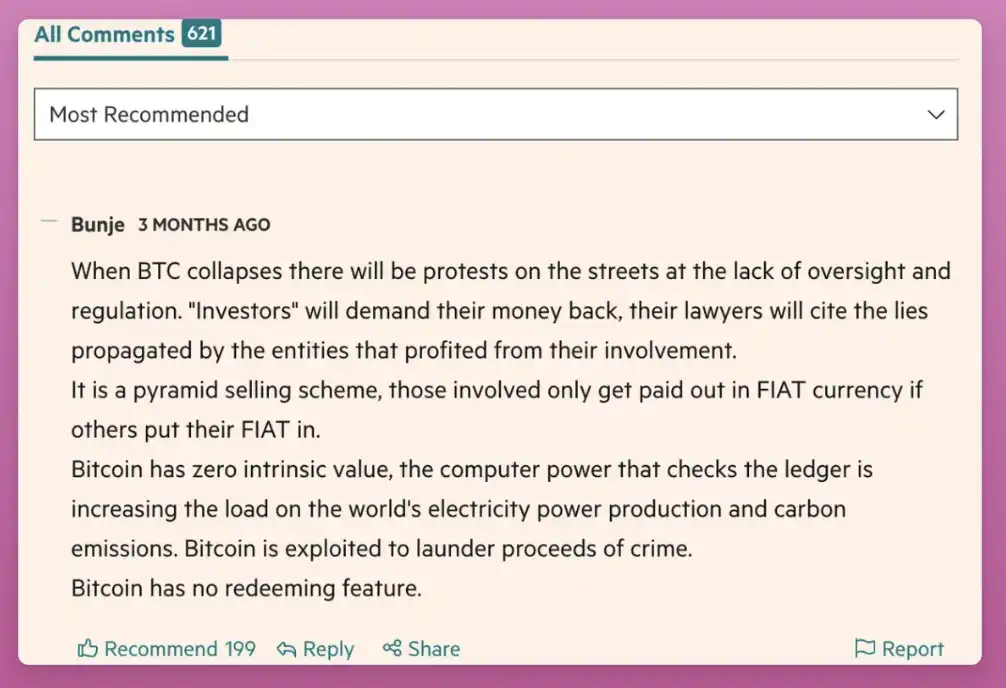
However, I find that cryptocurrency has done a terrible job in emphasizing our mission, why we need cryptocurrency, and why getting rich through cryptocurrency is not inherently evil. Here is a popular comment from the Financial Times summarizing the views of crypto skeptics:

The crypto market is currently facing a trust crisis. What should the industry do to turn the tide?

If you read Reddit, you'd know how much the common folk despise cryptocurrency, but I wish to see more positive representation of cryptocurrency in mainstream media. To be fair, the Financial Times has always been skeptical of cryptocurrency, but over the years, Bloomberg's coverage has improved, providing great insights. Interestingly, there was a seemingly harmless Bloomberg article titled "Meet America's Seven Top Personal Finance Influencers," which mentioned a crypto influencer. He mainly focuses on meme coins and promotes his meme coin Telegram group, so while I'm glad Bloomberg wants to incorporate a crypto element, I'm surprised they actually shared @cryptomasun.

People Really Hate Cryptocurrency

As this is still a "research" blog, here are some noteworthy research findings on cryptocurrency sentiment. Many surveys indicate that non-investors see cryptocurrency as a high-risk speculation rather than a legitimate financial asset. In the UK, 64% of surveyed consumers knowledgeable about cryptocurrency believe that "investing in cryptocurrency is basically gambling."

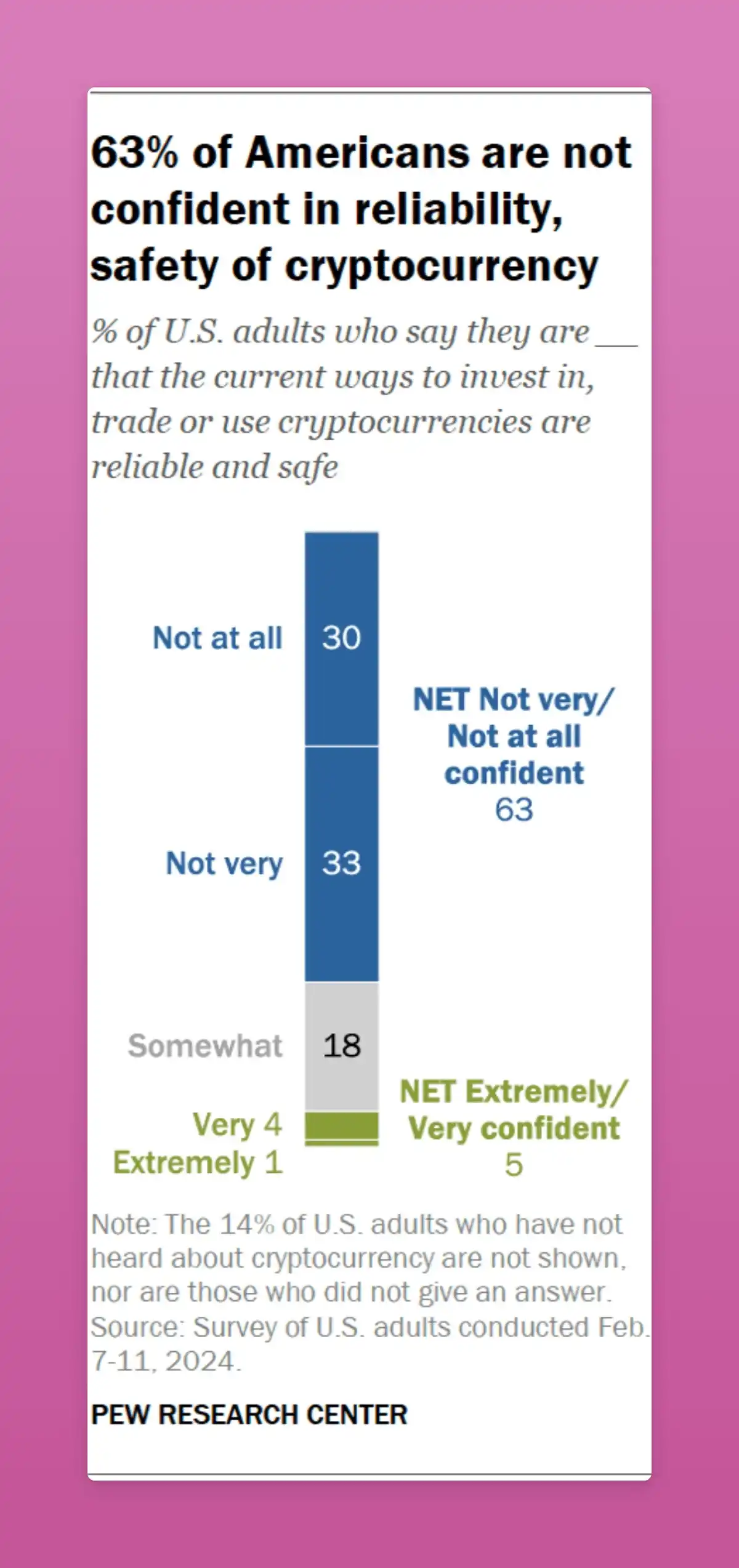
A 2024 Pew survey found that 75% of Americans distrust its reliability and security due to scams and market volatility.
In the 2023 Edelman Global Study, cryptocurrency is distrusted across all age groups, with its trust even lower than the banks we're trying to disrupt.
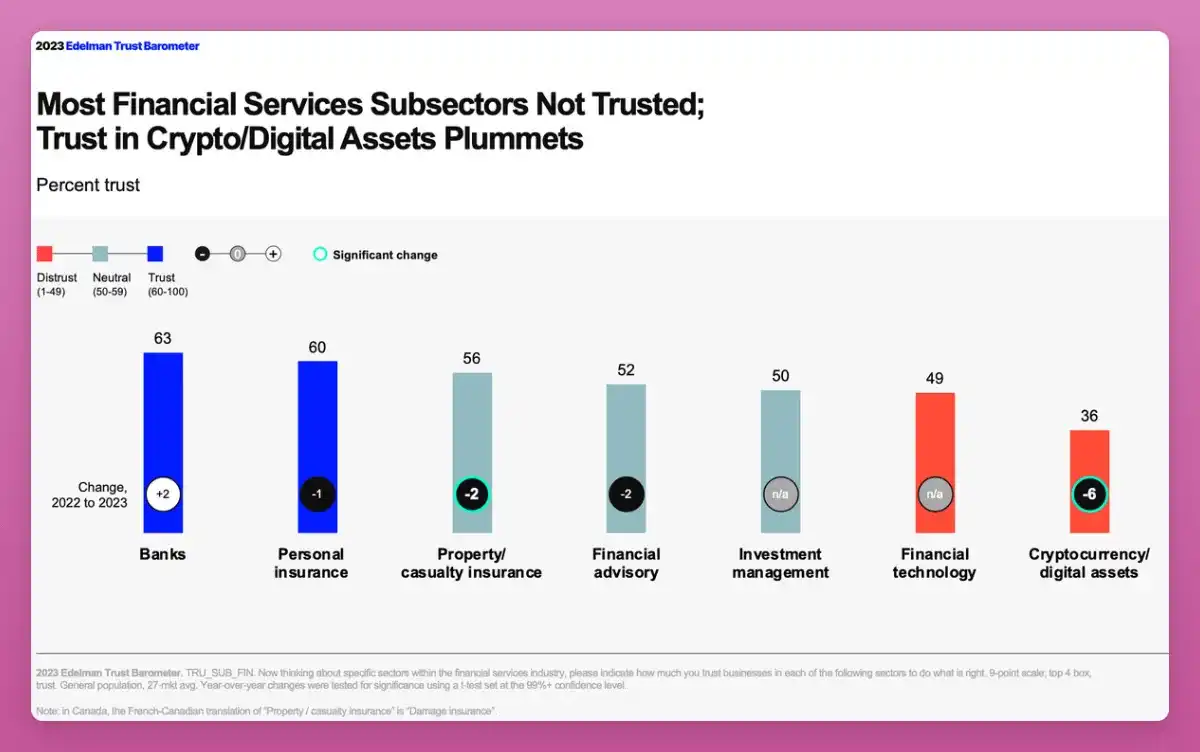
Of course, FTX damaged cryptocurrency's reputation in 2023, but this year didn't help with meme coins either.

Consensys annually releases excellent research reports, and their 2024 report shows a decline in the narrative of the "future of money" in cryptocurrency. Sentiments of speculation, scams, phishing, crime, and money laundering are as prevalent in cryptocurrency as they are in the "traditional financial alternative."
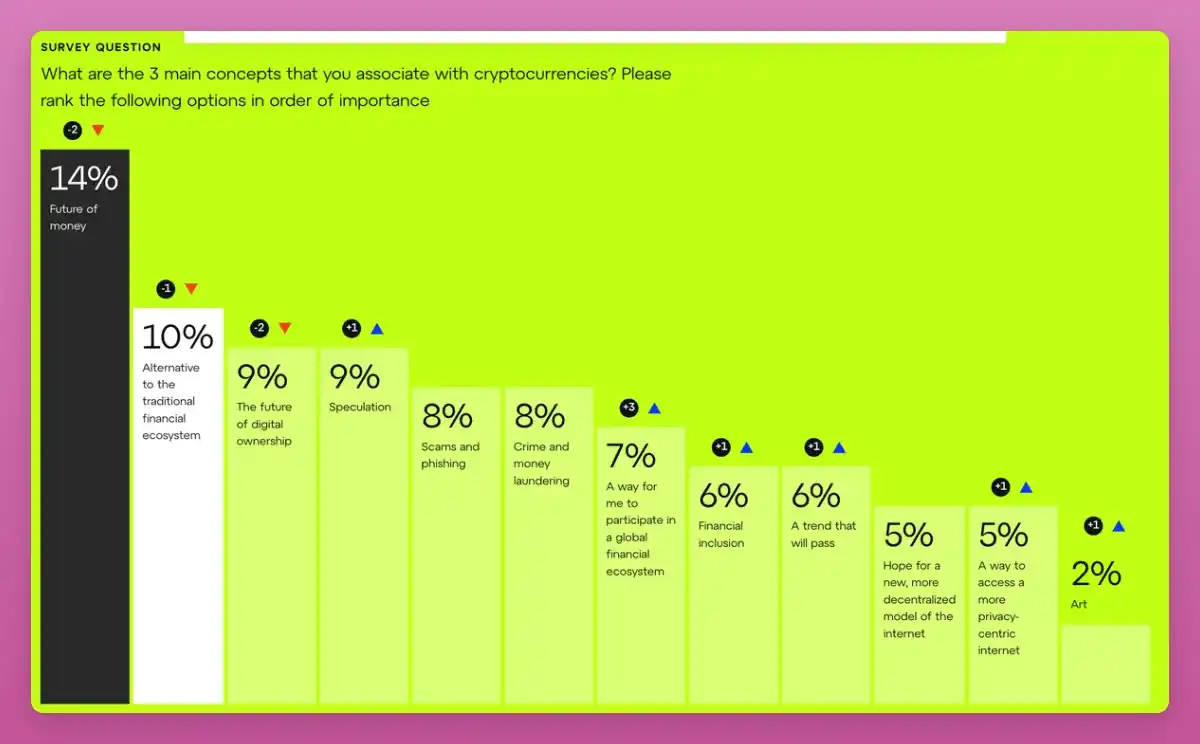
The message is clear: outside the crypto community, people widely doubt whether digital assets can be trusted as secure financial instruments.

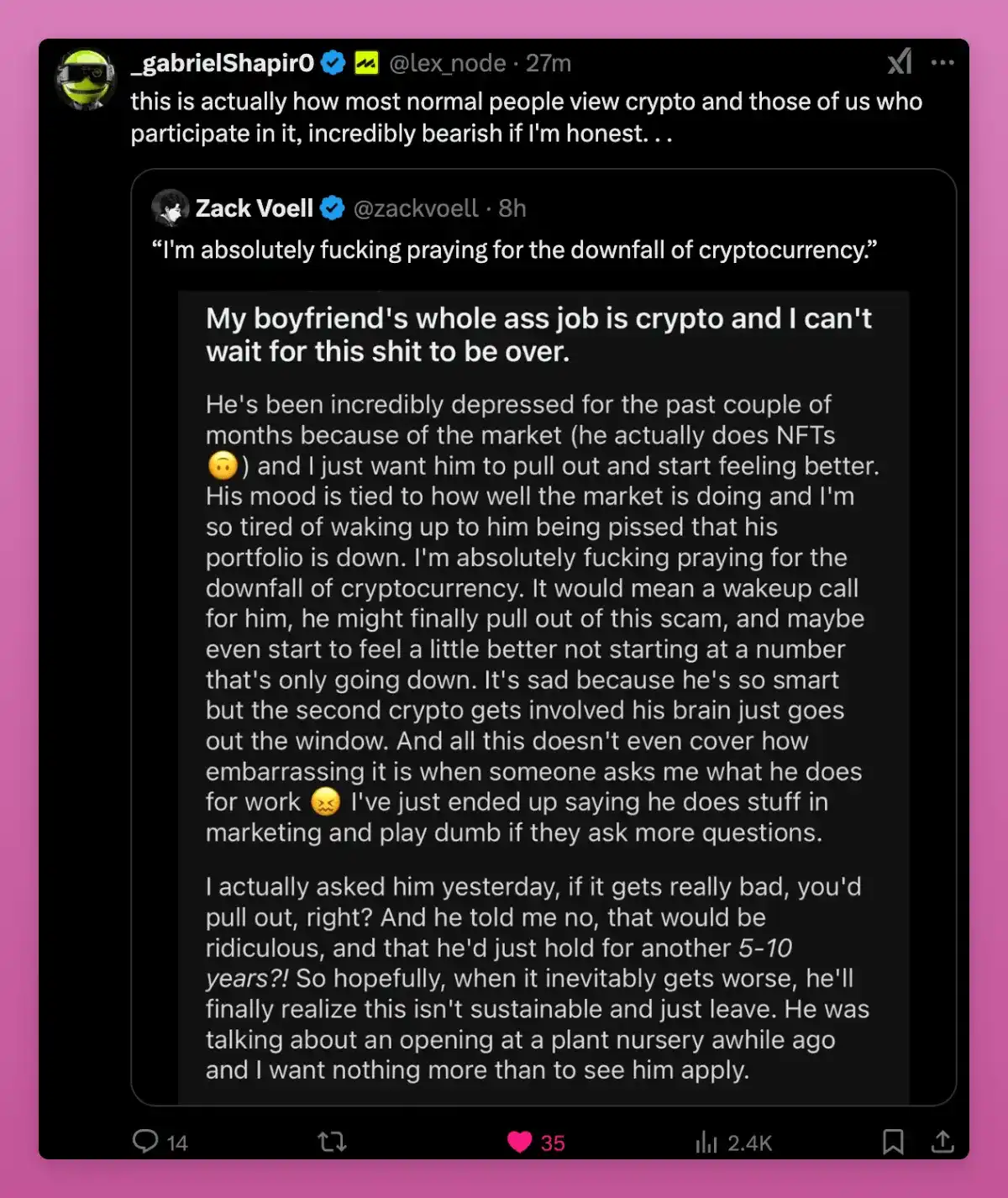
While writing this blog post, I came across the following tweet that succinctly captures public sentiment towards cryptocurrency:
Why Cryptocurrency Culture Matters

Our public image may seem unimportant as the general public "just doesn't get it." They fear being rescued from the 9-5 grind and are influenced by mainstream media's anti-crypto propaganda.

Nevertheless, the tide is turning, with more people willing to buy into cryptocurrency. I believe that a shifting crypto culture can add millions of new members to the community.
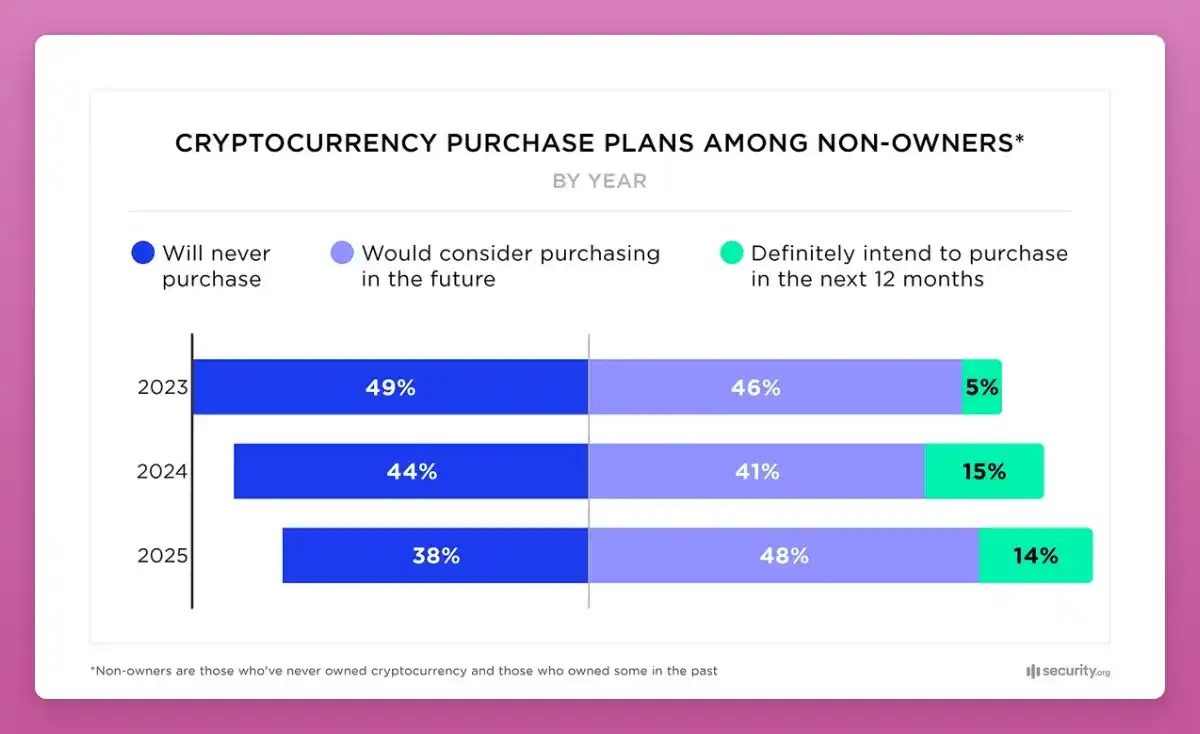
I believe we can and should do better. We need to make people believe in the vision and mission of cryptocurrency.

Cryptocurrency envisions a decentralized financial system where individuals have full control of their assets, free from the constraints of intermediaries like banks or governments. It aims to create a borderless, censorship-resistant, trust-minimized ecosystem where anyone can transact, store value, and build an economic system without relying on centralized authorities.

Our vision is being drowned out by meme coins and speculative noise.

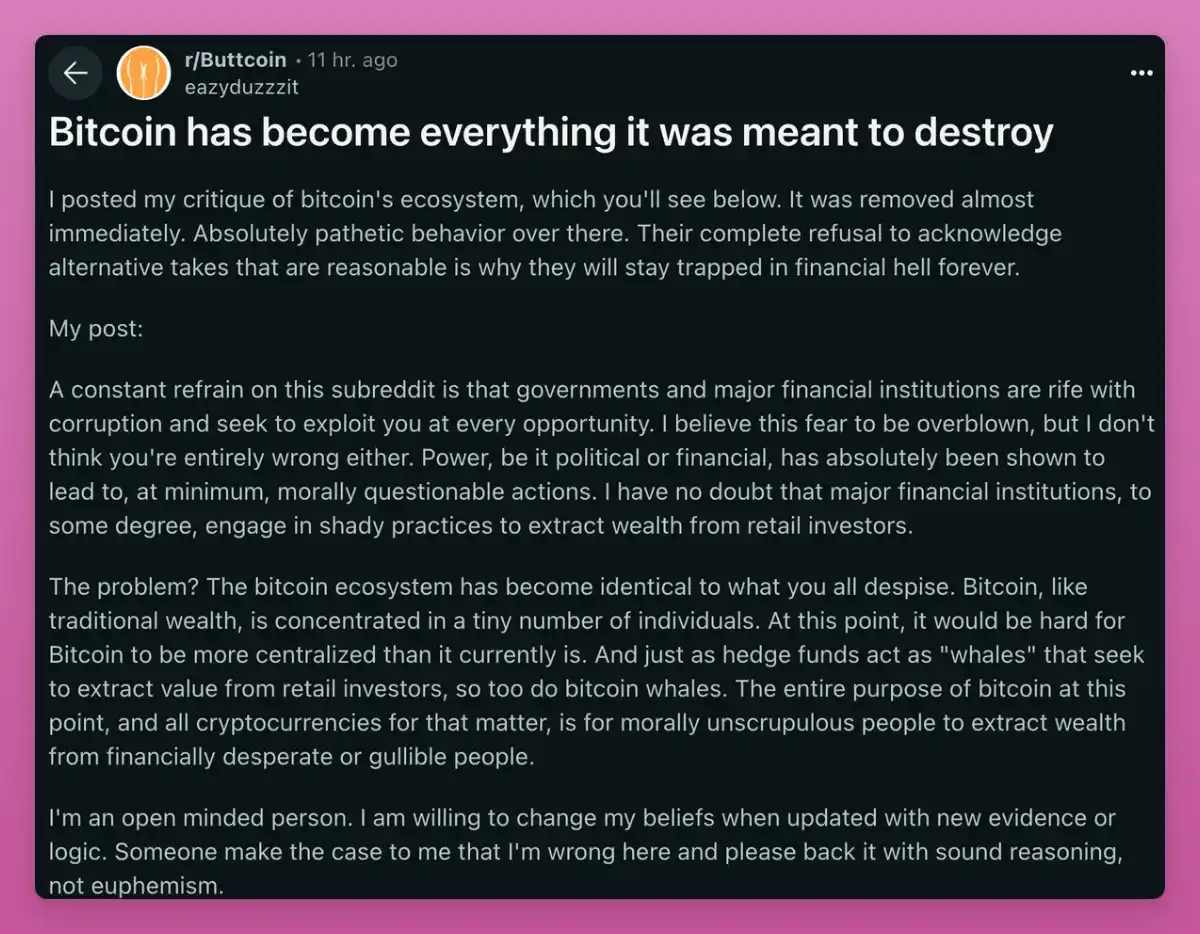
Even worse, the public no longer sees cryptocurrency as a revolutionary way to improve the financial system. As stated below: "The Bitcoin ecosystem has become everything you despise." Wealth and power are concentrated in the hands of a few, extracting wealth from the economically desperate.
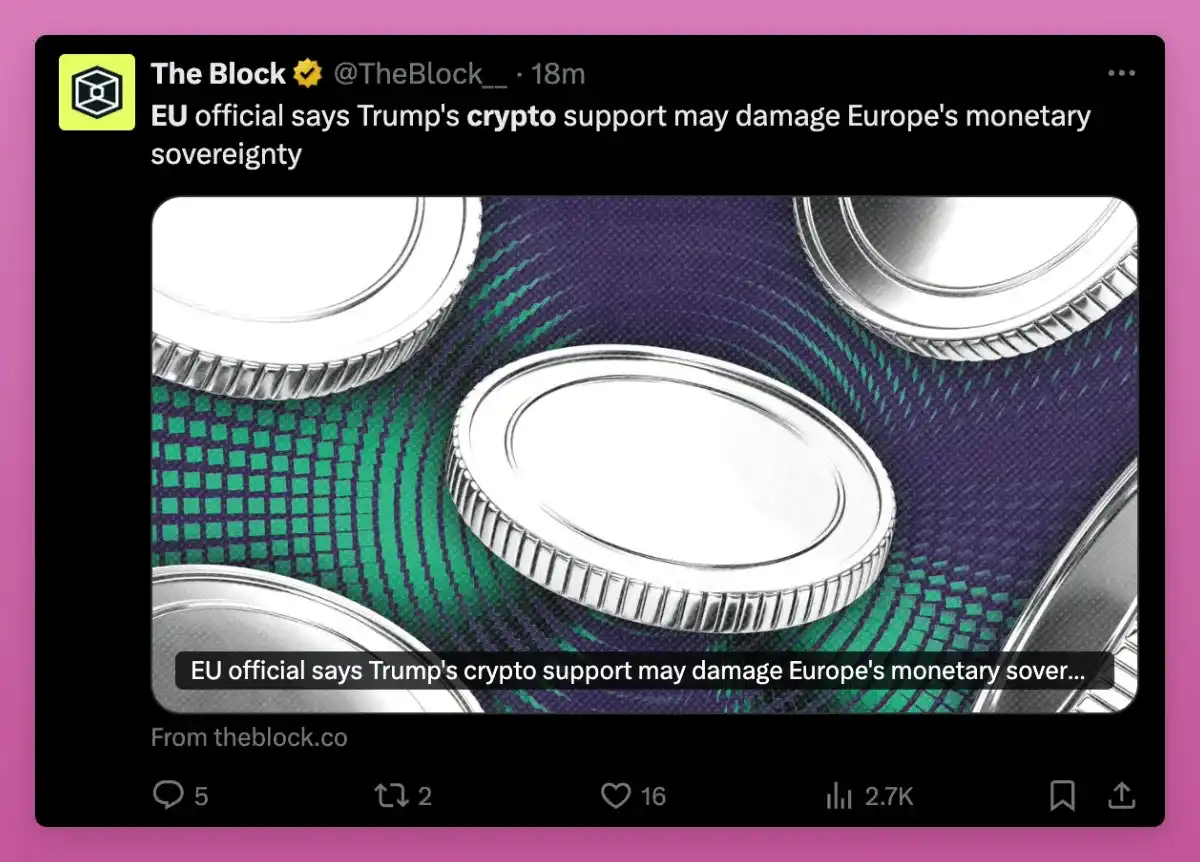
Furthermore, due to Trump's public endorsement, people now associate cryptocurrency with the MAGA movement, which is not well-received outside its circle. Unsurprisingly, the EU views Trump's support for cryptocurrency as a threat to European monetary sovereignty.
Make no mistake—the pause in regulation by the former U.S. government was bullish. However, the crypto industry is walking on thin ice under the current Trump administration.

How to Change Cryptocurrency's Perception

Cryptocurrency's reputation won't repair itself. If we want mainstream adoption, we need to reshape the narrative.

Easier said than done, but it must start from within: even crypto natives have lost hope in cryptocurrency.

I believe we need to focus on three key points first:

1. Make Cryptocurrency Great Again

In previous cycles, newcomers to cryptocurrency could make money. However, meme coins were distorted by small groups and venture-backed low-circulating, high FDV projects, leaving no room for upward movement for newcomers.

This cycle we managed to resist low circulation, high FDV, but fell into the meme coin small group trap.

Legion and Echo made progress by adopting a fairer funding model, but they are still too exclusive. We need to create and promote games that create value rather than destroy value, allowing early adopters to benefit together. Kyle in "First Principles" provides a detailed plan on how to rise more powerfully from market chaos.

But due to extreme short-termism, a culture of maximizing extraction, and low-trust individuals, we have fallen into a self-inflicted eternal financial nihilism loop. When everyone thinks "I can get out before he scams" is a good idea, the collective decision is to blindly invest in random scammer coins.

We need to self-regulate bad actors. The industry must do more to expose scams and hold influencers accountable for their misleading promotions. ZachXBT used to do this, but the level of criminality got out of hand, and even he eventually dumped the meme coins sent to him.

I also need to do better in this regard, staying away from value-extraction activities. People need to truly make money while expanding the crypto cake. Now, newcomers end up financially devastated. Or worse.

2. Shift the Narrative from Speculation to Utility

Cryptocurrency is not just gambling—it offers real-world benefits. We need to focus on use cases such as remittances, financial inclusion, and transparent governance, rather than meme coin culture.

DeFi is expanding, new social networks like Lens, Abstract, and Farcaster are emerging with innovative monetization models. In addition, the increasing adoption of stablecoins and real-world assets (RWA) helps preserve and grow wealth rather than destroy it.
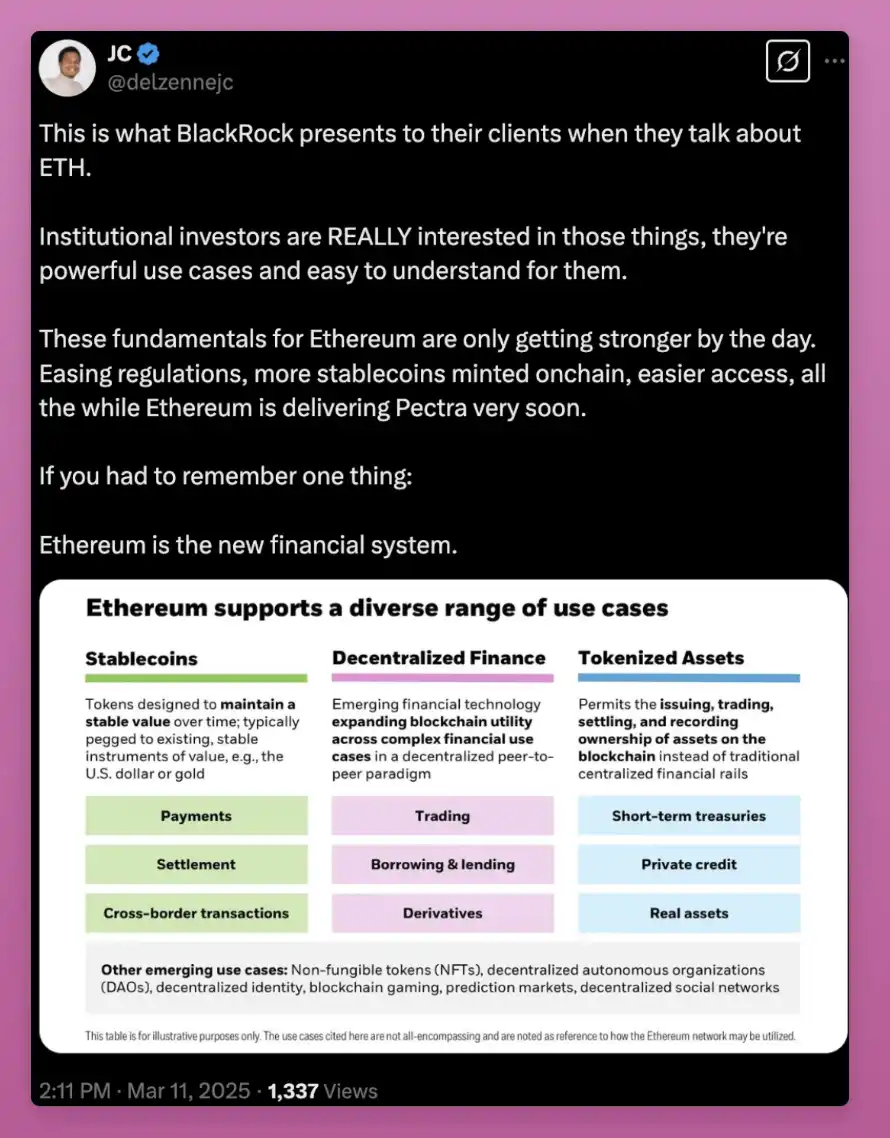
KOLs on X may not care about these, but CryptoX is just a small part of a wider crypto culture.

I am glad Bitcoin is performing well as "digital gold," but Ethereum and Solana are seen as speculative chains rather than foundational platforms for an open digital economy.

If we promote meme coins as part of crypto culture, I bet Pudgy Penguins are the strongest output from Web3 to Web2, rather than meme coins imported from Web2 (Doge, Pepe, etc.).

3. Reclaiming the Bitcoin and Ethereum Narratives

Cryptocurrency is not a singular unified culture but rather consists of multiple subcultures. Among the most prominent are Bitcoin and Ethereum.

The view that Bitcoin "became everything it was supposed to destroy" really irks me. Only those who store BTC in a cold wallet truly understand the peace of mind that self-custody and disintermediation bring.

ETFs are beneficial for our wallets, but they are a double-edged sword because ETF buyers do not experience the freedom that self-custody provides.

I also wish Bitcoin would steer clear of the MAGA movement. Bitcoin is global and should be neutral.

That's why I like Ethereum. Many criticize the Ethereum Foundation for not cozying up to the Trump team, but in the long run, this will prove to be a winning strategy.
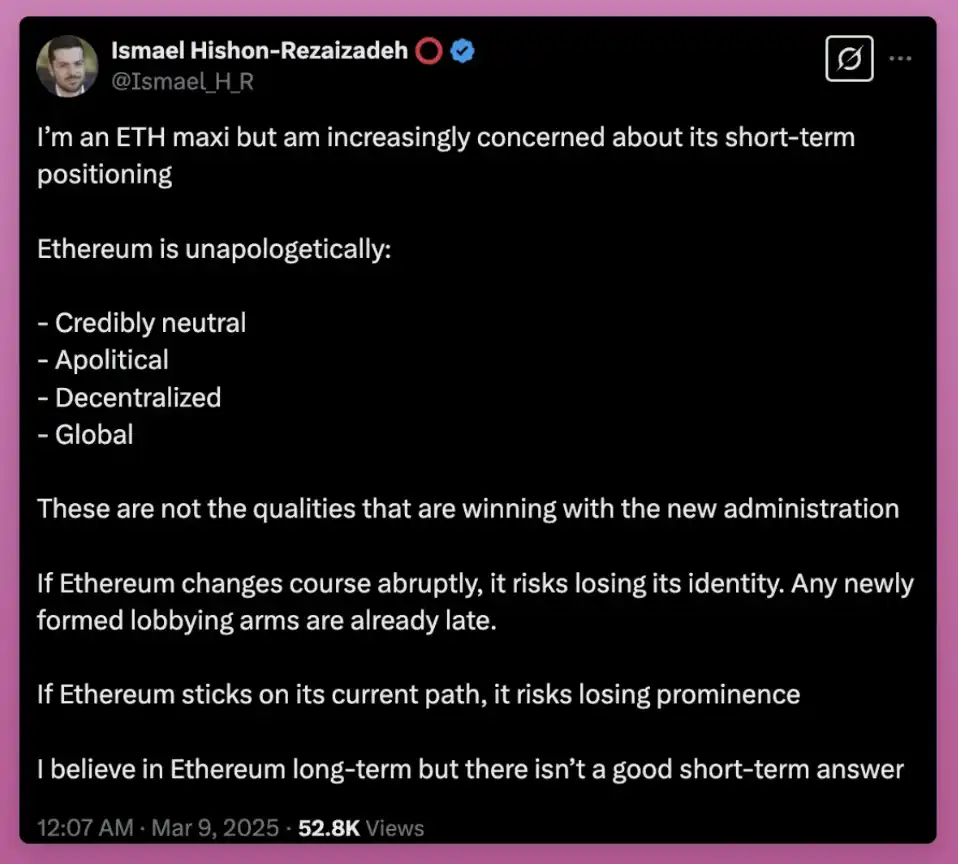
In a world where privacy and democracy are eroding, AI blurs reality and illusion, and digital ownership is not assured, Ethereum offers a secure haven.

Ethereum stands unwaveringly for:

· Trusted Neutrality

· Depoliticization

· Decentralization

· Globality

Those outside of cryptocurrency are unaware of these, so our job is to spread this information and build products that truly showcase Ethereum's value.

An Optimistic Future

Today, the entire cryptocurrency market has just reached a $2.7 trillion valuation. But are we deserving of this?
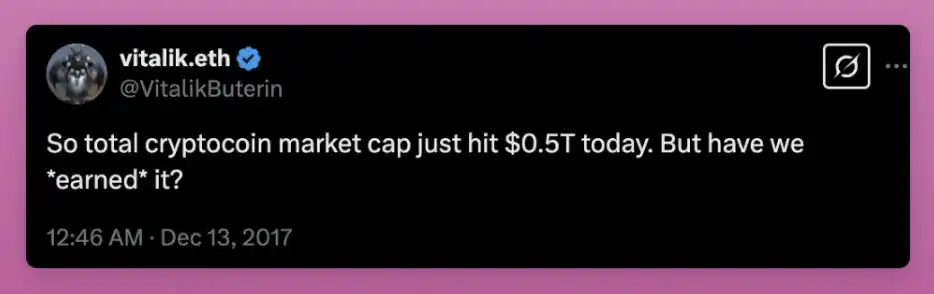
Since Vitalik's post in 2017, cryptocurrency has evolved beyond mere speculation and zero-sum games.

As I've written in previous posts, globally, 1.4 billion people are unbanked. Even in the U.S., this figure stands at 4.5%. The Fed's own research finds that high-income individuals see cryptocurrency as an investment, but the less wealthy use it for transactions. 60% of those using it for transactions earn less than $50,000 annually, and 13% are unbanked.

Venezuela ranks 40th in the 2023 Chainalysis Cryptocurrency Adoption Index. Stablecoins are a lifeline against hyperinflation. Similar to Argentina, as the national currency plummets, stablecoin purchases surge—a sign of widespread cryptocurrency adoption.

Cryptocurrency is not just about fighting inflation; it is also used to resist oppressive regimes. During the COVID-19 pandemic, cryptocurrency was used to directly aid healthcare workers in Venezuela, free from interference by corrupt authorities. Ukraine raised $225 million in donations through cryptocurrency when the war started.

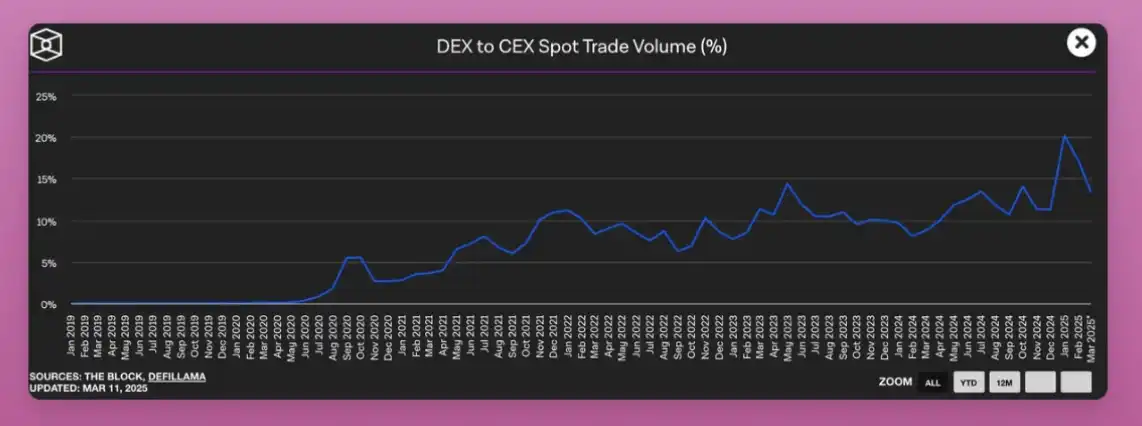
DeFi's TVL has reached $880 billion! Decentralized exchanges are now challenging centralized exchanges, and projects like Maker are bringing real-world assets onto the blockchain.
Non-speculative decentralized social applications are also seeing growth. Farcaster and Polymarket have thousands of users daily, with numbers still increasing. We now have truly usable dApps.

However, all these advancements seem to have been lost on the X timeline; we have done a terrible job in spreading this mission.

Nevertheless, I believe this market downturn will help the crypto industry heal, and progress will continue. We need to clean up our act first and then focus on promoting the positive side of cryptocurrency.

Original Article Link

You may also like

Token Cannot Compound, Where Is the Real Investment Opportunity?

The next chapter in the crypto industry will undoubtedly be written by Crypto-empowered Stocks.

February 6th Market Key Intelligence, How Much Did You Miss?

1. On-chain Flows: $508.2M USD inflow to Ethereum today; $390.8M USD outflow from Arbitrum 2. Biggest Gainers/Losers: $HBTC, $AIO 3. Top News: Current Bitcoin weekly RSI oversold signal comparable to June 2022

China's Central Bank and Eight Other Departments' Latest Regulatory Focus: Key Attention to RWA Tokenized Asset Risk


Foreword: Today, the People's Bank of China's website published the "Notice of the People's Bank of China, National Development and Reform Commission, Ministry of Industry and Information Technology, Ministry of Public Security, State Administration for Market Regulation, China Banking and Insurance Regulatory Commission, China Securities Regulatory Commission, State Administration of Foreign Exchange on Further Preventing and Dealing with Risks Related to Virtual Currency and Others (Yinfa [2026] No. 42)", the latest regulatory requirements from the eight departments including the central bank, which are basically consistent with the regulatory requirements of recent years. The main focus of the regulation is on speculative activities such as virtual currency trading, exchanges, ICOs, overseas platform services, and this time, regulatory oversight of RWA has been added, explicitly prohibiting RWA tokenization, stablecoins (especially those pegged to the RMB). The following is the full text:


To the people's governments of all provinces, autonomous regions, and municipalities directly under the Central Government, the Xinjiang Production and Construction Corps:


  Recently, there have been speculative activities related to virtual currency and Real-World Assets (RWA) tokenization, disrupting the economic and financial order and jeopardizing the property security of the people. In order to further prevent and address the risks related to virtual currency and Real-World Assets tokenization, effectively safeguard national security and social stability, in accordance with the "Law of the People's Republic of China on the People's Bank of China," "Law of the People's Republic of China on Commercial Banks," "Securities Law of the People's Republic of China," "Law of the People's Republic of China on Securities Investment Funds," "Law of the People's Republic of China on Futures and Derivatives," "Cybersecurity Law of the People's Republic of China," "Regulations of the People's Republic of China on the Administration of Renminbi," "Regulations on Prevention and Disposal of Illegal Fundraising," "Regulations of the People's Republic of China on Foreign Exchange Administration," "Telecommunications Regulations of the People's Republic of China," and other provisions, after reaching consensus with the Cyberspace Administration of China, the Supreme People's Court, and the Supreme People's Procuratorate, and with the approval of the State Council, the relevant matters are notified as follows:


  I. Clarify the essential attributes of virtual currency, Real-World Assets tokenization, and related business activities


  (I) Virtual currency does not possess the legal status equivalent to fiat currency. Virtual currencies such as Bitcoin, Ether, Tether, etc., have the main characteristics of being issued by non-monetary authorities, using encryption technology and distributed ledger or similar technology, existing in digital form, etc. They do not have legal tender status, should not and cannot be circulated and used as currency in the market.


  The business activities related to virtual currency are classified as illegal financial activities. The exchange of fiat currency and virtual currency within the territory, exchange of virtual currencies, acting as a central counterparty in buying and selling virtual currencies, providing information intermediary and pricing services for virtual currency transactions, token issuance financing, and trading of virtual currency-related financial products, etc., fall under illegal financial activities, such as suspected illegal issuance of token vouchers, unauthorized public issuance of securities, illegal operation of securities and futures business, illegal fundraising, etc., are strictly prohibited across the board and resolutely banned in accordance with the law. Overseas entities and individuals are not allowed to provide virtual currency-related services to domestic entities in any form.


  A stablecoin pegged to a fiat currency indirectly fulfills some functions of the fiat currency in circulation. Without the consent of relevant authorities in accordance with the law and regulations, any domestic or foreign entity or individual is not allowed to issue a RMB-pegged stablecoin overseas.


(II)Tokenization of Real-World Assets refers to the use of encryption technology and distributed ledger or similar technologies to transform ownership rights, income rights, etc., of assets into tokens (tokens) or other interests or bond certificates with token (token) characteristics, and carry out issuance and trading activities.


  Engaging in the tokenization of real-world assets domestically, as well as providing related intermediary, information technology services, etc., which are suspected of illegal issuance of token vouchers, unauthorized public offering of securities, illegal operation of securities and futures business, illegal fundraising, and other illegal financial activities, shall be prohibited; except for relevant business activities carried out with the approval of the competent authorities in accordance with the law and regulations and relying on specific financial infrastructures. Overseas entities and individuals are not allowed to illegally provide services related to the tokenization of real-world assets to domestic entities in any form.


  II. Sound Work Mechanism


  (III) Inter-agency Coordination. The People's Bank of China, together with the National Development and Reform Commission, the Ministry of Industry and Information Technology, the Ministry of Public Security, the State Administration for Market Regulation, the China Banking and Insurance Regulatory Commission, the China Securities Regulatory Commission, the State Administration of Foreign Exchange, and other departments, will improve the work mechanism, strengthen coordination with the Cyberspace Administration of China, the Supreme People's Court, and the Supreme People's Procuratorate, coordinate efforts, and overall guide regions to carry out risk prevention and disposal of virtual currency-related illegal financial activities.


  The China Securities Regulatory Commission, together with the National Development and Reform Commission, the Ministry of Industry and Information Technology, the Ministry of Public Security, the People's Bank of China, the State Administration for Market Regulation, the China Banking and Insurance Regulatory Commission, the State Administration of Foreign Exchange, and other departments, will improve the work mechanism, strengthen coordination with the Cyberspace Administration of China, the Supreme People's Court, and the Supreme People's Procuratorate, coordinate efforts, and overall guide regions to carry out risk prevention and disposal of illegal financial activities related to the tokenization of real-world assets.


  (IV) Strengthening Local Implementation. The people's governments at the provincial level are overall responsible for the prevention and disposal of risks related to virtual currencies and the tokenization of real-world assets in their respective administrative regions. The specific leading department is the local financial regulatory department, with participation from branches and dispatched institutions of the State Council's financial regulatory department, telecommunications regulators, public security, market supervision, and other departments, in coordination with cyberspace departments, courts, and procuratorates, to improve the normalization of the work mechanism, effectively connect with the relevant work mechanisms of central departments, form a cooperative and coordinated working pattern between central and local governments, effectively prevent and properly handle risks related to virtual currencies and the tokenization of real-world assets, and maintain economic and financial order and social stability.


  III. Strengthened Risk Monitoring, Prevention, and Disposal


  (5) Enhanced Risk Monitoring. The People's Bank of China, China Securities Regulatory Commission, National Development and Reform Commission, Ministry of Industry and Information Technology, Ministry of Public Security, State Administration of Foreign Exchange, Cyberspace Administration of China, and other departments continue to improve monitoring techniques and system support, enhance cross-departmental data analysis and sharing, establish sound information sharing and cross-validation mechanisms, promptly grasp the risk situation of activities related to virtual currency and real-world asset tokenization. Local governments at all levels give full play to the role of local monitoring and early warning mechanisms. Local financial regulatory authorities, together with branches and agencies of the State Council's financial regulatory authorities, as well as departments of cyberspace and public security, ensure effective connection between online monitoring, offline investigation, and fund tracking, efficiently and accurately identify activities related to virtual currency and real-world asset tokenization, promptly share risk information, improve early warning information dissemination, verification, and rapid response mechanisms.


  (6) Strengthened Oversight of Financial Institutions, Intermediaries, and Technology Service Providers. Financial institutions (including non-bank payment institutions) are prohibited from providing account opening, fund transfer, and clearing services for virtual currency-related business activities, issuing and selling financial products related to virtual currency, including virtual currency and related financial products in the scope of collateral, conducting insurance business related to virtual currency, or including virtual currency in the scope of insurance liability. Financial institutions (including non-bank payment institutions) are prohibited from providing custody, clearing, and settlement services for unauthorized real-world asset tokenization-related business and related financial products. Relevant intermediary institutions and information technology service providers are prohibited from providing intermediary, technical, or other services for unauthorized real-world asset tokenization-related businesses and related financial products.


  (7) Enhanced Management of Internet Information Content and Access. Internet enterprises are prohibited from providing online business venues, commercial displays, marketing, advertising, or paid traffic diversion services for virtual currency and real-world asset tokenization-related business activities. Upon discovering clues of illegal activities, they should promptly report to relevant departments and provide technical support and assistance for related investigations and inquiries. Based on the clues transferred by the financial regulatory authorities, the cyberspace administration, telecommunications authorities, and public security departments should promptly close and deal with websites, mobile applications (including mini-programs), and public accounts engaged in virtual currency and real-world asset tokenization-related business activities in accordance with the law.


  (8) Strengthened Entity Registration and Advertisement Management. Market supervision departments strengthen entity registration and management, and enterprise and individual business registrations must not contain terms such as "virtual currency," "virtual asset," "cryptocurrency," "crypto asset," "stablecoin," "real-world asset tokenization," or "RWA" in their names or business scopes. Market supervision departments, together with financial regulatory authorities, legally enhance the supervision of advertisements related to virtual currency and real-world asset tokenization, promptly investigating and handling relevant illegal advertisements.


  (IX) Continued Rectification of Virtual Currency Mining Activities. The National Development and Reform Commission, together with relevant departments, strictly controls virtual currency mining activities, continuously promotes the rectification of virtual currency mining activities. The people's governments of various provinces take overall responsibility for the rectification of "mining" within their respective administrative regions. In accordance with the requirements of the National Development and Reform Commission and other departments in the "Notice on the Rectification of Virtual Currency Mining Activities" (NDRC Energy-saving Building [2021] No. 1283) and the provisions of the "Guidance Catalog for Industrial Structure Adjustment (2024 Edition)," a comprehensive review, investigation, and closure of existing virtual currency mining projects are conducted, new mining projects are strictly prohibited, and mining machine production enterprises are strictly prohibited from providing mining machine sales and other services within the country.


  (X) Severe Crackdown on Related Illegal Financial Activities. Upon discovering clues to illegal financial activities related to virtual currency and the tokenization of real-world assets, local financial regulatory authorities, branches of the State Council's financial regulatory authorities, and other relevant departments promptly investigate, determine, and properly handle the issues in accordance with the law, and seriously hold the relevant entities and individuals legally responsible. Those suspected of crimes are transferred to the judicial authorities for processing according to the law.


 (XI) Severe Crackdown on Related Illegal and Criminal Activities. The Ministry of Public Security, the People's Bank of China, the State Administration for Market Regulation, the China Banking and Insurance Regulatory Commission, the China Securities Regulatory Commission, as well as judicial and procuratorial organs, in accordance with their respective responsibilities, rigorously crack down on illegal and criminal activities related to virtual currency, the tokenization of real-world assets, such as fraud, money laundering, illegal business operations, pyramid schemes, illegal fundraising, and other illegal and criminal activities carried out under the guise of virtual currency, the tokenization of real-world assets, etc.


  (XII) Strengthen Industry Self-discipline. Relevant industry associations should enhance membership management and policy advocacy, based on their own responsibilities, advocate and urge member units to resist illegal financial activities related to virtual currency and the tokenization of real-world assets. Member units that violate regulatory policies and industry self-discipline rules are to be disciplined in accordance with relevant self-regulatory management regulations. By leveraging various industry infrastructure, conduct risk monitoring related to virtual currency, the tokenization of real-world assets, and promptly transfer issue clues to relevant departments.


  IV. Strict Supervision of Domestic Entities Engaging in Overseas Business Activities


(XIII) Without the approval of relevant departments in accordance with the law and regulations, domestic entities and foreign entities controlled by them may not issue virtual currency overseas.


  (XIV) Domestic entities engaging directly or indirectly in overseas external debt-based tokenization of real-world assets, or conducting asset securitization activities abroad based on domestic ownership rights, income rights, etc. (hereinafter referred to as domestic equity), should be strictly regulated in accordance with the principles of "same business, same risk, same rules." The National Development and Reform Commission, the China Securities Regulatory Commission, the State Administration of Foreign Exchange, and other relevant departments regulate it according to their respective responsibilities. For other forms of overseas real-world asset tokenization activities based on domestic equity by domestic entities, the China Securities Regulatory Commission, together with relevant departments, supervise according to their division of responsibilities. Without the consent and filing of relevant departments, no unit or individual may engage in the above-mentioned business.


  (15) Overseas subsidiaries and branches of domestic financial institutions providing Real World Asset Tokenization-related services overseas shall do so legally and prudently. They shall have professional personnel and systems in place to effectively mitigate business risks, strictly implement customer onboarding, suitability management, anti-money laundering requirements, and incorporate them into the domestic financial institutions' compliance and risk management system. Intermediaries and information technology service providers offering Real World Asset Tokenization services abroad based on domestic equity or conducting Real World Asset Tokenization business in the form of overseas debt for domestic entities directly or indirectly venturing abroad must strictly comply with relevant laws and regulations. They should establish and improve relevant compliance and internal control systems in accordance with relevant normative requirements, strengthen business and risk control, and report the business developments to the relevant regulatory authorities for approval or filing.


  V. Strengthen Organizational Implementation


  (16) Strengthen organizational leadership and overall coordination. All departments and regions should attach great importance to the prevention of risks related to virtual currencies and Real World Asset Tokenization, strengthen organizational leadership, clarify work responsibilities, form a long-term effective working mechanism with centralized coordination, local implementation, and shared responsibilities, maintain high pressure, dynamically monitor risks, effectively prevent and mitigate risks in an orderly and efficient manner, legally protect the property security of the people, and make every effort to maintain economic and financial order and social stability.


  (17) Widely carry out publicity and education. All departments, regions, and industry associations should make full use of various media and other communication channels to disseminate information through legal and policy interpretation, analysis of typical cases, and education on investment risks, etc. They should promote the illegality and harm of virtual currencies and Real World Asset Tokenization-related businesses and their manifestations, fully alert to potential risks and hidden dangers, and enhance public awareness and identification capabilities for risk prevention.


  VI. Legal Responsibility


  (18) Engaging in illegal financial activities related to virtual currencies and Real World Asset Tokenization in violation of this notice, as well as providing services for virtual currencies and Real World Asset Tokenization-related businesses, shall be punished in accordance with relevant regulations. If it constitutes a crime, criminal liability shall be pursued according to the law. For domestic entities and individuals who knowingly or should have known that overseas entities illegally provided virtual currency or Real World Asset Tokenization-related services to domestic entities and still assisted them, relevant responsibilities shall be pursued according to the law. If it constitutes a crime, criminal liability shall be pursued according to the law.


  (19) If any unit or individual invests in virtual currencies, Real World Asset Tokens, and related financial products against public order and good customs, the relevant civil legal actions shall be invalid, and any resulting losses shall be borne by them. If there are suspicions of disrupting financial order and jeopardizing financial security, the relevant departments shall deal with them according to the law.


  This notice shall enter into force upon the date of its issuance. The People's Bank of China and ten other departments' "Notice on Further Preventing and Dealing with the Risks of Virtual Currency Trading Speculation" (Yinfa [2021] No. 237) is hereby repealed.


Former Partner's Perspective on Multicoin: Kyle's Exit, But the Game He Left Behind Just Getting Started

Kyle knew his game, so he decided to focus on playing the game he was good at and interested in.

Why Bitcoin Is Falling Now: The Real Reasons Behind BTC's Crash & WEEX's Smart Profit Playbook

Bitcoin's ongoing crash explained: Discover the 5 hidden triggers behind BTC's plunge & how WEEX's Auto Earn and Trade to Earn strategies help traders profit from crypto market volatility.

Wall Street's Hottest Trades See Exodus

This time there is no single triggering factor, but rather market anxiety about asset valuation, with many already skeptical of these valuations being too high, leading to investors choosing to retreat almost simultaneously.

Popular coins

Latest Crypto News

Read more