
- Buy Crypto
- Markets
 Futures
- Spot
- Copy Trade
 Earn
Earn- More
Which City Will Be the Crypto Capital? A Look at the 2025 Crypto-Friendly City Index

Original Title: Crypto Friendly Cities Index 2025
Original Author: Multipolitan
Original Translation: Felix, PANews
We are currently witnessing the reshaping of global financial and technological centers. Wealth, talent, and innovation are actively moving from jurisdictions hostile to cryptocurrency towards cities that openly embrace blockchain and digital assets. Identifying the most crypto-friendly cities is not only crucial but also requires insight. The future of financial, innovation, and talent flow is being rewritten — understanding this shift is essential for anyone looking to stay ahead in a rapidly evolving environment.
The Next Global Financial Center Will Be Dominated by Cryptocurrency
The next global financial center will not only embrace cryptocurrency but will also thrive on cryptocurrency. Here are the reasons why the most successful cities of the future are heavily betting on blockchain and digital assets:
1. Regulatory Arbitrage: The New Financial Power Play
Businesses, investors, and crypto pioneers are flocking to jurisdictions that offer a clear, consistent, and crypto-friendly regulatory environment. For example, Binance is strategically moving its operations, while Coinbase is considering pulling out of the United States due to regulatory friction. Regulatory clarity is not only beneficial but crucial.
2. Following Money and Talent
Crypto-friendly cities like Dubai, Singapore, and Zug (Switzerland) are rapidly becoming "magnets" attracting wealth, innovation, and talent. Cities with hostile regulations may lose their competitive edge, leading to a brain drain.
3. Cryptocurrency: A Parallel Financial Revolution
Governments that actively adopt cryptocurrency can gain new investments, tax revenue, and economic growth. Those that resist or over-regulate face not only the risk of capital flight but also the severe consequences of talent drain. Cryptocurrency is not just an asset but also an economic catalyst.
4. Digital Nomads and a Diversified Future
Cryptocurrency wealth knows no borders, and its holders are increasingly embracing a "decentralized lifestyle" — strategically diversifying their residence and assets across jurisdictions that support cryptocurrency. Stability, low taxes, and innovative policies are no longer just attractive conditions but prerequisites for cities shaping the future economy by attracting sovereign individuals.
5. First Mover Advantage: Cryptocurrency Winner Takes All
Cities that have embraced cryptocurrency early are gaining significant economic advantages. El Salvador has rapidly transformed from obscurity to a global Bitcoin hub, while Dubai's fintech-friendly policies have positioned it as a global financial powerhouse. In the crypto space, pioneers not only hold a leading position but also dominate. The global financial landscape is undergoing a transformation. Cities that swiftly embrace cryptocurrency are not only seeking to enhance their own influence but also to solidify their position as future financial hubs.
Where Is Cryptocurrency Wealth Flowing?
· Cryptocurrency-Friendly Centers: Dubai, Singapore, Zug (Switzerland), Lisbon, Miami, Puerto Rico, Hong Kong (recently shifting back to crypto-friendly).
· Jurisdictions Losing Crypto Talent: Some areas in the United States (regulatory hostility), China (talent outflow due to bans), some regions in the European Union (unclear regulatory paths in some countries).
How to Determine a Cryptocurrency-Friendly City?
Most cryptocurrency-friendly indices focus solely on tax incentives, but the actual situation is much more complex. While tax policies are important, regulation, legal clarity, and practical adoption are equally crucial in determining a city's cryptocurrency-friendliness.
The "2025 Cryptocurrency City Index" goes beyond surface-level metrics. Its methodology includes a multi-indicator analysis to provide a comprehensive view. It first pre-selected 27 cities based on 5 national-level criteria to ensure alignment with a thriving crypto ecosystem. Key focuses include:
· Clear Cryptocurrency Legal Status: Stable and predictable regulatory frameworks.
· Strong Economic Growth: Cities that provide robust macroeconomic conditions for business development. High-growth cities offer better business opportunities, investor confidence, and a solid financial infrastructure to support crypto businesses.
· High Wealth Class – A wealth center that drives cryptocurrency adoption through retail and institutional participants.
· Quality of Life – Cities that rank high in national and city-level happiness indexes ensure sustainable long-term cryptocurrency adoption. A city needs to be not just business-friendly but also livable. Factors such as healthcare, safety, and cost of living influence the choices of crypto entrepreneurs, digital nomads, and investors.
More than just a regulatory haven: The best cryptocurrency cities should not only be regulatory safe havens but also be places where talent wants to settle and thrive. By combining these factors, the first Cryptocurrency City Index has been created to provide a snapshot for the true flourishing of digital finance and the genuine integration of cryptocurrencies.
After identifying 27 cities, the "Cryptocurrency Adoption" of these cities was evaluated based on five indicators:
· Regulatory Environment: National regulations were assessed by analyzing local tax policies, licensing frameworks, and incentive schemes, using a three-point scoring system based on a comparative analysis.
· Tax System: Considering different legislative conditions, the highest potential capital gains tax rate was used to evaluate the tax impact. Scores ranged from 1 to 3 based on the comparison of each jurisdiction to the sample average.
· Wealth and Lifestyle: The city's economic health was measured using GDP per capita and house prices, representing investment potential and quality of life, respectively. Scores were derived by comparing the data to the averages using a weighted average method, with a higher weight given to city-level house price data.
· Digital Infrastructure: Connectivity and technological readiness were measured through indicators such as internet speed and smart city rankings. This score reflects the level of support each city's infrastructure provides for cryptocurrency activities, categorizing cities into high, medium, and low tiers.
· Crypto Infrastructure: The presence of cryptocurrency ATMs and retail adoption rates were analyzed to reflect the extent of cryptocurrency culture penetration in each city. Cities with high concentration of these assets scored the highest, showcasing their leading position in cryptocurrency integration.
Each indicator contributed to the total score, with the Cryptocurrency Culture weight doubled to highlight its importance. The final score was adjusted on a 180-point scale to determine the rankings, focusing on cities that combine legal, economic, and infrastructural advantages to attract cryptocurrency enthusiasts and investors.
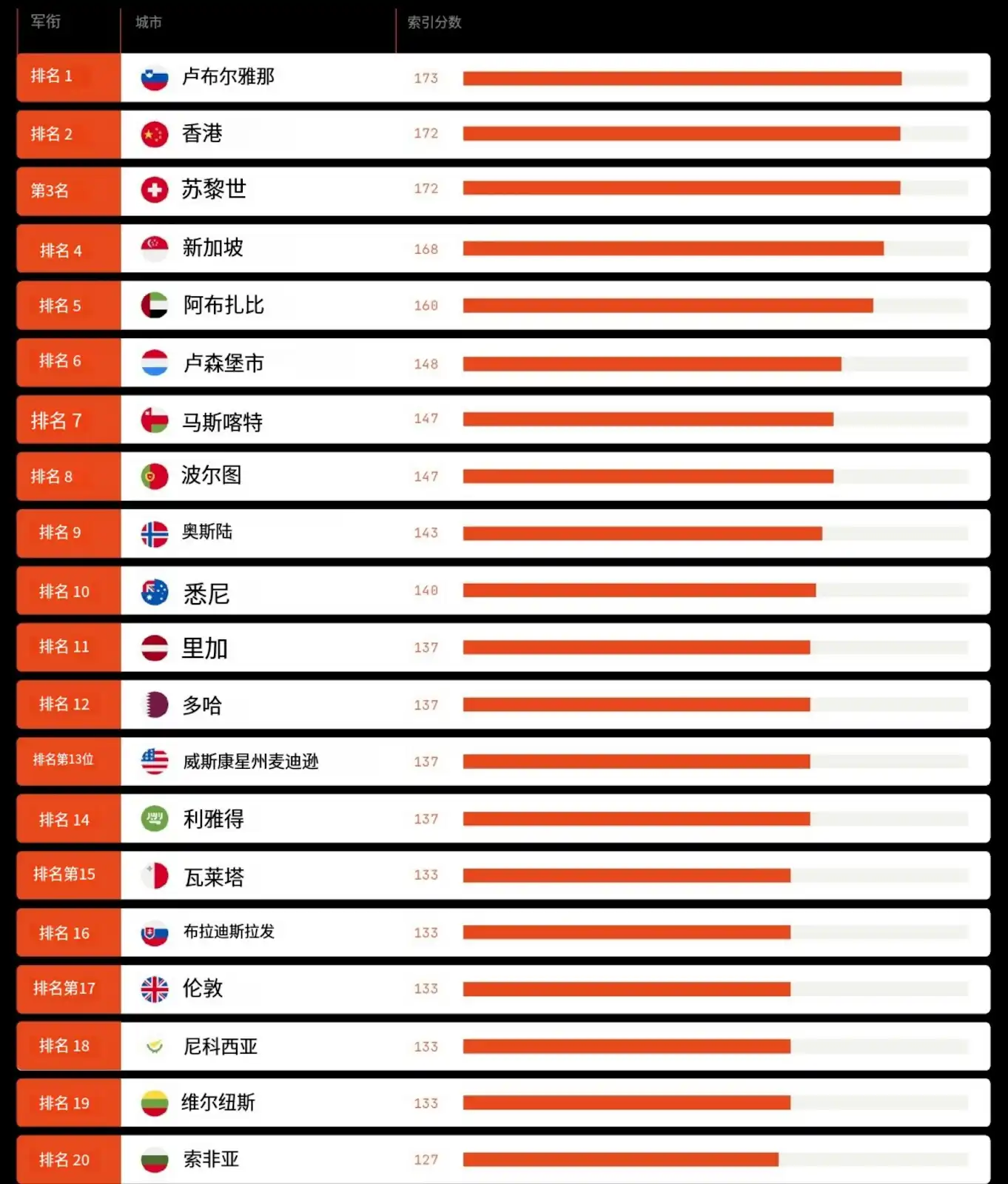
Multipolitan 2025 Cryptocurrency-Friendly City Index
The Future Financial Hubs
The global financial landscape is no longer dominated solely by traditional financial centers like New York or London. The rise of crypto-friendly cities is transforming this landscape.
· Crypto-Friendly Cities: Abu Dhabi, Ljubljana, Luxembourg City, Muscat, Nicosia, Lisbon, Riga, Singapore, Zurich—each city offers a clear legal framework and attractive tax system.
· Top Smart Cities: Zurich, Oslo, Singapore, London, Abu Dhabi—ranking high in the IMD 2024 Smart City Index, proving that crypto-friendly cities are also at the forefront in terms of technology and infrastructure.
· Cryptocurrency ATM and Merchant Leader: Sydney leads with 330 cryptocurrency ATMs and retail locations, followed by Hong Kong (201 ATMs) and Ljubljana (155 ATMs), where these cities have integrated real-world cryptocurrency.
Furthermore, speed and connectivity are the foundations of the digital economy, with connectivity driving cryptocurrency adoption. Abu Dhabi, Doha, and Oslo lead in internet speeds, reaching 398 Mbps, 265 Mbps, and 205 Mbps respectively, enabling high-frequency trading, digital finance, and seamless blockchain transactions. Mapping the most crypto-friendly cities aligns perfectly with the industry's borderless ethos. As people and capital seek favorable jurisdictions, the demand for advisory services to assist high-net-worth individuals in migration, business establishment, and asset management will continue to grow.
How Is Cryptocurrency Wealth Centralized?
Mere tracking of how many people own cryptocurrency is no longer sufficient. Equally important is understanding who holds significant cryptocurrency wealth. The landscape is vastly different between millions holding small amounts of cryptocurrency versus countries dominated by a few crypto whales. Multipolitan's Cryptocurrency Wealth Concentration Index combines cryptocurrency ownership rates and transaction volume (adjusted for inequality using the Gini coefficient) to provide insightful analysis.
Cryptocurrency has evolved from a speculative novelty to a global financial phenomenon. As digital assets gain mainstream acceptance, a key question remains: where is cryptocurrency wealth truly concentrated? To grasp the emerging financial landscape, Multipolitan has developed the "2025 Cryptocurrency Wealth Concentration Index," which not only reveals cryptocurrency adoption but also showcases the actual concentration of cryptocurrency wealth globally.
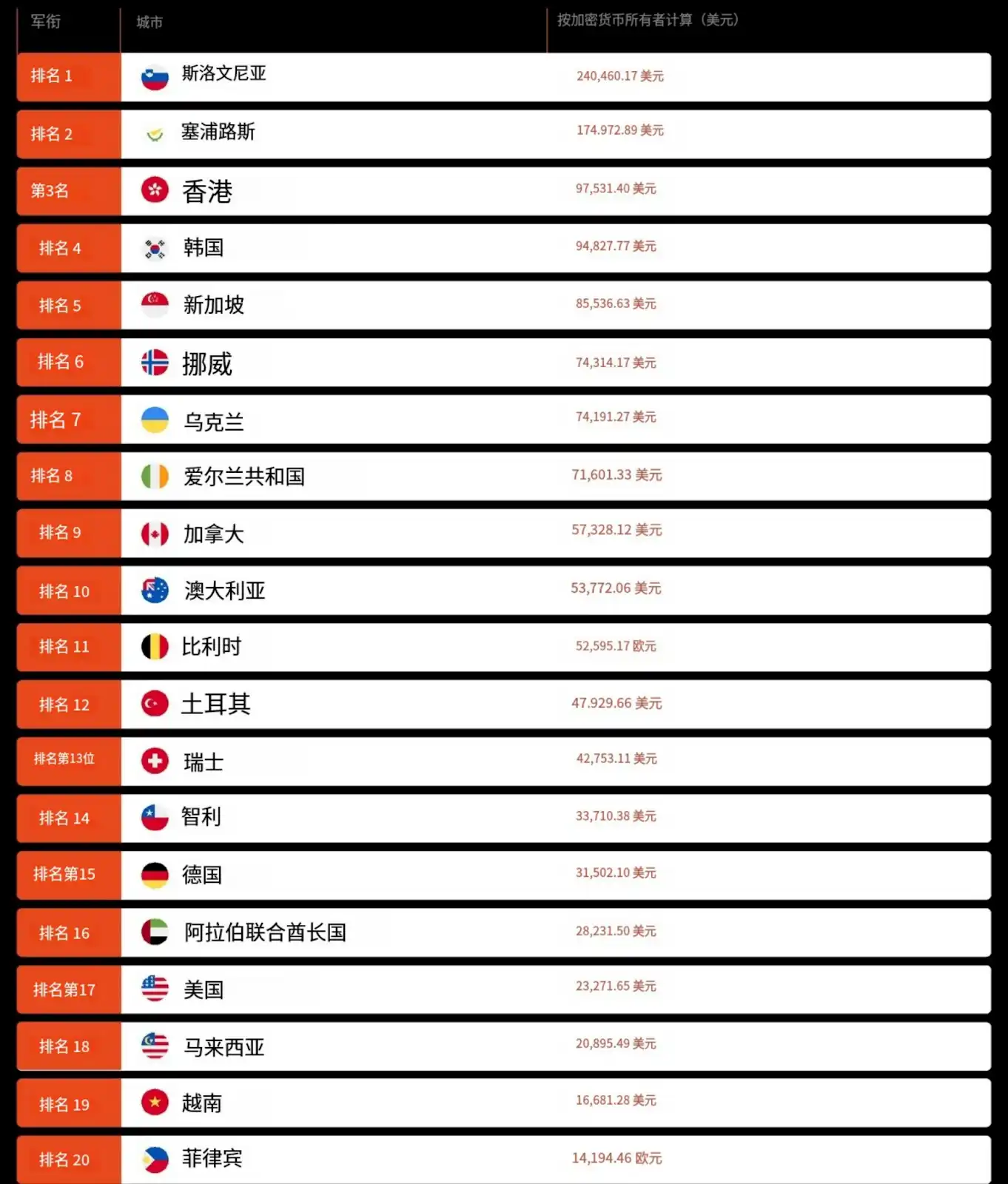
Multipolitan 2025 Cryptocurrency Wealth Concentration Index
Global Leaders in Cryptocurrency
· UAE - Global Adoption Leader. The UAE has 25.3% of its population holding cryptocurrency, leading in adoption rates, thanks to proactive government policies and clear regulations, making cities like Dubai thriving cryptocurrency hubs.
· India - Digital Giant. India has 118.9 million cryptocurrency holders, making it the world's largest cryptocurrency community. Despite facing regulatory hurdles, its retail investors continue to drive mass market participation, highlighting India's growing influence.
· United States—Still the Leader in Capital Flow. The United States remains a dominant force in capital flow. With some of the world's largest exchanges and institutional investors, the U.S. leads in trading volume, reaching $2.07 trillion. Such significant trading activity has positioned the U.S. as a key node in the global cryptocurrency financial landscape.
Slovenia, Cyprus, and Hong Kong SAR, China—Small Countries, Big Impact. Slovenia leads in per capita cryptocurrency transaction volume, with an average of $240,000 per person, indicating high user trading activity and wealth concentration. Cyprus averages $174,000 per person, and Hong Kong SAR, China averages $77,000 per person, making these regions hubs of cryptocurrency wealth concentration.
The Future is Borderless and Ever-Changing
Cryptocurrency wealth is no longer confined to traditional financial centers like New York, London, or Singapore. It is borderless, ever-changing, and finding new homes at the intersection of innovation and clarity. Cities and countries embracing these dynamics will lay the groundwork for the next financial era. The future financial capitals are believed to be in the cryptocurrency age.
This index is not just data; it is a strategic tool that can guide decisions on migration, business growth, and asset management. Understanding the concentration of today's cryptocurrency wealth will shape the future global financial landscape. The question now is not who is adopting cryptocurrency but who will control the immense wealth of cryptocurrency in the future. The competition to become the ultimate Cryptopolis is heating up.
You may also like

After being questioned by Vitalik, L2s are collectively saying goodbye to the "cheap" era

WEEX AI Trading Hackathon Paris Workshop Reveals: How Retail Crypto Traders Can Outperform Hedge Funds
Witness how WEEX's Paris AI Trading Hackathon revealed AI's edge over human traders. Explore key strategies, live competition results & how to build your own AI trading bot.

U.S. Oil (USOR) Price Prediction 2026–2030
Key Takeaways U.S. Oil (USOR) is a speculative Solana-based crypto project that aims to index the United States…

USOR Surges on Meme Narrative Despite No Real-World Asset Backing
Key Takeaways: USOR, a Solana-based token, has seen a notable surge driven by speculative narratives rather than verifiable…

How to Buy U.S. Oil Reserve (USOR) Cryptocurrency
Key Takeaways U.S. Oil Reserve (USOR) is a Solana-based token primarily traded on decentralized exchanges (DEXs). Claims have…

USOR vs Oil ETFs: Understanding Why the ‘Oil Reserve’ Token Doesn’t Track Crude Prices
Key Takeaways The U.S. Oil Reserve (USOR) token has become noteworthy for its claims, yet it does not…

Trend Research Reduces Ether Holdings After Major Market Turbulence
Key Takeaways: Trend Research has significantly cut down its Ether holdings, moving over 404,000 ETH to exchanges recently.…
Investors Channel $258M into Crypto Startups Despite $2 Trillion Market Sell-Off
Key Takeaways: Investors pumped approximately $258 million into crypto startups in early February, highlighting continued support for blockchain-related…
NBA Star Giannis Antetokounmpo Becomes Shareholder in Prediction Market Kalshi
Key Takeaways: Giannis Antetokounmpo, the NBA’s two-time MVP, invests in the prediction market platform Kalshi as a shareholder.…

Arizona Home Invasion Targets $66 Million in Cryptocurrency: Two Teens Charged
Key Takeaways Two teenagers from California face serious felony charges for allegedly attempting to steal $66 million in…

El Salvador’s Bukele Approval Reaches Record 91.9% Despite Limited Bitcoin Use
Key Takeaways: El Salvador President Nayib Bukele enjoys a record high approval rating of 91.9% from his populace,…

Crypto Price Prediction for February 6: XRP, Dogecoin, and Shiba Inu’s Market Movements
Key Takeaways: The crypto market experienced a notable shift with Bitcoin’s significant surge, impacting altcoins like XRP, Dogecoin,…

China Restricts Unapproved Yuan-Pegged Stablecoins to Maintain Currency Stability
Key Takeaways: China’s central bank and seven government agencies have banned the issuance of yuan-pegged stablecoins abroad without…

Solana Price Prediction: $80 SOL Looks Scary – But Smart Money Just Signaled This Might Be the Bottom
Key Takeaways Despite Solana’s descent to $80, some traders find security as smart money enters the fray, suggesting…

XRP Price Prediction: Major Ledger Upgrade Quietly Activated – Why This Could Be the Most Bullish Signal Yet
Key Takeaways: The activation of the Permissioned Domains amendment on XRPL represents a significant development in XRP’s potential…

Dogecoin Price Prediction: Death Cross Confirmed as DOGE Falls Below $0.10 – Is DOGE Reaching Zero?
Key Takeaways The death cross event signals potential bearish trends for Dogecoin as its price dips under $0.10,…

Stablecoin Inflows Have Doubled to $98B Amid Selling Pressure
Key Takeaways Stablecoin inflows to crypto exchanges have surged to $98 billion, doubling previous levels amidst heightened market…

Coinbase UK Executive Declares Tokenised Collateral a Mainstream Financial Force
Key Takeaways Tokenised collateral is transitioning from its initial experimental stages into becoming core infrastructure within financial markets.…
After being questioned by Vitalik, L2s are collectively saying goodbye to the "cheap" era
WEEX AI Trading Hackathon Paris Workshop Reveals: How Retail Crypto Traders Can Outperform Hedge Funds
Witness how WEEX's Paris AI Trading Hackathon revealed AI's edge over human traders. Explore key strategies, live competition results & how to build your own AI trading bot.
U.S. Oil (USOR) Price Prediction 2026–2030
Key Takeaways U.S. Oil (USOR) is a speculative Solana-based crypto project that aims to index the United States…
USOR Surges on Meme Narrative Despite No Real-World Asset Backing
Key Takeaways: USOR, a Solana-based token, has seen a notable surge driven by speculative narratives rather than verifiable…
How to Buy U.S. Oil Reserve (USOR) Cryptocurrency
Key Takeaways U.S. Oil Reserve (USOR) is a Solana-based token primarily traded on decentralized exchanges (DEXs). Claims have…
USOR vs Oil ETFs: Understanding Why the ‘Oil Reserve’ Token Doesn’t Track Crude Prices
Key Takeaways The U.S. Oil Reserve (USOR) token has become noteworthy for its claims, yet it does not…


 App
App