Oil Tokenization: How Blockchain is Revolutionizing Energy Asset Trading

Key Takeaways
- Tokenized oil converts physical oil reserves into digital blockchain tokens, making them globally tradable as Real-World Assets (RWA).
- Fractional ownership allows retail investors to invest in the oil market for the first time without high entry barriers.
- Oracle networks like Chainlink cryptographically secure tokens by verifying real-world holdings on-chain via "Proof-of-Reserve."
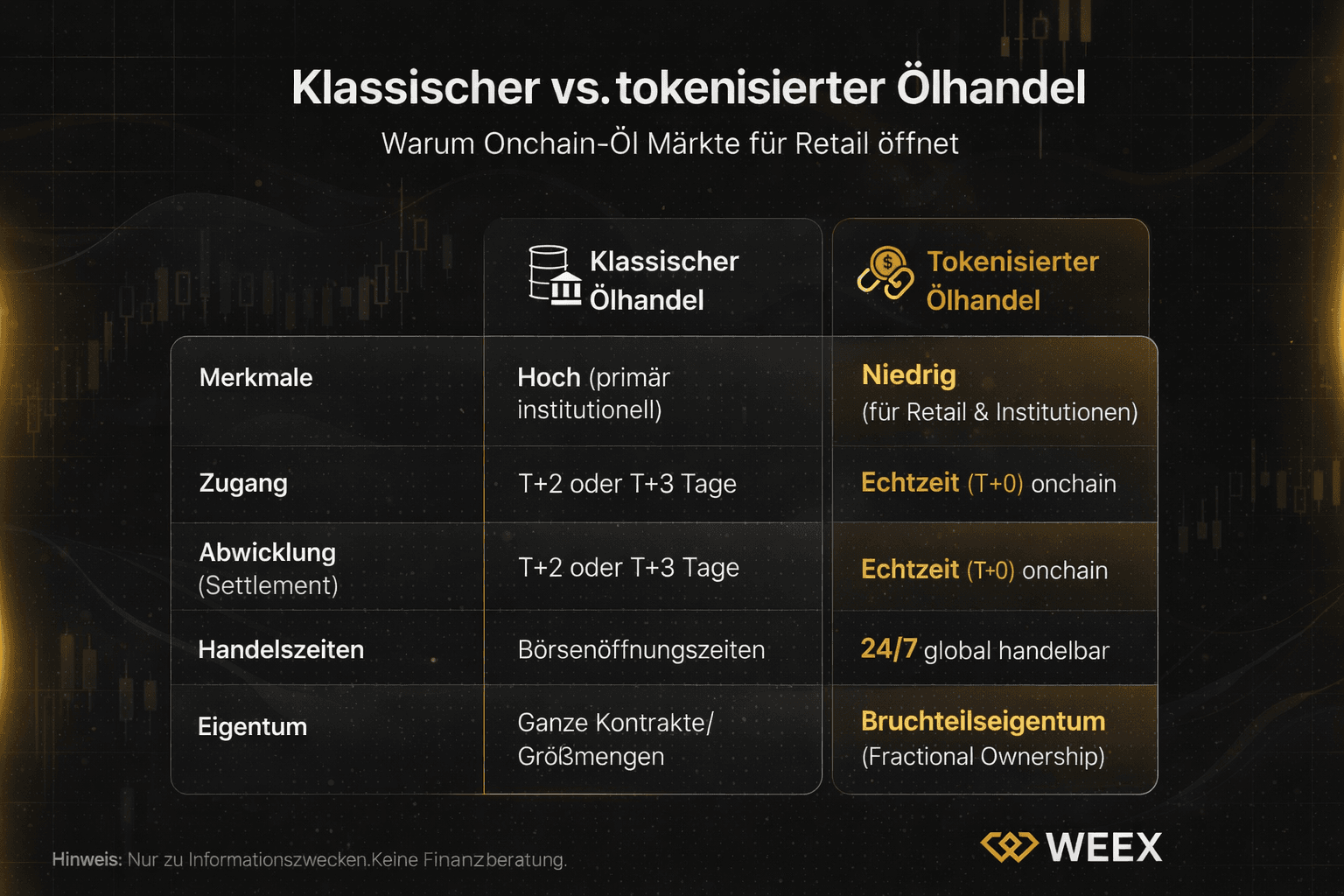
- 24/7 Liquidity: Transactions occur in real-time (T+0), replacing traditional, lengthy settlement processes in energy trading.
Introduction
The global oil market is massive, yet it has been held back for decades by outdated infrastructure, high entry barriers, and slow settlement cycles. Previously, direct access to crude oil or energy infrastructure was reserved almost exclusively for institutional giants and states. However, a technological innovation is fundamentally changing this paradigm: oil tokenization is bringing classic commodity markets onto the blockchain. Through so-called Real-World Assets (RWAs), physical barrels or production capacities are transformed into digital, programmable assets. This article examines how tokenization makes the energy sector more efficient, the benefits it offers investors, and the risks investors should be aware of.
What is Oil Tokenization?
With the tokenization of oil, ownership or revenue rights to crude oil, refined products, or energy infrastructure are represented as digital tokens on a blockchain. Unlike traditional paper derivatives or futures contracts, which exist in closed systems and are often settled only in cash, tokenized assets live on a shared, immutable ledger.
This process integrates the traditional energy sector into decentralized finance (DeFi). Each token acts as a kind of digital twin of the physical good—for example, one token corresponds exactly to one barrel of West Texas Intermediate (WTI) crude oil stored in a verified facility.
Ready for your crypto oil investment?
Start now and benefit from the global liquidity of RWA markets.
Trade CRUDEOIL/USDT directly on WEEX and expand your portfolio with tokenized commodities.
How Does the Technology Work?
The lifecycle of a tokenized oil asset begins in the real world and ends as a tradable crypto asset. The process requires a seamless technical and legal infrastructure:
- Origin and Custody: A regulated custodian or energy producer first verifies the existence and quality of the oil in physical storage.
- Onchain-Minting: Once the oil is verified, a smart contract generates the corresponding digital token on a blockchain.
- Data Oracles and Proof of Reserve: For the token to retain its value, it must be ensured that the oil actually exists. This is where decentralized oracle networks come in. Through a cryptographic "Proof of Reserve" procedure, inventory data from storage facilities is transmitted to the blockchain in real-time. If physical inventory drops, the creation of new tokens is automatically halted.
- Interoperability: Modern cross-chain protocols ensure that these tokens can be securely moved between different blockchains (e.g., from private bank networks to public DeFi exchanges).
Advantages and Use Cases
Fractional Ownership and Liquidity
Perhaps the greatest advantage of the technology is so-called fractional ownership. Large assets like oil wells or ship cargoes are broken down into small, affordable token units. This allows retail investors to invest in the oil and gas industry with minimal capital. At the same time, tokens can be traded in real-time, which immediately frees up tied-up capital.
Financing Energy Projects
Beyond pure crude oil, revenue rights can also be tokenized. Producers, for example, tokenize the future earnings of an oil well to obtain immediate capital for operations. Projects like elmnts on the Solana blockchain make it possible to issue direct participations in oil and gas rights as digital tokens. This allows exploration companies to generate much-needed liquidity for further expansion, while investors participate transparently and on-chain in ongoing commodity revenues.
DeFi Collateralization
Oil producers can tokenize their physical holdings and deposit them as collateral in DeFi protocols. This allows them to obtain liquidity in the form of stablecoins to cover operating costs without having to sell their oil prematurely at a discount.
Risks and Regulatory Challenges
Anyone looking to build their own tokenization platform or enter as an investor must consider critical hurdles.
For one, regulatory uncertainty remains high: in many countries, oil-backed tokens are not considered simple utility tokens, but rather highly regulated security tokens. Providers must integrate strict KYC (Know Your Customer) and AML (Anti-Money Laundering) guidelines directly into the smart contracts.
Furthermore, there is the risk of the physical gap. While the blockchain is tamper-proof, it must rely on data from the real world. Without reliable physical audits by third parties and transparent custody concepts, even the best smart contract is useless. It is therefore essential to distinguish between tokens that are actually physically backed by oil and those that use the commodity narrative only for marketing purposes.
Conclusion
Oil tokenization is on the verge of fundamentally digitizing a multi-billion dollar market. By combining physical energy assets with the efficiency of blockchains and the transparency of decentralized oracles, entirely new asset classes are emerging. Even though legal frameworks and physical audit standards still need to mature, tokenized oil is a decisive milestone in making illiquid assets efficient, global, and tradable around the clock.
Ready for your crypto oil investment?
Start now and benefit from the global liquidity of RWA markets.
Trade CRUDEOIL/USDT directly on WEEX and expand your portfolio with tokenized commodities.
FAQ: Frequently Asked Questions About Oil Tokenization
What is a tokenized barrel of oil?
A digital token that represents the ownership of one real, securely stored barrel of oil and makes it tradable worldwide in real-time.
Is oil tokenization regulated?
Yes. Tokenized energy assets are usually considered securities. Issuers must comply with strict financial regulations such as KYC/AML and integrate them directly into the token code.
How does the blockchain protect against fake oil reserves?
Technologies like "Proof of Reserve" (e.g., from Chainlink) verify real storage levels on-chain through independent auditors. Without physical backing, the smart contract automatically stops token issuance.
Can I also have the oil delivered physically?
Yes. With true "commodity tokens," the tokens can be exchanged (burned) to receive the physical oil or its equivalent in fiat currency. The exact details are determined by the issuer.
WEEX | Rising Star of Crypto Exchanges in the DACH Region
WEEX combines security, innovation, and community with features for beginners and professionals:
Security & Protection
- 1,000 BTC Protection Fund: Self-funded reserve for rapid loss protection in exceptional cases
Trading & Earning
- Auto Earn: Daily automatic USDT earnings with zero effort
- Copy Trading: Follow elite traders automatically or apply as an elite trader for additional benefits
- WE-Launch: Early access to new projects – exclusive to WEEX users
Benefits & Rewards
- Promotions & Rewards: Trading competitions and special bonuses for active users
- Affiliate Program: Lifetime commissions from new users – details here
- VIP Benefits: Lowest fees, market insights, and personal support for high-volume traders
- WXT Token: Fee discounts, airdrops, and exclusive platform benefits
Discover current trends on WEEX Spot and get started now: Register now
Disclaimer – Legal Notice from WEEX Exchange
WEEX and its affiliates offer services for the exchange of digital assets, including derivatives and margin trading, only where legal and to eligible users. All content is general information, not financial advice – seek independent advice before trading. Trading cryptocurrencies involves high risk and can lead to a total loss. By using WEEX services, you accept all associated risks and terms. Never invest more than you can afford to lose. Further information can be found in our Terms of Use and in the Risk Disclosure.
Follow WEEX on social media:
X: @WEEX_Official
Instagram: @WEEX Exchange
TikTok: @weex_global
YouTube: @WEEX_official
Discord: WEEX Community
Telegram: WeexGlobal Group