What is a stablecoin and how to use it in Brazil in 2026

Understanding what a stablecoin is starts with the name itself: "stable" means steady, and "coin" means currency—in other words, a cryptocurrency created to avoid price fluctuations.
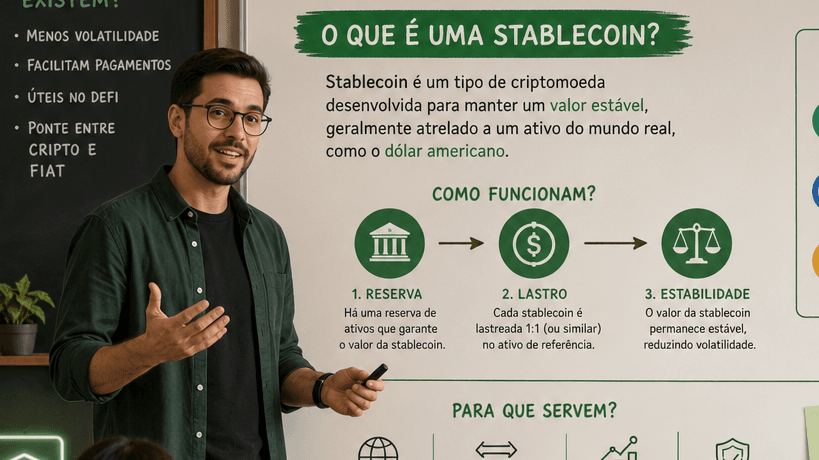
While Bitcoin or Ethereum can fluctuate 10% in a single day, a stablecoin like USDT always remains close to US$ 1. This predictable behavior has turned stablecoins into one of the most used tools in the Brazilian crypto market. Today, they move more volume than any other digital asset in the country, and their application goes far beyond simple value storage: stablecoins already function behind the scenes for international payments, currency protection, and daily operations in the crypto market.
In this guide, you will understand how they work, what they are used for in practice, and how to start using them.
What is a stablecoin and how does it maintain a stable price
The name says it all: stable currency. A stablecoin is a cryptocurrency designed not to fluctuate, and for this, each unit issued must have collateral—a real asset that guarantees the value behind the token.
The most common model is the fiat-backed one. USDT works this way: for every token issued, Tether Corporation holds one dollar or an equivalent in liquid assets in reserve. The USDC from Circle follows the same principle, with independent monthly audits that prove the collateral and offer more transparency to the investor.
There are also algorithmic stablecoins, which attempt to maintain parity via smart contracts without direct dollar backing. This model has already demonstrated serious fragility, when the collapse of TerraUST in 2022 wiped out tens of billions of dollars in just a few days, a risk that the investor needs to know before choosing which stablecoin to use.
If you are just starting out, the safest path is to begin with the backed and audited options. The next section shows exactly what they are used for in daily life.
What is a stablecoin used for in practice
Stablecoins are not just a place to park money during market downturns. For the Brazilian investor, they have three concrete uses that make a direct difference in daily life.
Currency protection
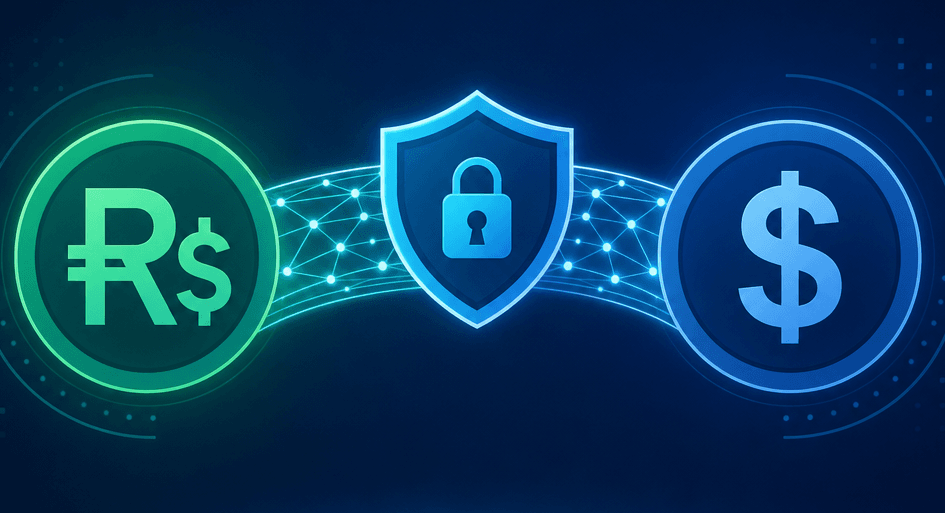
The real has a history of frequent devaluation against the dollar. Keeping part of your assets in USDT acts as a natural hedge: no foreign bank account is needed, and there is no exchange bureaucracy. When the dollar rises, the value of your position in reais rises along with it, and you don't have to do anything for that to happen.
Liquidity for crypto trading
Instead of converting to reais every time you exit a position, paying bank fees and waiting days for transfers, the investor converts to USDT and re-enters the market as soon as they identify a new opportunity. This agility is one of the reasons why USDT leads the trading volume on all exchanges worldwide.
International remittances
Sending money abroad through the banking system is expensive and takes days; with the use of stablecoins, the transfer is completed in minutes, with much lower fees and no intermediaries.
Identify which of these features makes the most sense for your profile, and in the next section, we will help you choose the right stablecoin for each situation.
USDT, USDC or BUSD: which stablecoin to choose
The Brazilian market concentrates volume in two main stablecoin options, with distinct characteristics that matter depending on your profile.
USDT (Tether)
It is the most liquid stablecoin in the world and the most used in Brazil. Available on WEEX and accepted in practically any trading pair. The main historical criticism concerns the transparency of the reserves, but USDT has never broken parity with the dollar and remains the most practical choice for those who prioritize liquidity and ease of use.
USDC (Circle)
More conservative in regulatory terms: it publishes independent monthly audits and operates under American supervision. It has been growing among investors seeking compliance, especially after the Central Bank rules that equated stablecoins to exchange operations in 2026.
BUSD
It lost relevance after regulatory restrictions in the US in 2023 and is not recommended as a primary option today. If you are just starting, USDT is the most direct entry point. If regulatory compliance is a priority, USDC is the most solid choice.
The next section shows how these stablecoins already work in real payments in Brazil.
How stablecoins work in real payments
The use of stablecoins in payments has already left the theoretical field and reached regional daily life. The most visible application in Brazil is in international remittances and trade with neighboring countries.
A concrete example: an Argentine tourist arrives in Brazil without a local bank account. They open their financial app from their home country, scan a Pix QR Code, and complete the payment normally. Behind the scenes, the settlement happens via stablecoins; in other words, the value is converted and settled in seconds, without either party needing to understand the technical process.
Fintechs and digital wallets in Latin America already use stablecoins as a settlement layer to eliminate the slowness and cost of the traditional banking system, with 24-hour operations, costs far below conventional means, and almost instantaneous settlement.
Stablecoins have become real financial infrastructure, and understanding this changes how you decide to use them. The next section shows how to take the first step within WEEX.
How to buy and use stablecoins on WEEX
Buying stablecoins on WEEX does not require advanced technical knowledge, as the process starts with a simple deposit in reais via PIX, which arrives in the account in minutes. From there, just access the USDT/BRL pair on the platform and execute the purchase at the market price.
With USDT in your wallet, the possibilities open up immediately: buy Bitcoin, Ethereum, or other assets available on WEEX; keep it as a dollar reserve while waiting for a more favorable entry opportunity; or transfer it for international remittances at a reduced cost.
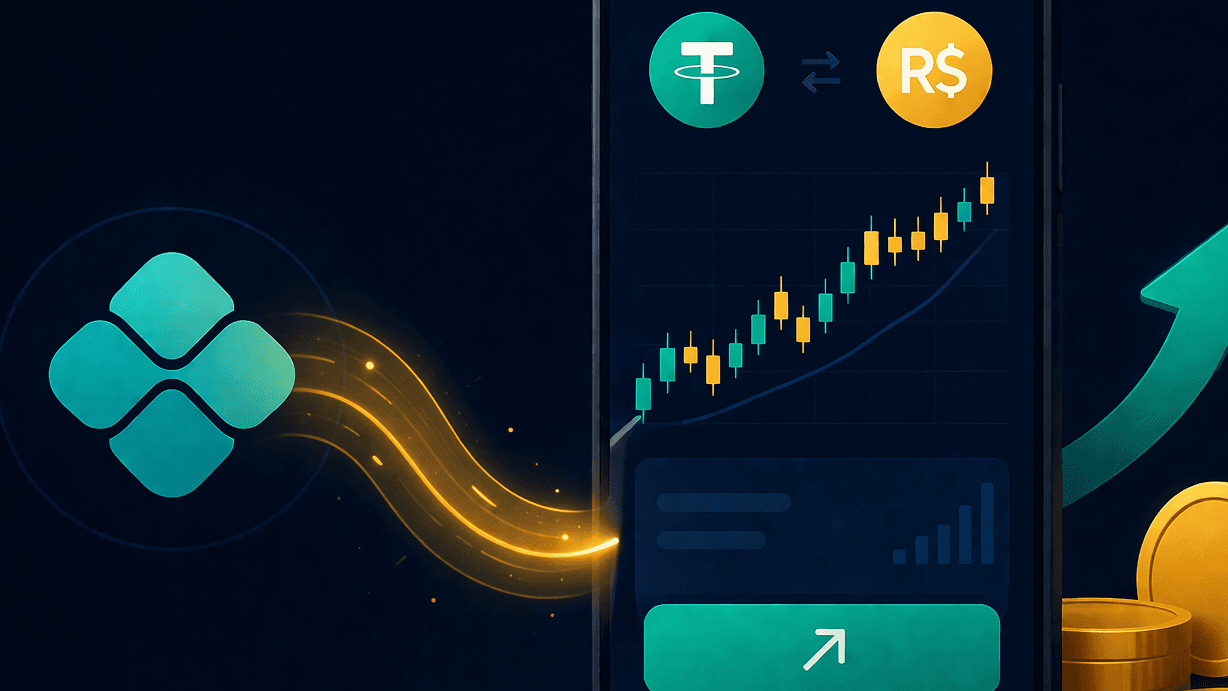
WEEX offers liquidity in USDT and USDC, with deposits via PIX and an interface entirely in Portuguese.
Conclusion
Stablecoins have ceased to be a niche tool to become a central part of digital financial infrastructure. For the Brazilian investor, they solve concrete problems: they protect assets from currency volatility, provide agility to operate in the crypto market, and pave the way for international remittances at a reduced cost. USDT and USDC are already available on WEEX with deposits via PIX, in Portuguese, and without bureaucracy.
If you don't use stablecoins yet, now is the time to start.
Frequently Asked Questions
Do stablecoins earn money?
Not automatically. USDT maintains parity with the dollar but does not pay interest on its own. Yield on stablecoins exists on some platforms via passive income; it is an additional service, not a feature of the asset.
Are stablecoins safe?
USDT and USDC have a solid track record of maintaining parity, and the audited and backed options are the safest.
Do stablecoins need to be declared in the income tax return?
Yes. Stablecoins are cryptoassets and must be declared according to the new tax rules in Brazil.
Disclaimer
WEEX and its affiliates provide digital asset exchange services, including derivatives and margin trading, only where legal and to qualified users. All content is general information and not financial advice—seek independent advice before trading. Cryptocurrency trading is high-risk and can result in total loss. By using WEEX services, you accept all related risks and terms. Never invest more than you can afford to lose. Consult our Terms of Use and Risk Warning for details.