
What Is Project Oasis Coin (PXR)? A 2026 Guide to Price, Risks, and How to Buy


Project Oasis Coin (PXR) is a small-cap Solana token that markets itself around an energy-reserve and "safe haven" narrative. It trades on decentralized venues, but the team, audit, and any real-world backing are undocumented as of June 2026. Here is what the market data actually shows, where the risks sit, and how to approach PXR without getting trapped.
The short version: PXR is a real, tradable token, not a proven product. Treat the commodity language as marketing until the project proves otherwise.
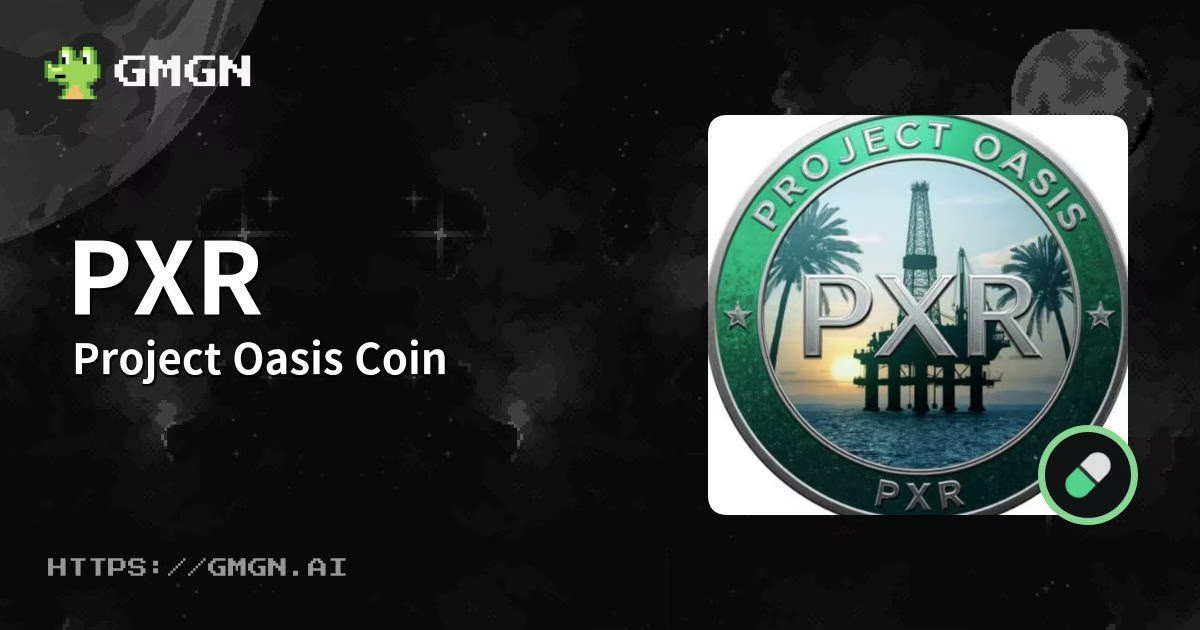
What Project Oasis Coin (PXR) actually is
Project Oasis Coin is a token on the Solana blockchain trading under the ticker PXR. Its public framing leans on phrases like "energy reserves," "commodities," and a "digital oasis" or safe-haven theme. That positioning is the pitch, not a verified fact. Nothing in the publicly available token pages, wallet listings, or DEX trackers confirms that PXR holds a claim on physical energy, regulated reserves, or any real-world infrastructure.
The more useful way to read PXR is by category: it behaves like an early-stage, community-driven Solana token, similar in mechanics to the broader wave of Solana meme coins that launch on platforms such as Pump.fun and trade on DEXs like Raydium and Jupiter. The "oasis" and "reserve" branding gives it a story, but the on-chain behavior is what matters for risk.
PXR price and market snapshot
PXR is a micro-cap token, and its readings differ noticeably across trackers. That spread is itself a signal of thin, fragmented liquidity. The figures below are approximate and dated, because numbers at this size move fast and depend on which contract and pool a tracker is reading.
| Metric | Approximate reading (as of June 10–11, 2026) | Notes |
|---|---|---|
| Price | ~$0.0018 | Varies by source and pool |
| Market cap | ~$1.8M – $3.8M | Different trackers report different figures |
| 24h volume | ~$0.9M – $3.3M | Volume relative to cap is high, typical of speculative tokens |
| Supply | ~999.99M – 1B PXR | Most circulating supply already live |
| Chain | Solana | SPL token |
The takeaway is not the exact price. It is that a token this size can swing double digits in a single session, and that two "PXR" pages can quote you very different numbers at the same moment. Do not anchor to a single screenshot.
The contract address problem
This is the part most beginners miss. Multiple Solana addresses circulate under the PXR / "Project Oasis Coin" name across Coinbase, Phantom, Jupiter, and DEX screeners, and they do not all point to the same token. Some tracker pages even show wildly different prices because they are reading entirely different pools.
In practice, that means the single most important step before any PXR trade is confirming the exact contract address from a source you trust, then matching it on the DEX before you swap. A token sharing a ticker tells you nothing. On Solana, anyone can mint a token called "Project Oasis Coin" with the PXR symbol. The contract address is the only reliable identifier.
Is Project Oasis Coin legit or a scam?
There is no conclusive evidence that PXR is a scam. There is also no evidence that it is a vetted, asset-backed project. Both statements are true at the same time, and holding them together is the honest position.
What is missing is the documentation a serious project would publish: a named, accountable team; a security audit; a verifiable claim behind the "reserve" branding; and a track record longer than a few months of trading. Until those exist, the correct mental model is "speculative token using commodity language," not "commodity token with proven backing."
| Signal | Status as of June 2026 | Why it matters |
|---|---|---|
| Named, accountable team | Not documented | No one to hold responsible if it fails |
| Security / contract audit | None visible | Smart-contract risk is unverified |
| Proof of real-world backing | None visible | "Reserve" narrative is unsubstantiated |
| Liquidity depth | Thin, fragmented | Large orders move the price hard |
| Operating history | Short | No evidence of execution over time |
None of these alone proves bad intent. Together they describe a high-risk profile that demands caution and small position sizing, not conviction.
How people actually lose money on tokens like PXR
The blow-up points on micro-cap Solana tokens are predictable. Liquidity is the first one: thin pools mean your sell order can crater the price you receive, and slippage on a volatile token can quietly eat a large chunk of a trade. The second is the rug pull, where developers pull the underlying liquidity and the token goes to near zero. Before buying, experienced traders check whether liquidity is locked or burned and whether a handful of wallets hold a dangerous share of supply.
The third trap is buying the top. Tokens with a strong narrative and a fresh price spike pull in FOMO buyers right before momentum fades, and most early-stage tokens eventually lose the bulk of their value once the story cools. The fourth is the wrong-contract mistake described above. If discipline matters anywhere in crypto, it matters most here.
How to buy PXR (and the safer alternative)
PXR is a DEX-traded Solana token, so buying it directly requires SOL in a non-custodial wallet and a swap through a decentralized exchange. The general path: acquire SOL, move it to a Solana wallet, verify the exact PXR contract address, connect to a DEX, set a sensible slippage tolerance, and swap. You can start by getting SOL through a straightforward how to buy Solana (SOL) flow, then bridge into self-custody for the swap.
For most readers, the more important point is that you do not need to chase a token like PXR at all. If your goal is exposure to the Solana ecosystem rather than a single speculative micro-cap, holding SOL itself is the lower-risk version of the same thesis. You can track the live Solana price and decide whether the underlying network, not the narrative token, is what you actually want to own.
Market view: what matters most
Strip away the branding and PXR is a bet on attention, not on energy reserves. The "oasis" and "commodity" framing is a story that may or may not ever be backed by anything verifiable. For a trader, the only honest edge here is sizing and timing: treat it as money you can lose entirely, confirm the contract, watch liquidity, and have an exit before you enter. For an investor looking for durable value, the absence of a team, audit, and proof of backing is disqualifying until that changes.
FAQ
1. What is Project Oasis Coin (PXR)?
PXR is a Solana-based token that markets itself with an energy-reserve and safe-haven narrative. It trades on decentralized exchanges and is best understood as an early-stage, speculative token rather than a proven asset-backed product.
2. Is Project Oasis Coin (PXR) a scam?
There is no conclusive evidence that PXR is a scam, but there is also no documented team, audit, or proof of real-world backing. It carries the risk profile of a very early-stage token, so caution is warranted.
3. What is the price of PXR?
As of June 10–11, 2026, PXR traded around $0.0018, with a market cap reported between roughly $1.8M and $3.8M depending on the source. Readings vary because liquidity is thin and fragmented across pools.
4. Why do different sites show different PXR prices and addresses?
Multiple tokens share the PXR ticker and "Project Oasis Coin" name on Solana, and trackers may read different contracts or pools. Always confirm the exact contract address before trading.
5. Where can I buy PXR?
PXR is traded on Solana DEXs, which requires SOL in a non-custodial wallet and a verified contract address. If you want lower-risk Solana exposure instead, buying and holding SOL directly is the simpler route.
6. Is PXR backed by real energy or commodity reserves?
No public evidence confirms any real-world backing as of June 2026. Commodity-themed language does not mean a token holds physical assets or regulated reserves.
Risk Warning
Crypto assets are highly volatile and you can lose part or all of your capital. Project Oasis Coin (PXR) is a small-cap, early-stage Solana token with no documented team, no visible audit, and no verified backing behind its reserve narrative as of June 2026. Specific risks include severe price volatility, thin and fragmented liquidity, high slippage on exits, smart-contract and rug-pull risk, ticker and contract-address confusion across trackers, and regulatory uncertainty. Verify the exact contract address, never invest more than you can afford to lose entirely, and treat any "asset-backed" claim as unproven until the project publishes verifiable evidence. This article is for information only and is not financial advice.
You may also like

What Is a Good APR in Crypto? What Investors Should Know
APR in crypto tells you the yearly rate you might earn from staking, lending, or liquidity programs before…
APR vs APY Explained with Simple Examples
APR and APY look similar, but they measure yield differently. APR shows a yearly rate without compounding; APY…

How to Calculate APR in Crypto Investments? What Investors Should Know
APR shows the yearly rate you earn or pay before compounding. In crypto, APR appears on staking dashboards,…

Is BlockDAG a Good Investment in 2026?
BlockDAG (BDAG) promises a faster base layer by using a directed acyclic graph instead of a single-chain design.…

What is Amkor Technology Tokenized Stock (Ondo)(AMKRON) Coin? A comprehensive guide you don’t want to miss
Amkor Technology Tokenized Stock (Ondo) (ticker: AMKRON) is a tokenized representation of Amkor Technology, Inc. equity designed for…

Why Is WLFI Trending? Key Factors Explained
WLFI is trending because it sits at the crossroads of politics, DeFi product rollouts, and fast-moving crypto liquidity.…

What Is BlockDAG? Everything You Need to Know
BlockDAG, often written as blokdag in search queries, is a blockchain design that replaces the single-chain structure with…
How to Buy WLFI: A Beginner’s Guide
This guide explains what WLFI is, how its narrative can affect price, and how beginners can buy WLFI…
APR Explained: How Crypto Lending and Staking Rewards Work
APR is the annual percentage rate you earn or pay without compounding. In crypto, APR shows how much…
What Is APR in Crypto? A Beginner’s Guide
This guide explains what apr means in crypto, how it differs from apy, where you see apr in…

DEXTools vs TradingView: Which Is Better for Crypto Traders?
Choosing between DEXTools and TradingView comes down to what you trade and how you make decisions. This guide…
What Is DEXTools? A Beginner’s Guide to Crypto Charting
DEXTools is a real-time analytics platform that helps you research tokens trading on decentralized exchanges like Uniswap and…
BlockDAG Price Prediction: Future Potential Explained
BlockDAG (often searched as “blokdag”) aims to solve blockchain throughput limits with a DAG-style design that lets multiple…
WLFI Price Prediction 2026: Is It Worth Watching?
WLFI sits at a rare crossroads: politics and DeFi. In 2026, the token’s path likely hinges less on…

How to Use DEXTools to Find New Crypto Tokens
DEXTools helps you spot new crypto tokens on DEXs, read on-chain data in real time, and avoid common…
What Is WLFI? Everything You Need to Know
WLFI is the governance token of World Liberty Financial, a DeFi lending and borrowing project that drew attention…

Trump’s Tariff Policies Explained: What They Mean for Markets and Crypto
This article breaks down how a tariff works, why talk of broad Trump tariff policies matters for inflation,…
How Do Tariffs Affect Bitcoin and Cryptocurrency Markets?
Tariff changes ripple through currencies, inflation, supply chains, and risk appetite—all of which feed into crypto pricing and…
What Is a Good APR in Crypto? What Investors Should Know
APR in crypto tells you the yearly rate you might earn from staking, lending, or liquidity programs before…
APR vs APY Explained with Simple Examples
APR and APY look similar, but they measure yield differently. APR shows a yearly rate without compounding; APY…
How to Calculate APR in Crypto Investments? What Investors Should Know
APR shows the yearly rate you earn or pay before compounding. In crypto, APR appears on staking dashboards,…
Is BlockDAG a Good Investment in 2026?
BlockDAG (BDAG) promises a faster base layer by using a directed acyclic graph instead of a single-chain design.…
What is Amkor Technology Tokenized Stock (Ondo)(AMKRON) Coin? A comprehensive guide you don’t want to miss
Amkor Technology Tokenized Stock (Ondo) (ticker: AMKRON) is a tokenized representation of Amkor Technology, Inc. equity designed for…
Why Is WLFI Trending? Key Factors Explained
WLFI is trending because it sits at the crossroads of politics, DeFi product rollouts, and fast-moving crypto liquidity.…


